Tag: iot

  • Google moves deeper into the smarthome

    Google moves deeper into the smarthome

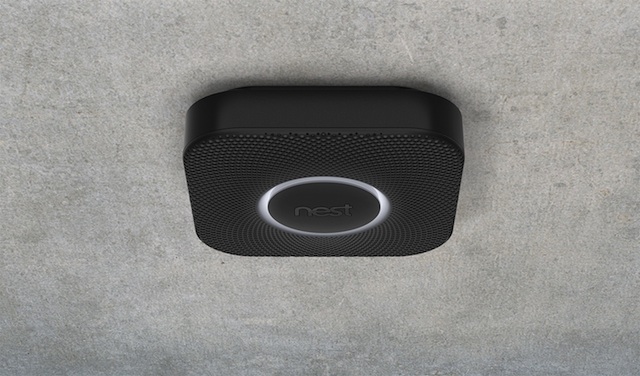
    Since Google bought smart smoke detector company Nest earlier this year it’s become apparent that the search engine giant sees the smarthome as one of its big marketplaces in the near future.

    Nest’s acquisition of smarthome automation company Revolv yesterday illustrates this and shows that Nest is Google’s smarthome division.

    As the smarthome becomes more common, the value of controlling the systems that run the connected home’s devices becomes greater. So the positions being taken by Apple, Google and Samsung are going to be important as the marketplace develops.

    The latter relationship — Google and Samsung — is particularly fascinating as Samsung’s smartphones and tablets are locked into the Google Android system which makes it harder for the Korean industrial giant to strike off in an independent path.

    All of this of course is based upon homeowners being happy with having their smarthomes locked into one vendor’s platform. We may yet see the market rebel against the internet giant’s ambitions to carve up the connected world.

    Similar posts:

    • No Related Posts
  • Building community knowledge

    Building community knowledge

    One of the promises of big data and the internet of things is that local governments will be able to gather information about the state of their infrastructure.

    A good working example of this is Google’s Waze, the Israeli traffic monitoring startup bought by the search engine giant two years ago.

    Waze gathers information about traffic delays and transit times from users then aggregates them to give a picture of commuting times. It has always been a good example of how collaborative data can work.

    This week Google announced the service will share its information with a handful of transit agencies and councils to improve their knowledge of the traffic choke points in their cities.

    In return the agencies will give their transit information to Waze.

    Waze’s story is a good example of how sensors and people, in this case smartphones and their users, are going to gather information on infrastructure and cities. The key is going to be in making sure that data isn’t locked into proprietory databases.

    Similar posts:

    • No Related Posts
  • Building inclusive cities

    Building inclusive cities

    Yesterday Barcelona won the 2014 Bloomberg Mayors’ Challenge — a ideas competition for European cities.

    Barcelona’s winning idea was collaborative care networks for older citizens. In Barcelona’s case one in five residents is over 65 and by 2o40 seniors will make up a quarter of the city’s population.

    The approach Barcelona’s council has proposed is a combination of high tech and the community working together.

    Barcelona will use digital and low-tech strategies to create a network of family members, friends, neighbors, social workers, and volunteers who together make up a “trust network” for each at-risk elderly resident.

    Last year I had the opportunity to interview the Deputy Mayor of Barcelona, Antoni Vives, on how the city was using the internet of things to improve citizens’ lives.

    In that interview Vives spoke on how important was that these technologies improved the lives of all citizens, not just the young and the rich. Today’s prize illustrates how the city is applying that philosophy.

    For technologists, one of the tasks ahead is to show how today’s inventions are more than the toys of rich men, but are things that genuinely improve society’s well being.


    Similar posts:

    • No Related Posts
  • Skipping the trough of disillusionment

    Skipping the trough of disillusionment

    When consulting group Gartner placed the Internet of Things at the peak of their hype cycle last month it raised concerns that the technologies might be about to take a tumble.

    Speaking to Networked Globe this week in San Jose; Maciej Kranz, VP and GM of Cisco’s technology group described how he believes the IoT’s evolution from the top of the hype cycle to the plateau of acceptance will be quick.

    “We’re happy that Gartner put IoT on top as it means there’s awareness,” said Kranz. “We hope to prove Gartner wrong, that in IoT we don’t go through the classic hype cycle we go from hype into reality.”

    Kranz’s reasoning while the IoT will suffer a short spell, if any at all, in Gartner’s ‘trough of disillusionment’ is because the major industry players are working closely together to build the sector and its standards.

    “Where we think it’s a little bit different from some of the other hype cycles than some of the other hype cycles is that we continue to work very close at the industry,” Kranz explained.

    “Because we’re all working as an industry to make it real it will go through the disillusionment and quickly into a reality.”

    This may well turn out to be true if the big players like Cisco and GE in the industrial space along with companies such as Google and Apple in the consumer sector stay committed to the concept. If the major vendors stay the course, then it’s likely IoT technologies won’t suffer much at all.

    Another aspect in the IoT’s favour is that it isn’t really a specific technology or product at all, instead being more of a concept bought about by various technologies such as home automation, industrial controls and cloud computing all reaching maturity.

    Rather than one separate item on the Gartner hype cycle, the IoT is really made of dozens of different technologies that are mostly on the ‘plateau of acceptance’ themselves.

    Kranz sees Gartner’s listing of the company as being on the top of the hype cycle as being a vindication for how the IoT has been adopted by industry and the community, “it is remarkable how we’ve gone in the last nine months from people saying it’s a vision to n

    Similar posts:
    • No Related Posts
  • Hacks on a plane

    Hacks on a plane

    One of the great concerns about the internet of things is what happens when older computer technology that was never designed to be connected to the net is exposed to the online world.

    A presentation to the Black Hat Conference in Las Vegas this Thursday by researcher Ruben Santamarta promises to show some of the vulnerabilities in aircraft avionic systems.

    Today’s aircraft are extremely smart devices with the downsides shown in the tragedy of AF447 where an Air France jet plunged into the Atlantic Ocean when two undertrained pilots didn’t understand what their plane was doing as it encountered severe ice conditions in a storm.

    With aircrew increasingly dependent upon computers to help them fly planes, the risks of bugs or security weaknesses in aircraft systems is a serious issue and with the continued mystery of MH370’s fate adds an element of speculation that a glitch of some form was responsible for its disappearance.

    It wouldn’t be the first time a passenger plane came to grief because of a computer error; most notably Air New Zealand flight 901 crashed into Antarctica’s Mount Erebus during a 1979 sightseeing trip due to wrong information being loaded into the navigation system.

    The internet adds numerous risk factors to aircraft – Santamarta’s hack allegedly works through in plane WiFi systems – particularly given these avionics systems haven’t been designed to deal with unauthorised access into their networks.

    Should Santamarta’s demonstration prove feasible, it will be an important warning to the aviation industry and the broader Internet of Things community that security is a pressing issue in a world where critical equipment is connected.

    Similar posts:

    • No Related Posts