Tag: m2m

  • Could the Internet of Things grow by fifty times?

    Could the Internet of Things grow by fifty times?

    One of the annual events in the tech world is Cisco’s Visual Networking Index, the company’s survey of internet traffic trends.

    The numbers, as always, are staggering and this year Cisco are forecasting that global internet traffic will grow by a factor of eleven over the next four years to 190 exabytes – that’s 190,000,000,000,000Mb or the equivalent of 19o billion hard drives.

    What’s particularly fascinating about this year’s index Cisco forecast that by 2018 there will be more mobile devices on the planet than people.

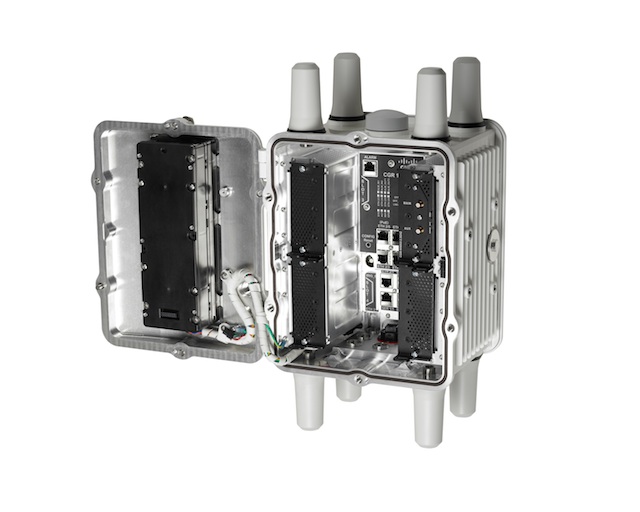
    Many of those devices will be the sensors and equipment that makes up the Internet of Things (IoT), or Machine to Machine (M2M) technologies and Cisco expects the internet traffic in this area to surge fifty-fold over the next four years.

    This is remarkable as most of the M2M devices don’t use much data as the vast majority only need to send out the odd short signal – as opposed to smartphones that download megabytes of information each day.Cisco’s predictions underscore just how pervasive this technology is going to become in the next few years, the challenge for us is to understand how to use and protect the masses of data these systems are going to generate.
    Similar posts:

    • No Related Posts
  • Network neutrality and the internet of things

    Network neutrality and the internet of things

    Yesterday’s US Supreme Court decision ruling against the Federal Communication Commission’s regulations on network neutrality is a mixed bag for the Internet of Things industry.

    Network neutrality is the principle that all internet traffic is treated the same, regardless of its nature or destination.

    The FCC rules meant US based Internet Service Providers weren’t allowed to discriminate between different types of services, for instance blocking Netflicks or allowing faster downloads from Amazon.

    In the United States network neutrality has been a bone of contention between consumer groups, government regulators and ISPs for over a decade, although it hasn’t been much of an issue outside North America.

    For Machine to Machine (M2M) or Internet of Things (IoT) vendors and services there is some attraction in Telcos being able to offer prioritised traffic for mission critical systems.

    In applications like supply chain management and public safety, reliability of the connection is essential and something the ‘best effort’ services offered by ISPs are not well suited to.

    When networks are overcapacity, say at sporting events or during disasters, being able to shed non critical traffic may be important for emergency services and the devices they may depend upon.

    So for IoT and M2M services, network neutrality is not necessarily a good thing.

    However there is a downside should network neutrality be overturned, the risk of vendor lock in is high and it’s quite possible to see as situation where, for instance, AT&T enter into an agreement with Google to provide the public network capabilities for Nest home automation devices.

    This could see Nest customers suffering a substandard service if they choose another provider.

    Internationally the attitude towards network neutrality has been that competition will sort things out, however the IT and telco industries do have a habit of trying to enforce their own monopolies on customers – something we’re currently seeing in the Apple-Google battles over smartphones and connected vehicles.

    So it isn’t clear whether network neutrality isn’t a good thing for the M2M sector, however it’s something that’s going to play out as these technologies become more ubiquitous across the economy.

    Similar posts:

    • No Related Posts
  • Who pays for the internet of things?

    Who pays for the internet of things?

    “If there’s one number I’d like you to remember, it’s 19 trillion.” Cisco CEO John Chambers told the 2014 International CES during his keynote speech earlier this week.

    Chambers was referring to the economic value of the Internet of Things or machine to machine technologies as they get rolled out across society, but who pays for the connectivity?

    In the case of the smart home, office, factory or farm the data costs go onto the existing internet bill, but once you get out of the office or on the road then the bills start mounting up as systems start connecting to a cellular or satellite network.

    Certainly the telcos see the opportunity with Ovum Research predicting telco’s M2M revenues will grow to reach US$44.8bn over the next five years.

    While for logistics companies and similar businesses this will be just another cost of doing business, for many consumers being stuck with an expensive mobile data plan with their smart car might not be attractive.

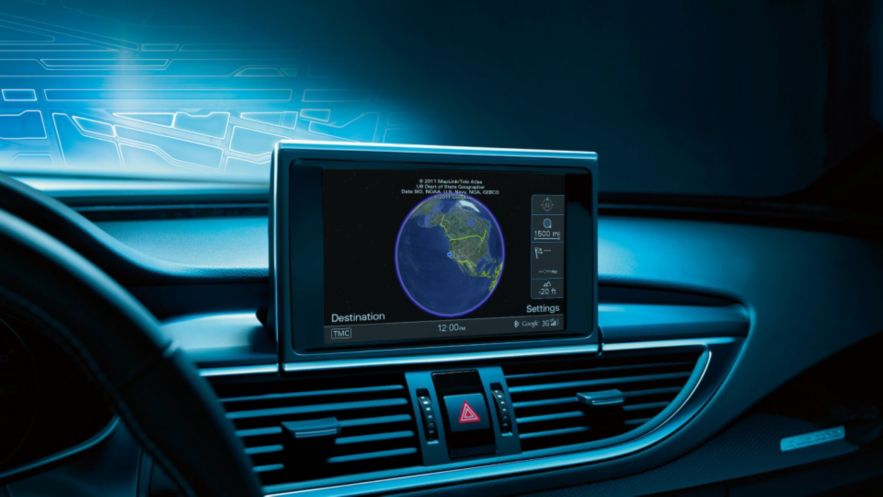
    As car manufacturers start to push their vehicles as being more like smartphones, suddenly the choice of network provider, compatibility with apps and operating systems starts to become a valid concern.

    In that world, choosing a car on the basis of which telco it connects to is a sensible idea.

    Of course it may be that consumers may not own cars by the end of the decade. The vision of companies like Zip Car and Uber is that we just call for a towncar or pick up a share car when we need one.

    Certainly that vision makes sense from an economic perspective and the trends right now show that millennials are nowhere near as interested in cars as their parents and grandparents were.

    As with every technological change, it’s not always obvious in the early days how things will pan out. In 1977 the founder of Digital Equipment Corporation Ken Olsen said, “there is no reason anyone would want a computer in their home.” Within 15 years he was proved very wrong.

    The motor car drove western society during the Twentieth Century and to assume we’ll continue to use it the same way in the 21st is as flawed as believing a hundred years ago that we’d continue to use horse carriages the same way as previously.

    So the assumptions about where money is to be made with the Internet of Things may turn out to surprise us all.


    Similar posts: