Tag: manufacturing

  • 4D printing and the next generation of design – ABC Sydney

    4D printing and the next generation of design – ABC Sydney

    I’ll be on ABC Sydney this morning discussing 4D printing and the future of design as the Sydney Vivid Festival swings into gear.

    Some of the areas we’ll be looking at in the spot that should start around 10.20am is what exactly is 4D printing, how can materials build themselves and how designers are creating more sustainable devices like Google’s Project Ara.

    One particularly interesting Vivid session is the Electric Dreams to Reality session that will feature local entrepreneurs and makers explaining how they are using the internet of things and new design.

    We’d love to hear your views so join the conversation with your on-air questions, ideas or comments; phone in on 1300 222 702 or post a question on ABC702 Sydney’s Facebook page.

    If you’re a social media users, you can also follow the show through twitter to @paulwallbank and @702Sydney.

    Similar posts:

    • No Related Posts
  • Building modern manufacturing

    Building modern manufacturing

    Around the world manufacturers are wondering how they adapt to the rise of 3D printing nod the continued challenge of China’s low costs of production.

    In Singapore, Reuters reports, the government is putting its hopes on new technology boosting the country’s manufacturing industry in one of the world’s highest cost centers.

    “The future of manufacturing for us is about disruptive technologies, areas like 3D printing, automation and robotics,” EDB Managing Director Yeoh Keat Chuan told Reuters.

    Britain too is experimenting with modern technologies as the BBC’s World of Business reports about how the country is reinventing its manufacturing industry.

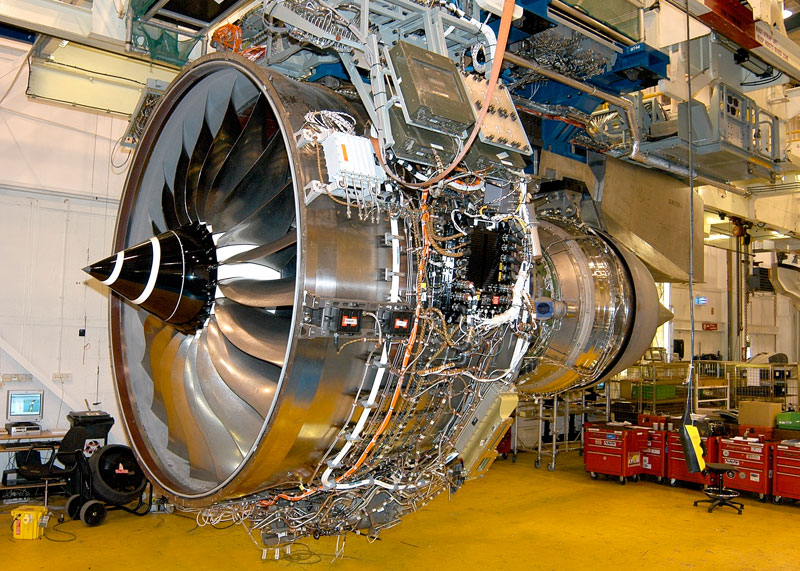
    Tim Chapman of the University of Sheffield’s Advanced Manufacturing Research Centre describes how the economics of manufacturing changes in a high cost economy with an simple advance in machining rotor disks for Rolls-Royce Trent jet engines.

    “These quite complex shaped grooves were taking 54 minutes of machining to make each of these slots. Rolls-Royce came to us and said can ‘can you improve the efficiency of this? Can you cut these slots faster.”

    “We reduced the cutting time from 54 minutes to 90 seconds.”

    “That’s the kind of process improvement that companies need to achieve to manufacture in the UK.”

    Interestingly many of those British engineers interviewed by Peter Day in the BBC report focus on China’s cheap labor as being the driver for moving up the value chain and automating

    Dismissing China as purely a low cost producer a risk as Chinese manufacturers are working hard to move up the value chain as their aging populating erodes their labor advantage.

    The last word though for Britain’s engineering sector has to go to Hugh Facey, founder of wire tool company, Gripple.

    “Are you a rich man?”
    “No”
    “Do you mind?”
    “I’m from Yorkshire.”

    Both Singapore and the UK are working on establishing their positions in the 21st Century economy; both business owners and individuals have to give some thought on where they want to be.

    For manufacturing, the rollout of new technologies means the industry is going to look very different in the next decade. It won’t be the only industry radically changed.

    Similar posts:

  • Does the motor industry matter in the 21st Century?

    Does the motor industry matter in the 21st Century?

    One of the key drivers of Twentieth Century industrialisation was the motor industry. Today it’s an industry plagued by over production, distorted by government subsidies and increasingly dominated by a small group of major players.

    In Australia, the Productivity Commission examined how the motor industry was evolving and its preliminary report (PDF) is a good snapshot of the current state of play in the global automobile sector.

    Chronic worldwide overcapacity is what stands out most starkly in the report with most of the world’s manufacturers operating at less than the 80% production break even point that’s assumed in the industry.

    global-motor-industry-overcapacity

    Australia is a good example of how the motor industry was held as being essential to a country’s development. Like most of the world, the early Twentieth Century saw dozens of small automobile manufacturers pop up in the backyards of enthusiastic tinkerers – it’s like the surge in smartphone apps today.

    Eventually only a handful survived the industry shakeout following the Great Depression and by the end of World War II the industry was largely dominated by US, British and European manufacturers, today that consolidation has increased with East Asian producers replacing the UK carmakers.

    The lessons of World War II

    One of the lessons from World War II was that having a strong domestic manufacturing industry was a nation’s strategic advantage. So governments around the world protected and subsidised their automobile industries along with other factories.

    For Australia, bringing in the required labour to run those manufacturing industries was a seen as a key to the nation’s post World War II growth and it was one of the contributors to the country’s ethnic diversity that started to flower in the late 1970s.

    Today the echoes of those policies remain with governments around the world still subsidising their motor industries despite the economic and strategic military benefits of automobile manufacturing being dubious at best.

    Australia’s failure

    In Australia the modest incentives provided by governments hasn’t been enough to keep local car plants operating, which was the reason for the Productivity Commission’s report into the future of the industry.

    The report’s message is stark for Australia, as a high cost nation that hasn’t invested in skills or capital equipment there’s little reason for the world to buy Australian technology as there’s little being built that the world wants or needs.

    With the nation’s advantages in agriculture and mining – not to mention solar power – Australia should be leading in technologies that exploit these advantages but instead the nation is a net technology importer in all three of those sectors.

    To be fair to Australian industrialists, they responded rationally to government policies that favour property and share speculation over productive investment. Coupled with the drive to create duopolies in almost every sector of the Aussie economy, it didn’t make sense to invest when they could exploit domestic markets rather than invest in new technologies.

    Becoming high cost economies

    For nations moving up the value chain such as China, Thailand and Brazil; Australia’s failure to develop high tech manufacturing and inability in adapting to being a high cost economy is a powerful lesson in the importance of framing sensible long term economic policies.

    The Australian Productivity Commission report illustrates how the motor industry does have a role in helping countries move into being industrial powerhouses, but once a nation becomes a high cost economy it takes more than dumb subsidies to maintain a competitive advantage.

    Germany and the US illustrate this, and the fact both countries’ motor industries are running at greater than 80% capacity shows how their automotive sectors are evolving. It’s no co-incidence that electric car manufacturer Tesla Motor’s plant in Fremont, California was a former GM-Toyota joint venture factory.

    As motor vehicles become increasingly clever so too are their manufacturers; unless car builders and governments are prepared to invest in the brains of their workers and modern technology then they have little future in the 21st Century.

    For nations, the question is whether the Twentieth Century model of building a car industry is relevant in this century. It may well be that other industries will drive the successful economies of the next hundred years.

    Similar posts:

  • Cities of Industry

    Cities of Industry

    The latest Decoding The New Economy interview feature Laurel Barsotti, Director of Business Development at the City of San Francisco discussing how the city refound it’s entrepreneurial mojo.

    A notable point about Laurel’s interview is how she has similar views to Barcelona’s Deputy Mayor Antoni Vives about the importance of industry to San Francisco.

    For some time it was an article of faith in the Anglo-Saxon world that the west had become post-industrial economy where manufacturing was something dispatched to the third world and rich white folk could live well selling each other real estate and managing their neighbours’ investment funds.

    “Opening doors for each other” was how a US diplomat described this 1980s vision according to former BBC political correspondent John Cole.

    It’s clear now that vision was flawed and now leaders are having to think about where manufacturing, and other industries, sit in their economic plans.

    Barcelona’s and San Francisco’s governments have understood this, but others are struggling to realise this is even a problem as they hang on to dreams of running their economies on tourism, finance and flogging their decidedly ordinary college courses to foreign students.

    For some political and business leaders this is a challenge to their fundamental economic beliefs. It’s going to be interesting to see how they fare in the next twenty years.

    Similar posts:

  • Breaking the break-fix business model

    Breaking the break-fix business model

    One of the most profitable areas for many companies has been in fixing broken products, now the internet of everything promises to put an end to that business model.

    ‘Break-fix’ has always been a good profit earner with business ranging from construction companies to washing machine manufacturers making good money from fixing failed products.

    Speaking at a lunch in Sydney earlier today GE’s CEO of Global Growth and Operations, John Rice, described how the Internet of Everything is changing in the industrial landscape.

    One of the big business changes Rice sees is in the ‘break-fix’ model of many industrial suppliers.

    “We grew up in companies with a break fix mentality,” Rice says. “We sold you equipment and if it broke, you paid us more money to come and fix it.”

    “Your dilemma was our profit opportunity,” Rice pointed out. Now, he says engineering industry shares risks with their customers and the break-fix business is no longer the profit centre it was.

    Goodbye to the TV mechanic

    This is true in many other industries as products become both more reliable and less economical to repair – the local TV repairman has largely vanished and the backyard computer support businesses are going the same way.

    For many businesses, this means a change to how they service their customers and the nature of their operations. For many, it means close monitoring of their products will be essential to manage risk.

    Rice also flagged how grid computing will improve the reliability of equipment and networks citing how giant wind turbine talk to each other.

    “Every wind turbine has an anemometer on top that’s used to judge wind speed and direction,” says Rice. “If you had a problem with the anemometer the wind turbine shut down until someone could come out – maybe a week later – to climb to the top of the turbine, diagnose the problem and start the thing back up.”

    “Today the technology is such that the wind turbines talk to each other so if you’re in a wind field of thirty turbines you don’t rely on one anemometer,” points out Rice. “This is a very simple example of machine to machine interface.”

    Wind turbines and the road toll

    Rice’s example of wind turbines talking to each other is similar to Cisco’s scenario of using the internet of everything to reduce the road toll where cars communicate with road signs, traffic lights and each other to monitor conditions on the highway ahead.

    Those machines talking together also give early warnings of problems which reduces downtime and risk for industrial users, it also means less money for businesses who’ve made money from those problems.

    Similar posts:

    • No Related Posts