Tag: marketing

  • When business models die

    When business models die

    To say the motor industry is facing disruption on multiple fronts is an understatement.

    A global glut of motor vehicles is depressing the world market, a range of emerging manufacturers from China and India are challenging incumbents and a new breed of electric, autonomous vehicles designed by tech companies are arriving on the market.

    To cap it all off, today’s young adults in western markets aren’t too interested in buying cars reversing the consumer attitudes which had made the motor industry among the world’s most powerful.

    Exacerbating the motor industry’s woes are its antiquated business models, particularly the dealership networks that lock both franchisees and manufacturers into expensive relationships that increase costs, reduce flexibility and do little to add value.

    The tale of Australia’s General Motors Holden is a good example, as sales stagnate and the company winds up its Australian manufacturing operations its rationalising its national dealer network.

    Unsurprisingly the dealers being axed are less than happy as Wheels Magazine reports.

    What’s notable about the story is the level of control the manufacturers have over their franchisees.

    Hoffman said Holden had even contacted him to say that once the contract expires, the car maker would send someone to take down $30,000 worth of signage. He will also lose the right to service Holden-badged cars under its capped-price servicing scheme – any cars he sells between now and the day the signs come down, he’s unlikely to see again when service time rolls around. Holden will also buy back any unsold new cars, parts and specialist tools.

    That absolute model of franchising had value when the manufacturers’ brands were strong and consumers were born into a ‘Ford’, ‘General Motors’ or ‘Chrysler’ family. Today, the brands are largely interchangeable outside the premium or luxury markets and attempting to lock-in customers is increasingly difficult.

    More telling is the inflexibility of pushing stock out to the dealers which may or may not get sold while centralising marketing. The resulting disconnect between consumers and supplier means increased costs and a slow response to changing market conditions.

    The motor industry was one of the defining businesses of the Twentieth Century, affordable motor cars changed every society and transformed the cultures of affluent nations.

    Now that influence is waning and it remains to be seen how today’s incumbent manufacturers will evolve, if they survive at all, in today’s very different society.

    One thing is for sure – the existing dealership structure won’t be around for much longer.

    Similar posts:

    • No Related Posts
  • Counting the digital pennies

    Counting the digital pennies

    With media companies around the world struggling to make money, the publishing platforms on Facebook and Google promised to bring in much needed income streams. They appear not to have worked.

    Business Insider reports how US based premium publisher trade body Digital Content Next surveyed its members on their online platform income and discovered some disappointing answers.

    On average, premium publishing companies generated $773,567 in the first half of 2016 by distributing their content on YouTube. Content published to Facebook earned an average of $560,144 in the period, Twitter generated an average of $482,788, and Snapchat generated $192,819 for each publisher in the sample.

    To call these returns derisory is an understatement and it illustrates how the current media model is unsustainable as it’s impossible to sustain a basic newsroom, let alone produce investigative features with those sort of budgets.

    It isn’t just the media model that’s unsustainable, Business Insider cites the CEO of Digital Content Next, Jason Klint, who flagged in a blog post last year that all the growth in digital advertising is being accounted for by Facebook and Google – the rest of the industry is shrinking.


    Even Facebook and Google aren’t immune from the unsustainable model that’s currently in place, Klint points out that fraud and intermediaries further skew the model which undermines advertisers’ confidence in the platforms and online media in general.

    For the moment though, the intermediaries seem to be doing okay. Klint cites IAB research which claims AdTech companies are making 55% of the online advertising industry’s revenues while publishers are only getting half.

    That illustrates how the tail is currently wagging the dog with publishers and content creators losing out while middlemen who add little in the way of value get the bulk of the revenue. That too is not sustainable.

    We’re still in early days for online media and the models are still being worked out. While we wait for the 21st Century’s David Sarnoff many sectors are threatened including the advertising, marketing and PR industries. At least the publishers aren’t alone.

    Similar posts:

    • No Related Posts
  • The rise and fall of a social media influencer

    The rise and fall of a social media influencer

    Jess Miller from suburban Melbourne was a social media star. Two years ago at the age of sixteen she was earning $10,000 a week as ‘Pizza’ on Tumblr.

    Miller was a classic social media influencer, with 700 thousand young followers she was popular with advertisers then along came the payday of reposting fake diet pill testimonials.

    Miller started to make serious money. She’d already been able to make a little cash: fashion companies and some small Etsy stores paid her to post pictures of clothing on her blog, with a nudge to her followers to check out their sales. She’d earned about $4000 in this way.

    But then the big one came along. Two 18-year-old American social media entrepreneurs, Zach Lilley and Jeremy Greenfield – fans and friends of Pizza – approached Jess Miller and other top-performing Tumblr bloggers in April 2014 with a proposition for a money-making scheme. It used a decidedly old-school lure: diet pills.

    Lilley, Greenfield and their associate Dennis Hegstad ran a website called Exposely, which connected brands to people with strong followings on social media. Lilley and Greenfield used their social media skills to create diet pill ads that masqueraded as Tumblr posts, essentially fake testimonials from women talking about their weight-loss journey. Miller would re-blog these posts, and get a small payment if the user clicked on the link. If the user bought the pills, Miller would get $23 and Exposely would get $26. She watched the money roll in – to her mother’s PayPal account.


    Eventually the breaches their terms of service, not to mention ethics, became too much for Tumblr’s management and they deleted Miller’s blog along with a group of others in the scheme.

    Miller’s story illustrates the manipulation that is a big part of the social media influencer industry with behaviour that’s almost certainly illegal and most definitely unethical. It also illustrates the risks of basing an income or business on service where you can be closed down any time.

    For Miller, she seems relieved her time of fame is over. Those building their businesses around these platforms may not be so philosophical.

    Similar posts:

    • No Related Posts
  • Happy shiny people

    Happy shiny people

    “If you have anything negative to say, please don’t use the hashtag” implored the organiser to her stable of ‘influencers’ ahead of a recent social media campaign.

    Like everyone in the PR, marketing and advertising industries, that organiser was desperately keeping a shiny patina on their clients’ brands at a time where they are one tweet away from disaster in today’s world of message obsessed management.

    With influencer programs those risks are magnified as marketers co-opt amateurs to promote their clients in return for access and freebies*. Those unpaid posters on Instagram, Twitter and Facebook may be happy to give a positive view to everything but their fans may not be so kind.

    Given their clients’ aversion to risk, it’s not unusual to see marketers setting out terms to ‘influencers’ demanding the brand has the right to vet posts – as one telco requested to this site last year – or outright prohibiting anything negative being said about their client.

    Happy Shiny People

    Perversely, selecting happy shiny people to promote brands on social media while suppressing critical thinking could actually create distrust of brands argues communications consultant Joanne Jacobs who states “this distrust is caused by campaigns of undifferentiated positivity and uncritical thinking.”

    A good example of this potential damage is a recent influencer campaign by Chinese telecommunications Huawei where a group of influencers were flown to the 2016 Mobile World Congress to post about their experiences with the brand.

    The Facebook post below shows the influencers enjoying the vendor’s hospitality but it also illustrates the lack of diversity in the group, something that was quickly called out in the comments.

    huawei-men

    For the Huawei influencers who had spent the previous week gushing about the vendor’s products and events this was an opportunity to provide leadership on the lack of diversity in the tech and telco industries..

    Instead the critics – some of whom had more influential online audiences than the ‘influencers’ – were dismissed with the passive aggressive accusation of being ‘negative’, the cardinal sin of social media marketing.

    For Huawei, there was a real risk their happy shiny influencers clumsy attempts to protect the brand would damage for the company and it was unsurprising the company’s professional PR managers stepped in to defuse the situation which in the hands of amateur ‘brand ambassadors’ threatened to become a self inflicted disaster.

    Brittle brands of happiness

    Huawei’s experience illustrates a key problem with the happy shiny influencer campaigns in their brittleness when faced with genuine criticism. The happy consumerist gleefully liking Instagram photos of shoes or hamburgers will quickly abandon the product should the brand be perceived as acting dishonestly or unethically.

    For those influencers who’ve tied themselves too closely to brands, such a scandal could find their own names tarnished and their hard won audiences and reputation deserting them.

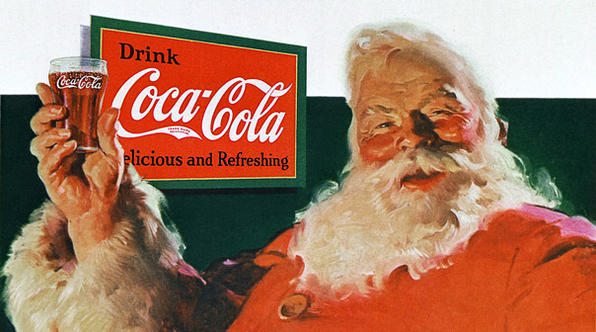
    In an age of conversation where critical voices can be heard, the nice shiny facades can easily collapse. The days when the tobacco industry or brands like Coca-Cola could drown out critical voices simply by the weight of their advertising campaigns are long gone.

    Struggles with a fragmented media

    The struggles for the PR and marketing industries in dealing with today’s fragmented world are not to be underestimated – the old models of broadcast advertising and engaging with journalists and celebrities have lost their effectiveness and the industry is grappling with what works with the new channels.

    In a building a brand that will last in today’s media landscape, pandering to shallow thinking consumerists is at best going to be a short term fix. To succeed, building a believable trustworthy name that tolerates dissent, allows complaints and acknowledges informed criticism is much more important and exponentially more valuable.

    Shallow thinking and shiny people might have worked for Coca-Cola selling to young baby boomers in 1965 but fifty years later things the critics and deeper thinkers have a voice to. Co-opting those voices will only strengthen the brand.

    *Disclaimer: This writer has been on a number of influencer programs and received various degrees of corporate largess including a Huawei smartphone.

    Similar posts:

    • No Related Posts
  • When startup growth pains prove fatal

    One of the most dangerous things for a startup business is trying to grow too quickly.  In his blog, Jun Loayza describes how RewardMe, one of the startups he was involved in, failed after it tried to scale to fast.

    In his list of factors that led to RewardMe’s demise Loayza cites an undue focus on customer acquisition, however this is a fundamental part of the current Silicon Valley greater fool model.

    As the exit strategy is to sell the business, whether it’s to a trade buyer or through an IPO,  the aim is to maximise the value of the operation ahead of that sale. Boosting the numbers of users is a key task for management.

    Loayza says in retrospect he would have liked to focus on product development rather than user acquisition, but that’s a luxury not available when you’ve taken venture capital funding.

    Similar posts: