Tag: microsoft

  • Microsoft’s devices and services strategy starts taking shape with the Surface tablet

    Microsoft’s devices and services strategy starts taking shape with the Surface tablet

    Microsoft’s latest version of their Surface tablet computer is the company’s first attempt at executing Steve Ballmer’s device and services strategy. If the company succeeds, there are some interesting implications for the tablet computer market.

    Currently Microsoft is on a worldwide PR campaign to promote their latest range of Surface tablet computers. Last week during the Sydney leg of their tour I had the opportunity for a hands on demonstration of the new devices with Jack Cowett of the product’s marketing team.

    The Surface itself is an interesting device with some major upgrades and changes as Microsoft begins to understand the tablet market with the device having more memory, better processors and battery life – although the lack of a cellular version is going to hinder its adoption by the consumer and small business markets.

    Devices and services

    It’s in the device’s integration with Microsoft’s cloud and communication services where the long term vision, and real story behind the Surface lies.

    Most obvious is the bundling of services with purchasers of a Microsoft Surface 2 or Surface Pro getting 200Gb of Sky Drive storage and a year’s free international calls included with the device.

    It’s an early taste of how Microsoft can combine services and devices that leverage off their existing position in the marketplace.

    While these incentives may not be enough to convince customers that the Windows systems are a better buy than Android or Apple devices, integrating these cloud services makes the computers more powerful devices.

    Keyboards as blades

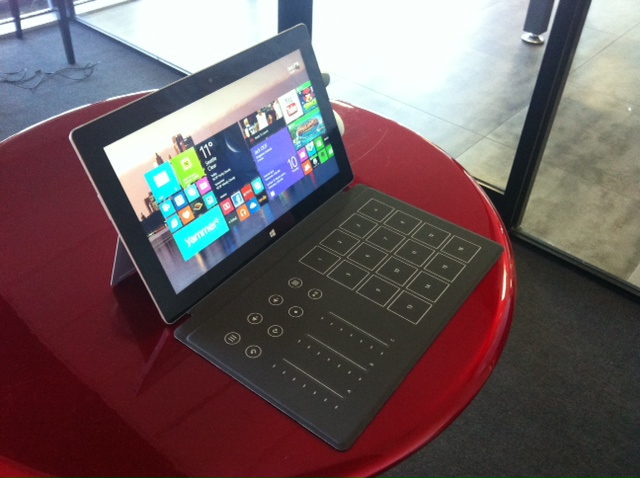
    Equally interesting with the Surface, is Microsoft’s devices play with the range of Surface covers that the company is informally calling ‘blades’ – an unfortunate choice of name which will confuse conversations with many IT managers.

    Blade covers for Microsoft surface tablets
    Blade covers for Microsoft surface tablets

    These covers dispense with the usual keyboard electronic layout with an underlying layout featuring a 1024 sensor pad that give the covers more potential than just being keyboards.

    As part of the Microsoft marketing push to show this aspect off, the company has released a blade cover with a sound mixer layout and seeded the devices with various DJs under the banner of the Remix Project.

    While the blade covers have applications as sound mixers and keyboards, the number and  flexible nature of the 1080 built in sensors will see their application in other areas.

    The way businesses have used tablet computers has taken manufacturers by surprise as  Google’s Eric Schmidt told last week’s Gartner conference and Microsoft’s devices open up more industrial applications.

    Already the medical industry is applying Windows based tablets as Microsoft are proud to show off.

    Should third party developers be able to develop their own skins for Surface blade covers then Microsoft may have a killer industrial device that plugs into existing Windows based networks.

    Added to Microsoft’s opportunity is the possibility of plugging Surface devices into the internet of everything giving business users direct access to the machines in their organisation.

    Should Microsoft be able to capture a slice of these markets, it may well be a pointer for the company’s future in a post-PC world.

    Regardless of how well Microsoft do with the internet of everything, the latest range of Surface tablets and accessories shows how the company is executing its strategy of becoming a devices and services company.

    Similar posts:

    • No Related Posts
  • Building a business culture

    Building a business culture

    “How can you create a great organisation of people and be that mean a person?” Asks funds manager Julian Robertson about Apple founder Steve Jobs.

    Robertson, who based the decision to sell his Apple shares on the details in Walter Isaacson’s biography of Steve Jobs, was largely ridiculed for his decision but the veteran investor has a very good point.

    A company’s culture develops from the top – if the senior management are paranoid, rogues or thieves then those attributes will eventually percolate through the company.

    The Tyco Lesson

    During the 1990s I had the unfortunate experience of working for Tyco International at the time it was led by Dennis Kozlowski, a man listed by Time Magazine as one of the ten most crooked CEOs of all time, senior management’s attitude of treating the company’s funds as their own piggy bank was copied throughout the organisation.

    Tyco suffered badly during that period and subsequent management has had to work hard to undo the influence of Kozlowski and his cronies’ poor leadership.

    One organisation I’ve watched closely over the last few years has been Australia’s NBNCo, the state owned company set up to build the nation’s National Broadband Network.

    In under four years of operation the company has developed a dysfunctional management culture that saw the project miss its targets by over 70%.

    For the NBN, a hands off attitude by senior management allowed bureaucratic silos to develop in a relatively small and young organisation. Those silos then started perpetuating bad habits as managers hired their friends and ignored good management processes. A lack of process and management accountability have been the main reasons the company has failed to meet its targets.

    Apple’s challenge

    In Apple’s case, Jobs created a culture of fear and secrecy with the company going as far as creating its own secret police designed to intimidate staff. The entire company was beholden to, and evolved around, one man’s vision, ego and quirks.

    While Jobs was ahead of the game, all was good for Apple shareholders but the risk was always that Jobs would make a major mistake or leave the company. It turned out to be the latter when Jobs passed away.

    As with any company built in the image of its founder, Apple now struggles to adapting to life without Steve Jobs and his successors have to reinvent the company’s culture around a more collegiate management structure than an often not-so-benign dictatorship.

    Microsoft are facing a similar transition as Steve Ballmer leaves the company. Like Apple, Microsoft is an immensely profitable facing a changing market at the very time they are transitioning to a new generation of leaders.

    Leaders such as Steve Cook at Apple and Ballmer’s successors at Microsoft have a massive task in changing their company’s culture as they try to undo a generation of management habits and this is why Robertson’s reasoning about selling his stake makes sense.

    Culture matters in an organisation. While a positive culture doesn’t guarantee success, it does make it more likely a company will survive its founders.

    Similar posts:

  • Does Bill Gates leaving Microsoft mark the end of the PC era?

    Does Bill Gates leaving Microsoft mark the end of the PC era?

    After Steve Ballmer’s announced retirement from Microsoft it was clear that the changing of guard was going to happen at Microsoft as Bill Gate’s last trusted lieutenant left a management position.

    Now Reuters reports that some of Microsoft’s shareholders are lobbying for Gates himself to leave the board.

    If that happens it would probably be the formal end of the PC era as Gates is the last of the pioneers of the desktop computer industry to still have a major role following Ballmer’s retirement and Steve Jobs’ passing.

    Similar posts:

    • No Related Posts
  • Who will win the race for wearable computers?

    Who will win the race for wearable computers?

    The news that wearable technology company Recon has secured funding from Intel and shipped fifty thousand devices reminds us that it’s not just Google who are in the market developing glasses that work as computers.

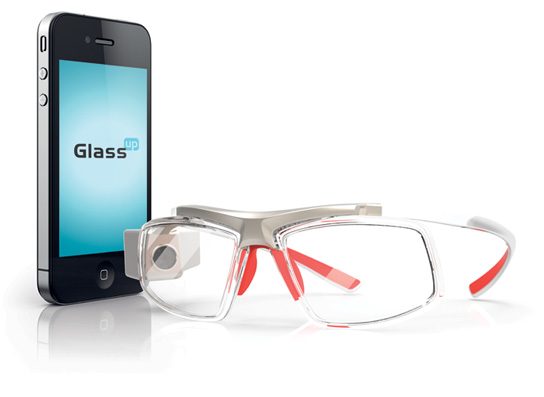
    Other companies competing with Google include Glass Up, an Italian startup that’s teamed with Australian company Nubis to provide a wearable device that’s controlled by a smart phone app.

    It’s tempting to think that the battle for wearable technology will be won by Google as they are biggest and best funded company, but history shows us size and incumbency don’t always guarantee success.

    Google themselves have failed many times when they’ve tried to enter new markets, regardless of the money and resources they’ve thrown at the market.

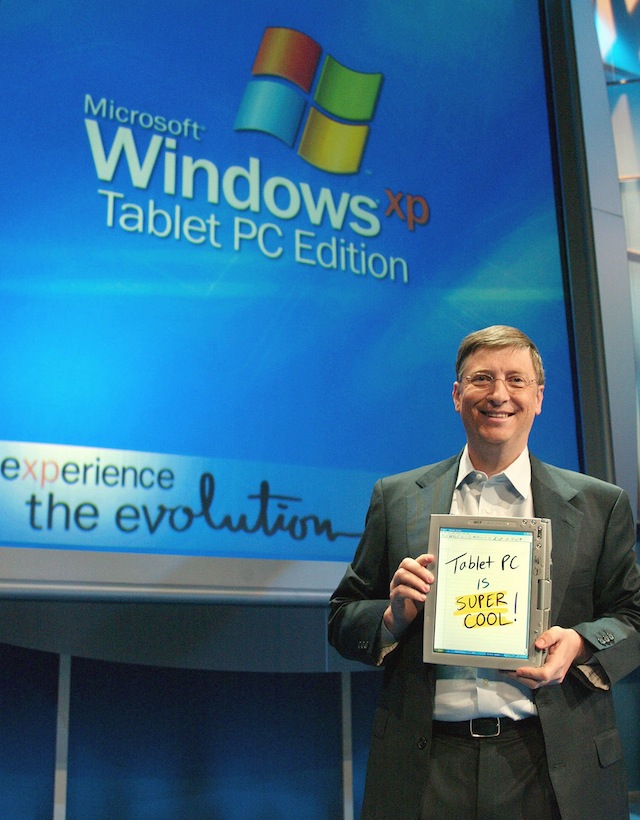
    The best recent example of this is Microsoft’s forays into smartphones and tablet computers during the Windows XP period – A decade ago it was obvious to everyone that Windows based phones and tablets would dominate those markets.

    As it turned out the clunky and awkward to use devices scared customers away and it was Apple and Steve Jobs who ended up being the dominant players.

    So it may well be that a company we’ve written off – maybe Microsoft – who might end up being the leader in wearable computers, although it’s more likely an upstart like Recon or Glass Up will eventually be the leader.

    It may even be that glasses don’t work out as wearable computers at all.

    Similar posts:

    • No Related Posts
  • Microsoft’s version three problem

    Microsoft’s version three problem

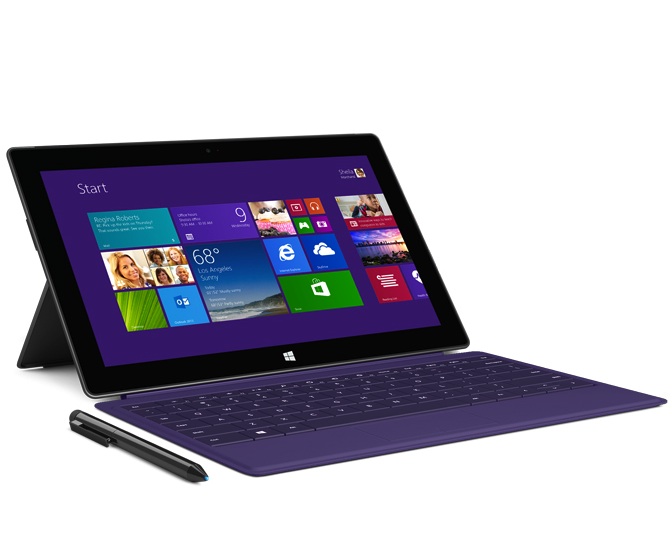
    Microsoft have released their second generation Surface tablet computers following the less than successful first versions that resulted in the company booking a $900 million write off.

    As always, the new devices boast improved battery life, better screens and more storage, all of which are important when competing against Apple’s iPad and the plethora of Android devices.

    For Microsoft, the stakes are high as the company tries to position itself as devices and services business in the post-PC world where tablet computers are one of the key markets.

    Unfortunately the PC industry’s legacy haunts Microsoft as the market believes it takes the company three attempts to get a product right.

    Microsoft Windows is the best example of this, versions one and two of the graphic operating system* were total and utter dogs. It was only with the arrival of Windows 3.0 that PC users started to migrate from DOS.

    This failure to execute lulled Microsoft’s competitors into a false sense of security, WordPerfect in particular completely flubbed the market’s move to Windows and never recovered which was a large reason for Microsoft Office’s eventual domination of the word processor and productivity suite sector.

    Strangely with Windows another pattern developed once Microsoft came to dominate the market, every second version was a dog – Window 98 was followed by the awful Windows ME which in turn was replaced by probably the most successful OS of all in Windows XP.

    XP, released at the high point of Microsoft’s powers, was followed by the disastrous Vista which was redeemed by Windows 7 that was in turn soiled by the now soon to be abandoned Windows 8.

    The problem for Microsoft is the PC industry model is in decline and the company is no longer a scrappy disrupter but instead a wounded giant wondering how to react to a rapidly changing market.

    In the face of Apple and Google’s domination of the tablet and smartphone markets, taking three cracks to get their tablet right is going to be an expensive and difficult path for Microsoft.

    Steve Ballmer’s place in business history might just depend on this version of the Surface, if it does take three attempts to get Microsoft’s tablet product right then his legacy may not be well judged.

    *Purists will argue that early versions of Windows weren’t operating systems as they sat on top of DOS which did the heavy lifting. They are right.

    Similar posts:

    • No Related Posts