Tag: microsoft

  • Microsoft imagines its future markets

    Microsoft imagines its future markets

    Currently Microsoft are running their Imagine Cup, the company’s annual student developer competition at their Seattle head office.

    A regular fixture for the last 14 years, the Imagine Cup is Microsoft’s opportunity to show how emerging applications can be based upon their technologies. It tells us as much about the company’s successes as it’s missed opportunities.

    With Artificial Intelligence and machine learning being the upcoming battlegrounds for the software giants, it’s not surprising many of this year’s competitors are focused on applying those technologies.

    A good example of this is the Ani platform of Australia’s entrant, Black.ai, which analyses spatial movement and biometric information. In many ways this adds intelligence to smarthomes and has immediate applications in fields like aged patient care.

    Black.ai’s timing is very good as patient monitoring has become an issue in their home country and veteran tech investor Mark Suster predicts tracking the flow of people is going to be a huge market.

    The patient care angle of Black.ai’s  is particularly pertinent to the Imagine Cup competition as health services have been a focus in the past. Two years ago the winners were another Australian medical services platform, Eyenaemia that used a smartphone app to detect anemia.

    While the Imagine Cup is a good showcase for Microsoft, the competition also shows how the market has evolved around the company. Most of the contests have a smartphone component and the cloud features heavily in all the applications, both are fields where Microsoft has either struggled or is playing catch up.

    The focus on cognitive computing and artificial intelligence in this year’s event shows the company is keen to show off its prowess in the emerging battle with Amazon, Google, Apple and no doubt other companies. Microsoft will be hoping they won’t be left behind in the next wave of computing.

    Similar posts:

    • No Related Posts
  • The smell of social media defeat

    The smell of social media defeat

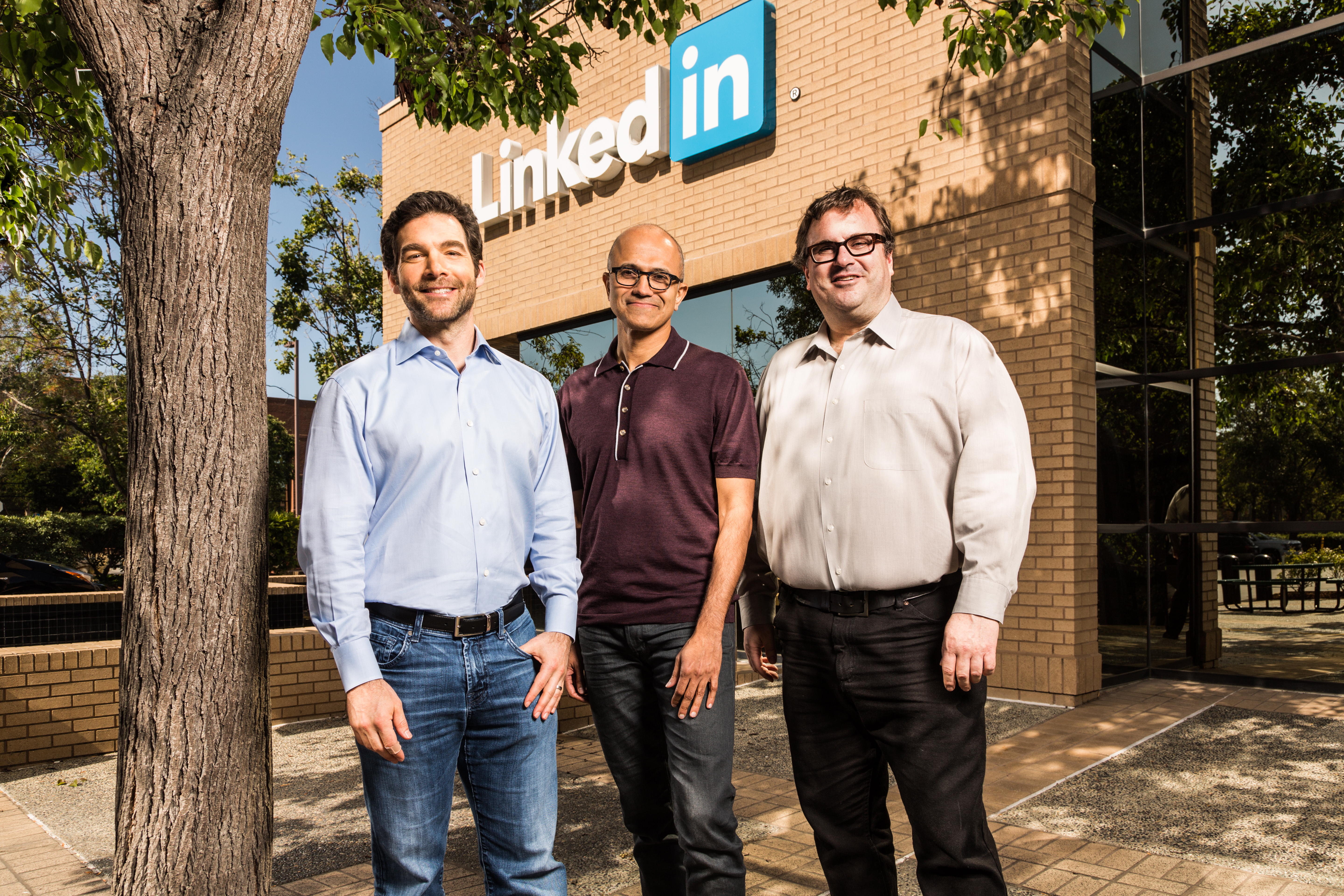
    “There’s a shared sense of alignment,” says LinkedIn CEO Jeff Weiner during his video with Microsoft’s Satya Nadella to announce Microsoft’s $26 billion dollar acquisition of LinkedIn.

    Weiner has been trying to reinvent LinkedIn’s business model for three years and Microsoft’s acquisition is an admission of defeat with the company’s market capitalisation half of what it was a year ago and profits proving hard to find.

    The fact revenues were slowing in the face of anemic returns is probably the reason why LinkedIn’s board was happy to accept Microsoft’s deal that’s 46% more than the social media site’s $17.5bn market capitalisation on Friday.

    LinkedIn’s capitulation shows what a graveyard social media sites have been for investors. With the exception of Facebook, almost all have failed to deliver the profits or promise hoped for by those making big bets on the platforms.

    Both LinkedIn’s and Twitter’s managements have been distracted by the search for revenue streams to justify their huge stockmarket valuations which in turn has alienated core users. LinkedIn’s surrender means Twitter’s acquisition is only a matter of time.

    Microsoft now has to show how it is going to derive twenty-six billion dollars worth of value out of LinkedIn. The company’s track record of acquisitions is execrable as we’ve seen with Nokia, Yammer and Skype and there’s little to indicate this deal will fare any better.

    Commentary that LinkedIn as a ‘cloud company’ will help Microsoft Azure against an already rampant AWS is downright silly, Nadella himself in a Bloomberg interview with LinkedIn’s Weiner was at pains to point out the networking service’s fit with the Dynamics product.

    Plugging LinkedIn’s ‘social graph’ with Microsoft Dynamics might give the Nadella’s team better tools to compete with Salesforce in the CRM market, it seems a high price to pay and almost justifies Salesforce’s Marc Benioff rejecting Microsoft’s overtures last year.

    LinkedIn’s capitulation marks the end of social media’s growth phase. Now, as Facebook becomes the platform that rules all, the others have to find their niches in a market dominated by one services. For Twitter the race is now on to find a buyer.

    Similar posts:

  • Getting academics onto the cloud

    Getting academics onto the cloud

    Offering free products to students and academics has long been a tactic used by software companies to build their market presence. The current fight for dominance in the cloud is seeing the same tactics being used.

    Last week I had the opportunity to talk to Amazon Web Services’ Glenn Gore about his company’s academic support program.

    Part of that conversation ended up in a story for The Australian about how researchers are now using cloud computing services and it’s worthwhile looking at how AWS are using this program to cement their products’ market positions.

    “We work with the majority of universities across Australia,” Gore said. “It’s part of an international focus around how we support the education sector in general.”

    In some respects AWS’s behaviour isn’t new, for years Microsoft, Autodesk and Adobe have had programs offering free or deeply discounted products for academic or student use. The success of those schemes in becoming defacto industry standards is no small reason why these companies have dominated many sectors.

    Microsoft themselves have the similar Bizspark program for tech startups and it’s easy to see how that initiative is helping push Azure’s adoption into a field that has been dominated by AWS.

    One of the drawbacks though with cloud computing services is the risk of ‘sticker shock’ where customers end up with big bills. One of the universities I spoke to in researching the story recounted how 0ne of their faculties was presented with a huge AWS invoice because their engineers didn’t provision the services correctly.

    This is where AWS’s team steps in with advice for researchers, “in the case of Koala Genome Project use the on-demand model, the standing pricing model for the cloud,” recounts Gore in pointing out the nature of their work could use spot-pricing to take advantage of cheaper prices in off-peak times. “As a result of making that one change they were able to do eighty percent more research.”

    Getting more research time is always attractive for researchers and Dr Rebecca Johnson who leads the Australian Museum’s part of the koala consortium was particularly effusive about the support from AWS staff,

    “What we have been able to access via this partnership with AWS is compute time and compute capacity that we just would not have had access too,” Dr Johnson said in a media release. “It would have cost us thousands and thousands of dollars to create and we just would not build such a computer system these days. You would not create your own computer infrastructure as we would only use a fraction of it anyway. So, it is great for us to piggy back off these already built systems.”

    Being a relatively small institution, the Australian Museum is a good example of how cloud computing can work for those without the resources of big universities or corporations in the same way small businesses and startups can access resources formerly only available to enterprises.

    Amazon’s programs though show the Microsoft model of getting students and startups onto their systems early pays dividends. It’s good for academic institutions but one wonders whether it’s also another form of vendor lock in.

    Similar posts:

  • Cloud computing’s elusive gold

    Cloud computing’s elusive gold

    Alphabet, aka Google, and Microsoft yesterday announced their quarterly results and despite both making healthy profits the numbers show the online world is a tough place to make money.

    Microsoft’s stockholders took a five percent hit to their wallets after the company announced weaker than expected results for the last quarter.

    Notable in the results were the stunning sales growth of its cloud services with Azure boasting a 120% year on year on year increase.

    Yet Microsoft’s Intelligent Cloud division which includes Azure saw its profits fall nearly 13%, showing the company’s products may be making inroads against Amazon Web Services but making profits in that market is very tough indeed.

    Similarly Alphabet’s results still show the company is sill totally dependent upon the advertising river of gold for its profits.

    Particularly concerning for Alphabet is its ‘other bets’ division doubled its sales but saw losses increase by 20%. Overall Google’s advertising revenues made up 89% of Alphabet’s total revenues this quarter compared to 90% last year.

    While both companies have very healthy profits – about five billion dollars this quarter for each – Alphabet’s continued dependence on Google advertising and Microsoft’s declining profitability should be a worrying sign for shareholders in both companies.

    Both companies show that despite the apparent riches of the technology sector, making profits is getting tougher. Shareholders of both companies should be watching carefully for any disruption to either business.

    Similar posts:

  • Microsoft and the AI future

    Microsoft and the AI future

    Despite the embarrassment of their foul mouthed racist bot, Microsoft are pressing on with a move into artificial intelligence.

    Ahead of this week’s Launch event in San Francisco, Microsoft’s CEO Satya Nadella laid out his vision for the company’s Artificial Intelligence efforts in describing a range of ‘bots’ that carry out small tasks.

    Bloomberg tagged Nadella’s vision as ‘the spawn of clippy’, referring to the incredibly irritating help assistant Microsoft included with Office 97.

    Tech site The Register parodied Clippy mercilessly in their short lived IT comedy program Salmon Days, as shown in this not safe for work trailer. While The Reg staff were brutal in their language and treatment of Clippy, most Microsoft Office users at the time shared their feelings.

    While Clippy may be making a comeback at Microsoft, albeit in a less irritating form, other companies are moving ahead with AI in the workplace.

    Robot manufacturer Fanuc showed off their self learning machine a few weeks ago which shows just how deeply AI is embedding itself in industry. Already there are many AI apps in software like Facebook’s algorithm and Google’s search functions with the search engine’s engineers acknowledging they aren’t quite sure what the robots are up to.

    For organisations dealing with massive amounts of data, artificial intelligence based programs are going to be essential in dealing with unexpected or fast moving events. Those programs will also affect a lot of occupations we currently think are immune from workplace automation.


    Similar posts:

    • No Related Posts