Tag: microsoft

  • The fight for cloud computing’s sweet spot

    The fight for cloud computing’s sweet spot

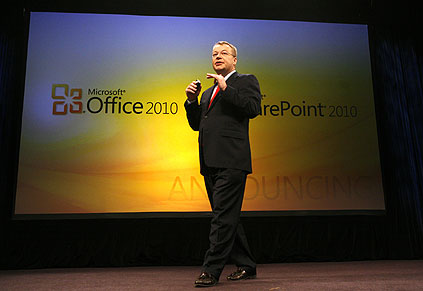
    One of the great market battles of the PC era was the fight between the ‘best of breed’ software designed to do specific jobs well — Lotus 123, WordPerfect, and Harvard Graphics — versus the bundled ‘suites’ led by Microsoft Office.

    Bundled suites of programs offered a common platform and cheaper price over buying products individually.

    In the case of Microsoft Office, it also helped that the software giant was aggressive in undercutting the market and leveraging the deals it had made with hardware vendors and system integrators.

    The winner of that battle was Microsoft as it turned out customers preferred the cheaper price points of the bundled packages and the common software platform made it easier to share data across the applications.

    In the cloud computing field that fight is happening again as Zach Nelson, CEO of Netsuite, describes; “I think the next battle is going to be the same battle that happened in the client-server world. Is it the best of breed cloud apps or is it the suite?”

    Nelson believes the suite vision will win out, “the suite is going to win again for exactly the same reasons why the suite won in the client-server world — it’s very hard to synchronise data between applications.”

    Given Netsuite’s business, as its name suggests, is in providing a suite of software it’s no surprising that Nelson believes their way of doing business will prevail. Those providing ‘best of breed’ stand alone cloud applications naturally disagree.

    Chris Ridd, Australian General Manager of accounting service Xero, disagrees with Nelson’s view. “With cloud and open APIs you have the holy grail of interoperability,” Ridd says. “In the 1990s the open systems were too early and didn’t work as well as they do today.”

    Ridd also points out that Xero has over 350 add on services, ” I don’t think any suite can deliver that” he says.

    History is on Nelson’s side but it may be that in this case history doesn’t repeat as the technology has moved along and now stand alone apps are what the market wants.

    Time will tell although its unlikely whichever prevails will have anything like the success and market domination of Microsoft Office during the PC era.

    Similar posts:

    • No Related Posts
  • ABC Nightlife with Tony Delroy October 2014

    ABC Nightlife with Tony Delroy October 2014

    Paul Wallbank joins Tony Delroy on ABC Nightlife across Australia from 10pm Australian Eastern time on Thursday, October 2 to discuss how technology affects your business and life.

    Update: If you missed the program you can listen to the podcast at the ABC site or stream it below.


    For this month’s spot we’re looking at smartcars, smartwatches, the next version of Microsoft Windows and whether the new social media platform Ello can displace Facebook.

    Some of the questions we’ll cover include;

    • What’s happening with connected car technologies?
    • Isn’t all this talk about smart cars another way ?
    • So how far are we off the driverless car?
    • Are our mobile phone choices going to dictate what brand car we buy?
    • How does the smart watch fit into how companies are trying to lock us into their software?
    • A new social media platform called Ello is taking off,  what is it?
    • Do we really need another social media platform?
    • Microsoft have announced Windows 10, aren’t we only up to eight?
    • What’s different in Windows 10?
    • Has Windows 8 been a success?
    • When will Windows 10 be released on the market?


    Join us

    We’d love to hear your views so join the conversation with your on-air questions, ideas or comments; phone in on the night on 1300 800 222 within Australia or +61 2 8333 1000 from outside Australia.

    Tune in on your local ABC radio station from 10pm Eastern Summer time or listen online at www.abc.net.au/nightlife.

    You can SMS Nightlife’s talkback on 19922702, or through twitter to @paulwallbank using the #abcnightlife hashtag or visit the Nightlife Facebook page.

    Similar posts:

    • No Related Posts
  • Could Windows 10 be Microsoft’s last desktop operating system?

    Could Windows 10 be Microsoft’s last desktop operating system?

    On Tuesday Microsoft are expected to announce their new Windows 10 operating system at a media event in San Francisco.

    If the rumours are true, then the new system will be launched almost exactly two years after Windows 8 was released amid hopes that it would stem the PC industry’s decline.

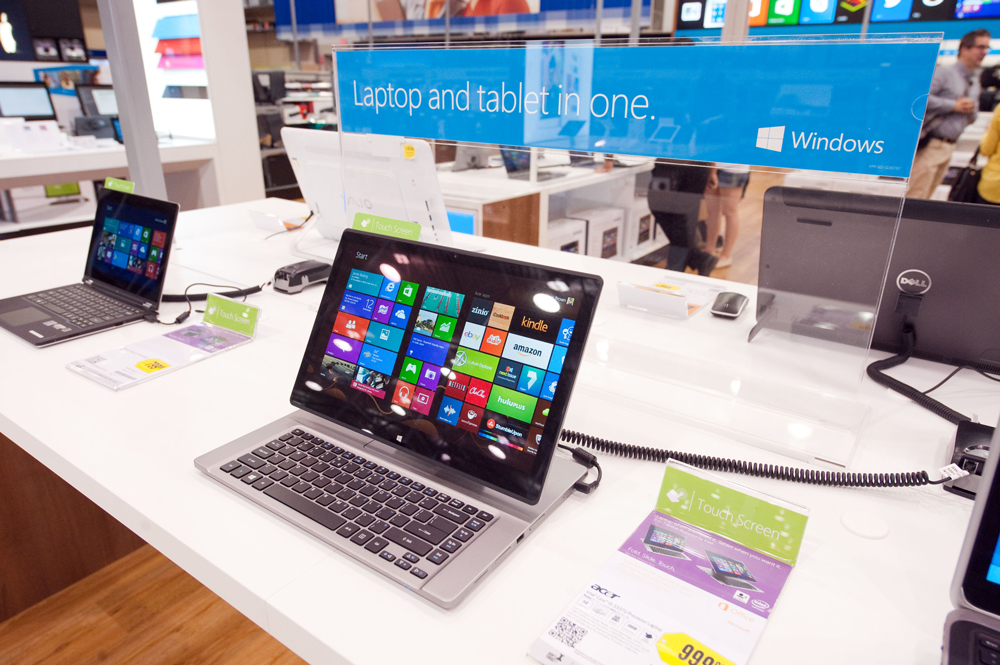
    Windows 8 didn’t deliver with most people being frustrated with the system’s inconsistent interface that tried to be unified desktop, laptop and tablet operating system which managed to be unsatisfactory on all of them.

    As a consequence, users avoided Windows 8 like the plague with industry analysts Netmarketshare claiming most of Microsoft’s customers are buying systems kitted out with Windows 7 or just sticking with decade old Windows XP systems.

    Courtesy of Netmarketshare http://www.netmarketshare.com
    Courtesy of Netmarketshare http://www.netmarketshare.com

    Making matters worse for Microsoft is the decline in personal computer sales in general with IDC estimating global shipments of both portable and desktop system will drop 3.8% in 2014.

    These declines are already well established in the trends being seen in Microsoft’s business with the company’s Windows division showing an accelerating decline in profit margins.

    Microsoft Windows division financial performance
    Microsoft Windows division financial performance ($ million)

    Should that decline continue with Windows 10, it may well be that Microsoft will have to consider the future of product.

    As it is, the market may be deciding for them as users increasingly switch to tablets and smartphones. We may also see a wave of cheap Chinese made laptops running versions of Google Chrome or other Linux based systems also threatening the existing PC sales base.

    Either way, a lot rides on what Microsoft announces in San Francisco this week. It could be the end of an era that defined the mass adoption of computers.

    Similar posts:

    • No Related Posts
  • Lenovo Yoga

    Lenovo Yoga

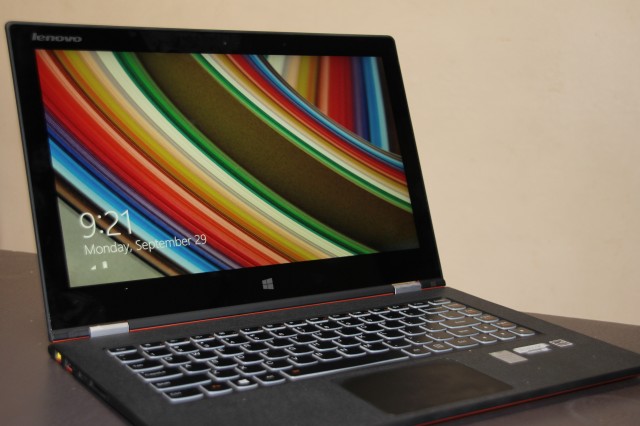
    Can a laptop be a tablet computer? The Lenovo Yoga Pro 2 tries to balance the needs of both in a package designed for home and small business users.

    The laptop computer market is in a difficult place at the moment as both consumers and businesses move to tablets and smartphones so it’s interesting to get hold of the Lenovo Yoga Pro 2 to see how one of the leading portable manufacturers is responding to the changing industry.

    One of the best ways of testing a portable device is to take it on a long trip, so a couple of 14 hour transpacific flights and trips around San Francisco, the Napa Valley and Silicon Valley proved a good workout for the Yoga Pro.

    As a laptop

    From a hardware perspective the Yoga is an impressive device with 8Gb of RAM, 256Gb solid state hard drive and a 1.8GHz i7 chip. The screen is a very nice 13.3″ 3200 x 1800 high-resolution display.

    Rounding out the hardware specs are two USB ports — one 3.0 and the other 2.0 — along with a Micro HDMI output, webcam, inbuilt mic, headphone jack and an SD Card reader. All the basics expected in a mid range ultrabook that weighs in at a respectable 1.4kg.

    lenovo-yoga-2-pro-in-laptop-mode-on-desktop

    In using the Yoga as a laptop, the device works well with the keys being crisp and responsive although the position of the glidepad and the backspace key being alongside the home key caused problems for this clumsy touch typist.

    One of the problems with the larger form of ultrabooks is their usability when travelling economy on a plane; if the passenger in front of you reclines then it becomes difficult to use the device. This isn’t a problem specific to the Lenovo Yoga, but it is a drawback that the industry seems not to have considered in its move to the larger screens.

    In the office

    If you’re not travelling on planes, the weight and form factor works well and makes the Yoga 2 Pro a nice device to use while on the move. In an office environment it’s a standard mid to upper range laptop with good fast specifications.

    For battery life, Lenovo claim “up to nine hours” for the Yoga Pro but in practice standard office use sees about five hours worth of juice with a full recharge taking under an hour. It’s lucky most transpacific flights now have power sockets.

    Flipping to a tablet

    While 1.4kg is good for a laptop it’s lousy for a tablet computer with the Yoga Pro 2 weighing in a kilo heavier than the iPad and 500g (one pound) heavier than the Microsoft Surface Pro. This makes it awkward to use over extended periods and the keyboard doesn’t feel right as the backing to a tablet.

    lenovo-yoga-2-pro-in-tablet-mode

    The Yoga’s weight problem illustrates the core conflict for a device that wants to be a laptop and a tablet as the different demands for each type of device make if difficult for designers to meet both markets.

    In the Yoga 2 Pro’s design, it’s clear the engineers had to make a choice between compromising either on the tablet or laptop functionality. As it turns out the designers decided to go with releasing a good Ultrabook laptop with compromised tablet functions — this was the correct choice for the Yoga.

    Windows 8 limitations

    Probably the greatest problem though for the Yoga Pro 2 in tablet mode lies in software with Windows 8 being far from adequate as a tablet operating system with a confused interface, an inconsistent user experience and unpredictable responses to touch screen commands.

    For companies like Lenovo who are persisting with Windows as their operating system, it’s becoming critical that they start demanding better design from Microsoft before they find their market being overwhelmed by Android and iOS devices offering a superior user interface.

    lenovo-yoga-2-pro-closed-mode-on-desktop

    While the Windows 8 irritations aren’t a deal breaker for the Yoga, it does limit the device as a tablet computer and its something anyone considering it instead of an iPad or Android tablet should keep in mind.

    A good general duty small business laptop

    Overall, the Lenovo Yoga Pro 2 is good Windows Ultrabook for home and small business use offering the benefits of an ultrabook with the flexibility of being able to flip into a tablet for specific uses.

    The device isn’t cheap, but the range of features and good hardware specs make it a decent purchase for small businesses, sole proprietors or workers operating from home who need a versatile Windows computer.

    Similar posts:

    • No Related Posts
  • iPhone ME — Apple risks becoming the new Microsoft

    iPhone ME — Apple risks becoming the new Microsoft

    It’s been a tough week for Apple, after the spectacular launch of the iPhone 6 the company has had two humiliating and worrying setbacks that indicate standards may be slipping at the once untouchable giant.

    The iPhone 6 Plus should have been a triumph, and for a while it was, but the news the phones bend and distort has tarnished the product.

    Compounding the bendable phone problem are the claims users are being charged to replace their damaged handsets.

    On its own this problem might have been manageable like the iPhone4’s antenna problems in 2010, however today’s news that the latest iOS8 has had to be withdrawn after user complaints indicates a sloppiness has crept into the company.

    Both problems, or all three problems if it turns out the stories of Genius Bars charging to replace damaged phones, show Apple isn’t paying attention to detail to the degree they’ve become known for.

    The botched iOS8.0.1 rollout is sloppy work while the bendable phone is very much an uncharacteristic lapse in design.

    For a premium brand with a large dose of arrogance, shipping defective products is both an embarrassment and damages the company’s name.

    This inattention to detail is horribly reminiscent of Microsoft’s horror days at the turn of the Century where the company repeatedly rushed incomplete products to market — Windows ME being the most notorious example.

    So maybe we are seeing Apple become the new Microsoft and the iPhone 6 Plus as the Windows ME of our time.

    That doesn’t mean we’ll see the end of Apple, Microsoft is still a huge corporation, but it may be the tech industry’s most iconic business is beginning to lose its edge.

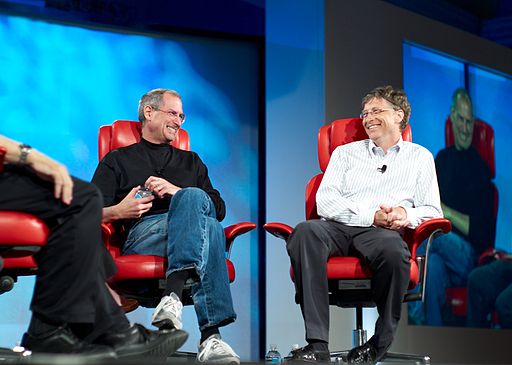
    Image of Steve Jobs and Bill Gates via Wikipedia

    Similar posts:

    • No Related Posts