Tag: mining

  • Mining for jobs in an automated future

    Mining for jobs in an automated future

    While politicians clamour to ‘bring jobs home’, automation is increasingly taking those jobs away with the mining industry being the best example.

    In 2015, McKinsey looked at the effects of automation in various US industries and found the production component of mining could lose over 80% of its jobs in coming years.

    In a piece for Diginomica this week, I looked at a case study featuring Western Australia’s Fortescue Metal Group (FMG) from the recent AWS Summit in Sydney.

    Slashing costs

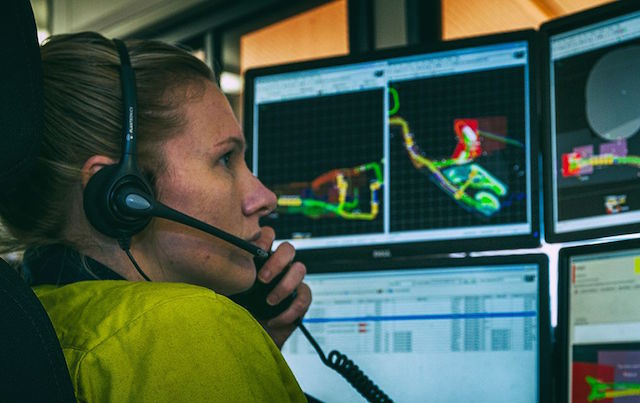
    When Fortescue planned their Solomon groups of iron ore mines in the Pilbara region of North-Western Australia in 2010, they estimated 75 manned trucks would be needed. As it turned out they only needed 49 robotic vehicles.

    The savings, both in capital expenditure and operational costs was substantial and the entire operation saw its costs nearly halved.

    It’s not just trucks becoming autonomous, functions like drilling and explosives laying are also being automated reducing costs and risks even further.

    Dashed hopes

    So mining communities like those in the United States hoping Donald Trump will bring back prosperity or Australians who believe a billion dollar subsidy to an Indian coal mining company will guarantee jobs are doomed to disappointment.

    A modern mine is likely to employ more workers in an office thousands of miles away than on the site itself. Where once the surrounding region would get hundreds of jobs from a large mine, today it’s only going to be a handful.

    It isn’t just the mine workers themselves though, McKinsey’s study also forecast the mining industry’s administrative workforce could see 90% of jobs going while senior management had the potential of being 99% automated.

    Beyond blue collar roles

    That this wave of automation will affect ‘white collar’ jobs as much as trades or unskilled workers isn’t new – this piece in 2015 for The Australian described how many of the ‘knowledge economy’ jobs will soon be done by robots or artificial intelligence.

    Mining is a good indicator of where technology and employment is heading. We, and our political leaders, are going to have to think carefully where the future jobs are coming from as they aren’t going to be found in resurrecting old industries.

    Similar posts:

  • Old king coal loses his merry men

    Old king coal loses his merry men

    The industrial revolution’s most important energy resource was coal, even today it generates most of the world’s electric power.

    However, the last half century hasn’t been good for those communities and workers whose incomes are dependent upon coal as the industry has moved away from labour intensive ways of digging the stuff up, alternative sources of energy have developed and the consequences of dumping billions of tons of carbon into the planet’s atmosphere come to be understood.

    The US Energy Information Administration’s annual report on the nation’s coal industry makes grim reading, with both production and employment levels falling.

    Coal industry jobs were one of the touchstone issues in the recent US Presidential elections. As The Guardian reported, former staunch Democrats in the mining regions – some of America’s poorest counties – supported Donald Trump on the strength of the promise to reinvigorate the sector.

    Sadly, as the EAI reports, those coal jobs are never coming back even if the world starts using more. Since World War II, the productivity of US coal mines has increased from .72 tons per worker to 5.22 in 2011.

    Despite a recent slight drop in US productivity at the end of last decade – apparently due to spoil recovery during a period of booming prices – the trend is not good. As Australian academics warn, increased mine automation means jobs in that industry are going to become increasingly scarce.

    Like Donald Trump and the distressed US mining regions, Australian politicians believe that coal mining will provide the jobs of the future. They are wrong.

    Those communities and politicians hoping for jobs in the 21st Century may well be better off looking to the future rather than the past. Nineteenth Century thinking is not going to provide answers.

    Similar posts:

  • A consumerist utopia – where does Australia go in the 21st Century?

    A consumerist utopia – where does Australia go in the 21st Century?

    Today has been a big day for Australian navel-gazing with a range of reports released on the country’s prospects on in the Twenty-First Century.

    One of the reports was the Joined Up Innovation survey commissioned by Microsoft and written by PwC, I wrote a story for Business Spectator on the results.

    While the Microsoft report focused on the small business sector, Startup Aus released their Crossroads report that warns Australia is falling behind the rest of the world. Smart Company’s Rose Powell has a more detailed summary of the report.

    Alan Noble, head of Google’s Australian Engineering operations warns, “we still lag behind many other nations, with one of the lowest rates of startup formation in the world, and one of the lowest rates of venture capital investment.”

    “If we fail to address this, we risk forfeiting over $100 billion in economic benefits from emerging tech companies, and an irreversible decline in Australia’s competitiveness.”

    Looking in from the outside

    Particularly notable from the two surveys is that the discussion about Australia’s tech competitiveness is the debate is being led by two local employees of US Multinationals.

    For a local perspective, the Macrobusiness blog joins the day’s chorus with a long examination of the risks to Australia’s living standards by being too far down the global value chain.

    In the Business Spectator piece, I compared some of PwC’s recommendations with the efforts of the UK and Singapore to rebuild their manufacturing industries.

    Australia’s collective decision

    For Australia, it’s probably way too late to worry about most of the manufacturing industry as in the 1980s the country made a collective – and almost unanimous – decision to shift the economy to being resources and high value added services.

    The high value added services haven’t eventuated; mainly because the internet has shifted the global dynamics towards lower cost centres and partly because Australian business leaders decided it was easier to exploit their domestic market power rather than compete globally.

    Mining proved to be a better bet, more by the accident of China’s turn of the century boom rather than any deliberate policy, however the industry employs less than ten percent of the workforce and the vast majority of Australians living in the South East corner of the country have little contact with the resources industry.

    A consumerist utopia

    For most Australians, employment and prosperity relies upon a growing population driving city GDP growth with domestic wealth supported by buoyant property prices. Australia truly is the consumerist utopia.

    As a result of a booming, seemingly unstoppable, housing market and an expending resources sector, Australia’s exchange rate has soared while the nation’s productivity has slumped.

    Making matters worse is that outside of mining and a few agricultural markets most of Australia’s industry is grossly expensive by global standards and suffering from chronic under-investment.

    An unsustainable economic model

    That model is not sustainable, it will take one shock to Australia’s housing market to see the good burghers of Brisbane, Sydney and Melbourne impoverished so the nation’s continued prosperity requires something to drive the economy beyond low interest rates and Chinese commodity purchases.

    Whether Australia’s business and political leadership are capable of hearing and reacting to these reports remains to be seen, but they will have no excuse to say they weren’t warned.

    Similar posts:

  • Australia in the Asian Century – Chapter Three: Australia in Asia

    Australia in the Asian Century – Chapter Three: Australia in Asia

    This post is one of the series of articles on the Australia in the Asian Century report. An initial overview of the report is at Australian Hubris in the Asian Century.

    The third Chapter of the Australia in the Asian Century report, “Australia in Asia” attempts to define the role the country currently plays in the region. In some ways this is the most constructive part of the paper in that it describes the lost opportunities of the last 25 years.

    Much of the early part of the chapter traces the development of Australia’s engagement with Asia after World War II; Chifley’s post war efforts with the United Nations, Menzies’ engagement with Japan, Whitlam’s going to China, Fraser’s opening to Vietnamese immigration and Hawke’s work on building the APEC agreement are all noted.

    Again are the major wars that also formed Australia’s current position in East Asia – World War II, the Malayan Emergency, the Korean and Vietnamese wars – are barely mentioned. This trivialises some of the major influences in today’s complex tapestry of relationships

    Of Australia’s closest Asian neighbour, the fall of Sukarno gets a brief nod but Suharto’s removal, the rise of Indonesian democracy and East Timor are all removed from the narrative. There is also no mention of other internal dislocations like the Cultural Revolution or the Indian Partition, all which still have echos today.

    In the introduction the Colombo Plan gets a mention and it’s worth reflecting upon its effects.

    When I worked in Bangkok in the early 1990s there were a number of business leaders who had been educated in Australia under Colombo Plan scholarships.

    That investment by Australia paid dividends through the 1980s and 90s as many of those scholarship students were ardent supporters of Australian businesses and government.

    One wonders how today’s students who’ve been treated as milk cows by Australian governments and “seats on bums” to education institutions will feel about the country when they enter business and political leadership positions over the next decade?

    The examples of Australian business engagement in Asia are interesting – Blundstone’s is a straight out manufacturing outsourcing story which doesn’t really describe anything not being done by thousands of other businesses while Tangalooma Island Resort is a light of hope in the distressed Australian tourism industry.

    A notable omission is how digital media, apps developers and service businesses are faring in Asia. There are many good case studies in those sectors but the writers seem to be, once again, fixated on the trade patterns of the 1980s and 90s rather than success stories in new fields and emerging technologies.

    Generally though the description of the Australian economy is again more of the same; a combination of self congratulations on having a government AAA credit rating, hubris over avoiding a GFC induced recession and stating how the services sector has risen to replace the manufacturing that’s been outsourced by companies like Blundstone.

    Overall Chapter Three of the Australia in the Asian Century report illustrates the opportunities missed in the last 25 years. Had this report been written twenty years ago it could have forecast a booming relationship in the services and advanced manufacturing sectors. It almost certainly would have included an observation that the days of the Australian economy depending upon minerals exports is over.

    What a difference a couple of decades make.

    The engagement of Australia with Asia concludes with a look at the changes to the nation’s immigration intakes and demographic composition. This point is, quite rightly, identified as an area of opportunity.

    Having Thai restaurants in every suburb and Indian doctors in most country town isn’t really taking advantage of the opportunities presented by having a diverse population and workforce. Chapter Four attempts to look at how these factors, and others, can help Australia’s engagement with the Asian economies.

    Similar posts: