
Tag: New Zealand

  • Wandering around Wellington

    Wandering around Wellington

    It bills itself as ‘the coolest little capital in the world’ however something is going on in Wellington, New Zealand’s capital city, as its technology sector takes off.

    Last week I was in Wellington, partly to attend the Open Source, Open Society conference and also to have a look at how the city is doing so well as one of the leading startup cities.

    While I’ll have a number of posts about the city, startup scene and conference over the next couple of weeks, it’s worthwhile noting some basic impressions that came from the visit.

    The size of the city, Wellington is a small town with a population of 200,000, brings both advantages and negatives for the business and startup communities.

    Small is sweet

    One of the advantages of being so small is the business community is relatively accessible, a number of entrepreneurs told me how easy it is for them to find the specialists they need given there’s usually two degrees or less separation between everyone.

    Normally having a small business community means it gets insular, particularly in a capital city where the business of government can create a bubble effect. What’s notable about Wellington is most of the businesses are looking outward towards the US, Australia and East Asia.

    The city’s intimate business environment also improves trust within the community as one Aussie expat told me, “if you rip off anyone in this town pretty well everyone knows about it by the end of the weekend. It keeps everyone honest.”

    Being small, the city makes it easy to walk around which compounds the business networking opportunities. A businesswoman, who is also a lifelong Wellingtonian, observed how she allows an extra 15 minutes to walk anywhere as she finds herself stopping for conversations.

    Three dominant businesses

    Having three successful businesses in the city – TradeMe, Xero and Weta – has both its upsides and disadvantages with the bigger players tending to dominate the employment market and funding opportunities.

    Of the three businesses, TradeMe is the most domestically focused while Xero is growing in the tech sector and Weta is the most diverse with its range of special effects and movie production services.

    With Weta, the business is exposed to the vagaries of the global film industry as Statistic New Zealand survey of movie production shows.

    The film industry is one of Wellington’s important employers with the sector supporting around two thousand businesses in the city, although I didn’t get time to explore how much of an overlap there is between the tech and film industries.

    TradeMe is largely a domestic focused business that provides a steady work and skills base for the local workforce. While it’s the least internationally exposed business of the three, it’s probably also the most consistent.

    Xero, like Weta, is a globally expanding business and its success is attracting investors and expats from North America and Australia. While its the smallest of the three it’s probably the business that has done the most raise Wellington’s profile in the tech industry.

    Community spaces

    What’s particularly notable are the number of coworking spaces in Wellington ranging from the straightforward Bizdojo startup space and Creative HQ through to the quirky Enspiral coworking space.

    The availability of shared spaces makes the city attractive to startups and adds to the vibrancy of the local tech community which links into hipster pursuits such as craft beer.

    Communities like Enspiral also add another dimension to the local startup and creative industries environment by connecting entrepreneurs with their peers and service providers.

    Partnerships with government

    One aspect I didn’t get to explore while in Wellington was the relationship between the city’s business community and educational institutions, particularly Victoria University.

    Similarly I didn’t get the opportunity to discover how much of a role local and national governments have had in the development of Wellington’s tech scene. It seems to be relatively hands off although some government agencies have supported Weta with co-investment funds.

    What I did meet though were plenty of immigrants; from Croatia, Denmark, Holland, the US and, most of all, Australia.

    Talking to some of the US and Australian expats it was clear that lifestyle combined with opportunity with lifestyle, as one Aussie emigre told me “I couldn’t get the water views, access to the city and be able to walk to work back home like I can here.”

    While these are superficial thoughts that I’ll expand on over the next week as I decipher notes and listen to interviews, there’s no doubt that Wellington is carving a position as one of the global centres of the new economy. How big it becomes will depend on how many other businesses grow to the size of Xero or Weta.
    Similar posts:

  • Beautiful software and changing the world

    Beautiful software and changing the world

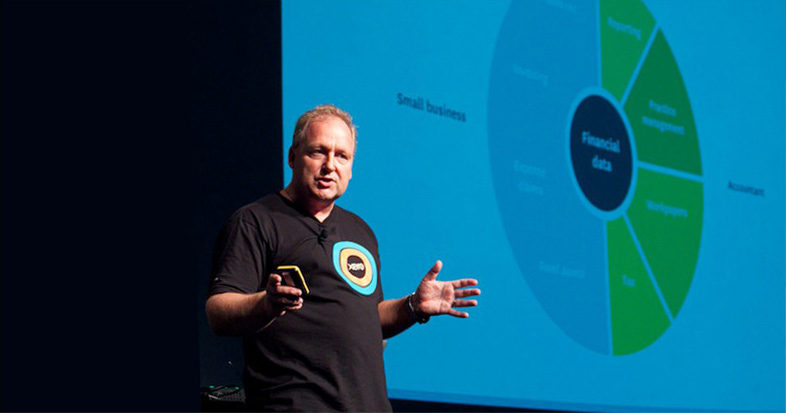
    Can cloud computing change the business world? Xero’s founder and CEO Rod Drury believes so and he has a grand vision for the future of business.

    Interviewing Xero CEO Rod Drury at the company’s Australian roadshow in Sydney last week, it’s hard not to be impressed by his pride in the company he founded and the vision for how cloud computing will change business.

    “It was only about three or four years ago we started thinking we’d have a trade show with multiple tracks and great guest speakers.” Drury said.

    Xero was celebrating its 200,000 customer at the conference and Drury sees the business growing further, “we want to get to a million customers as soon as we can.”

    “We’ve been doubling every year and we think that’s going to keep going. Looking at the numbers, we’re only at four percent market share.”

    Markets for Xero

    In Australia, that market is the 1.2 million small business the company believes needs accounting software. But it’s not just down under that Drury is looking at for growth.

    “We’re operating in four main markets at the moment. We have 90 staff in Australia and that’s our main market.” Drury says, “the UK is doing really well at the moment and we’ve had a team for the last twelve months in the US.”

    New Zealand Startup community

    Xero is probably the brightest star in New Zealand’s startup community which, while small, is punching well above its weight internationally, Drury has some views on why such a small business community is doing so well.

    “What’s cool about New Zealand is that it’s nice and small and everyone knows everybody so once a company gets to scale so there’s a nice, healthy ecosystem that lifts everybody up.”

    “The small companies building apps alongside Xero don’t have to build a marketing team or sales team.  If they are clever and partner with us they can access our 200,000 customers and 6,000 accounting partners.

    “It’s also interesting starting from New Zealand because we have the largest banks as customers so are able do some neat things with the next generation of banking, where online banking and accounting are closely tied together.”

    The Generational Change in accountants

    Drury doesn’t see much of a generational divide between those adopting cloud technologies, he finds the new way of doing business is liberating older accountants and business owners as much as it is enabling younger ones.

    “One of the neat things I’ve seen is that a lot of people come up to me who are in their fifties and sixties who say ‘I was thinking about getting out of the industry as I’m bored with accounting but you guys have made it exciting again.”

    On beautiful software

    A marketing tag line of Xero is “beautiful software”, something you don’t expect when talking about accounting technology. Drury sees this more as a philosophy than an advertising slogan.

    “We came up as part of the Apple generation. Beautiful isn’t just about being pixel perfect – it’s all about having great values and having software that delights people. “

    “WE did surveys at the start and people hated doing their books, they actually used the word ‘hate’. Now they love doing Xero.”

    Building a partner ecosystem

    The key to success in the software industry lies in building a developer and partner community. For cloud computing companies that requires having an open Application Programming Interface so other businesses can access data and provide complementary services.

    “When we saw the way the small business market was changing on the cloud, we made sure we had a nice, open API. We said ’lets make it really cheap for people to buy a commodity general ledger but super easy for developers to build these line of business applications,’” said Drury.

    “One of the really neat things we’ve seen is a lot of accountants are now moving over to the product side, so you go to the trade show and you see people we were selling product to with their bookkeeping hat on and now they’re selling software, so that change has been remarkable as well.”

    Building the supply chain

    One of the great opportunities Drury sees is in growing the logistic chain where cloud services become electronic data interchange (EDI) platforms plugging small businesses into larger businesses’ data and procurement systems.

    “Take Coles supermarkets, they have probably have 2,000 very small suppliers who drop off a pallet of jam every six weeks, it’s very expensive for them to deal with all of these companies.” “Now there’s so many small business running in the cloud it’s effectively providing an electronic data interchange.”

    “So we see a lot of interest from large businesses seeing how much they can improve their supply chain by now electronically connecting to small business.”

    Connecting business, customers and governments

    “In this early stages of this transition of accounting moving to the cloud you think it’s just moving from MYOB or QuickBooks to Xero, it’s actually that we’re connecting businesses, we’re connecting the banks” “we’re also seeing a lot more interest from government.”

    Drury cites the New Zealand government’s $1.5 billion revenue department’s IT upgrade as an example where open data and APIs could save taxpayer funds and improve the delivery of services.

    “The impact of the cloud is a whole lot different, it’s not just the next interface for accounting, it’s a fundamental change where everything connects. Big business to small business and business to government as well,” says Drury.

    The aims of Rod Drury and Xero are big and audacious, we’ll see how well both the company and cloud computing can deliver in revolutionising the way businesses, banks, governments and consumers communicate.

    Similar posts: