Tag: payments

  • Africa’s mobile payments shift

    Africa’s mobile payments shift

    One of the greatest profitable accidents of the last twenty years was SMS messaging that delivered telecoms companies huge revenues for a service that cost them almost nothing.

    In Somalia, we may be seeing phone companies leading the way in cashless transactions as the economy moves towards mobile payments on the back of service intended by one of the nation’s leading cellphone providers for a completely different purpose.

    The Hormuud Telecommunication Company set up EVCPlus to deal with account payments but in an unstable and risky economy the service has proved an efficient way to deal with daily transactions

    “It’s not safe to carry cash money here,” said Dhublawe Ibrahim Aden, 25, a hawker who sells shoes and clothes. “If someone has to buy my shoes and bungles [necklaces] then he has to pay me through my cellphone. I don’t accept cash money from clients.”

    Like Kenya’s M-PESA, EVCPlus is showing how slower and more basic connections aren’t a barrier to African economies leading the world in some online services. Sometimes having access to basic services isn’t an impediment.

    Similar posts:

    • No Related Posts
  • How banks will survive the fintech onslaught

    How banks will survive the fintech onslaught

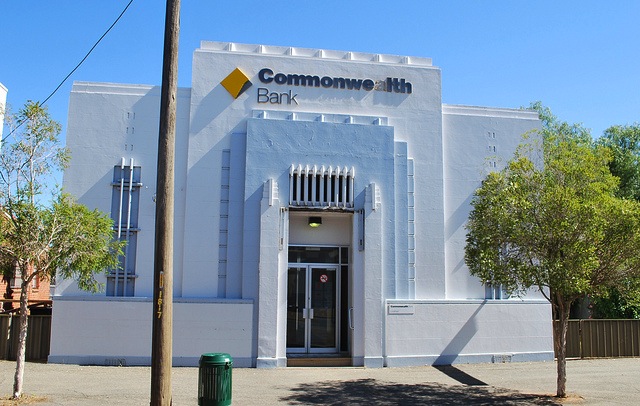
    Earlier this week the Financial Times reported how the eleven biggest North American and European banks had shed 100,000 jobs this year, so it when I was asked to do a segment on the future of banking for radio station ABC666 in Canberra I was more than delighted.

    The ABC producer’s interest had been piqued by an Ovum research paper detailing the IT spending of banks and their increasing focus on security.

    Rethinking payments

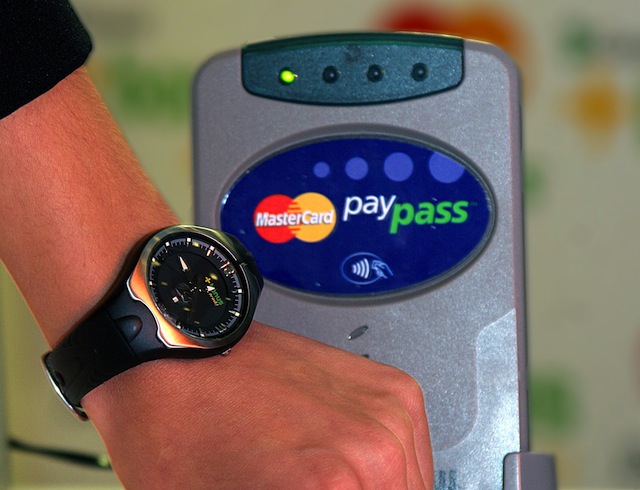
    In Ovum’s view much of the banking industry’s security  comes from the diverse range of payment options coming onto the marketplace. Another factor in the increased spend are the US credit cards moving to contactless payments.

    Certainly the increased focus on payments security is being driven by the range of new devices with smartphones, wearable technologies and the Internet of Things opening up a whole new range of commercial channels. This is something driving the development of services like Apple’s and Google’s payment system and part of a wider battle over who controls those channels.

    Underpinning much of the security focus is the interest in blockchain technologies which move the authentication records off central ledgers – historically one of the core functions of banking – onto a distributed network of databases.

    Core challenges

    That shift in record keeping is just one of changes affected the banking industry’s core functions, crowd funding and peer to peer lending threaten to displace banks from being the main providers of business capital, one of the fundamental reasons for the banking sectors existence.

    It should be noted though the banks have largely stepped away from being the providers of small business capital over recent decades as the ill conceived ‘reforms’ of the 1980s and 90s saw the finance sector being more focused on housing lending and doing mega M&A deals with the big end of town.

    The Financial Times report notes a decline in M&A deals is one of the drivers for the staff lay offs at the major banks, it’s notable that technology is changing that business function as much of the due diligence can be better done by artificial intelligence and algorithms rather than highly paid corporate lawyers and bankers.

    Where have the bankers gone?

    As the banks lay off senior staff, it’s notable many are finding their way to fintech companies. The Wall Street Journal however describes the relationship between incumbent banks and their would be disrupters as far more complex than it seems.

    Increasingly banks are buying or taking stakes in promising startups along with establishing their own investment arms and running hackathons to identify potential disruptors. Many in the banking industry are quite aware of the changes happening.

    That the banks are adopting the new technologies and identifying the threats shouldn’t be surprising, over the past fifty years the sector has been adept at applying technology from batch processing on mainframe computers through to deploying Automatic Teller Machines and rolling out credit cards to improve their business operations. Banking is one sector that’s proved itself fast to identify and adopt technological changes.

    Are the banks going away?

    So with fintech startups snapping at their heels, is it likely today’s banks are heading for extinction? Probably not suggests the CEO of fintech startup Currency Cloud, Mike Laven who describes such talk as being part of the “Level 39 bubble”, referring to the financial services startup hub based in London’s Canary Wharf.

    Laven’s view is some banks will evolve while others won’t do so well and historically that’s what we’ve seen with other technological shifts – some of the incumbents adapt and reinvent themselves while others are not so adept and wither away.

    Some of the bigger threats to banking may be social and economic change. Today’s rising of interest rates by the US Federal Reserve may mark the end of the last decade’s ‘free money’ mentality that’s been so profitable for them in recent times. The end of the consumerist era also challenges those financial institutions basing their business models on a never ending growth of consumer spending and household debt.

    Almost certainly the banking industry is not going to vanish, however it is going to be a very different – most definitely a much leaner – beast in a few years time. What is certain though is the days of banks as we’ve known them in the second half of the Twentieth Century are undergoing dramatic change in the face of technological and social change.

    Similar posts:
  • Stripe joins the unicorns

    Stripe joins the unicorns

    Payment service Stripe joins the unicorn club as credit card company Visa becomes the latest investor reports the Re/Code website.

    Two years ago this site interviewed John Collison, one of the Irish twins who founded Stripe about their mission to bring the payments industry in the 21st Century.

    With the Visa investment it now means two of the world’s three major credit card companies are investors in Stripe, the other being American Express, and this shows the incumbent players are acutely aware of the changes happening in the payments world.

    That credit card companies are investing in the businesses that threaten to disrupt their industry indicates the incumbents’ savvy management; while there are cultural and ethical barriers in trying to undercut the existing profitable products, having a stake in the new competitors gives companies like Visa and AmEx to remain relevant in a post credit card world.

    For Stripe, investment from what could have been their major competitors not only takes some of the pressure off the the business but also opens opportunities for technology sharing and access to bigger markets.

    Probably the most important thing for Strip with the Amex and Visa investments is they legitimise the business and the entire payments startup sector. It’s an important vote of confidence in the technologies and market.

    For the Collison twins it also helps build better businesses, as John told Decoding the New Economy two years ago, “if we just building a business to take transactions from PayPal and get them onto Stripe, that’s not that interesting. What is interesting is if we can create new types of transactions that would not have existed otherwise.”

    “By providing better infrastructure for anyone to build a global business. That will change the kind of things people will build.”

    Now more people will be looking at what they can build on these payment platforms.

    Similar posts:

    • No Related Posts
  • Apple looks dangerous in the payment wars

    Apple looks dangerous in the payment wars

    Apple are making great gains in the online payment space but the battle with Google Android, PayPal and the banks to control the market is far from over.

    One of the biggest business struggles this blog has been watching for the last five years is the battle over payment systems as banks, credit card companies, telcos and technologies vendors have jostled for control of what will probably the world’s most lucrative market by the end of the decade.

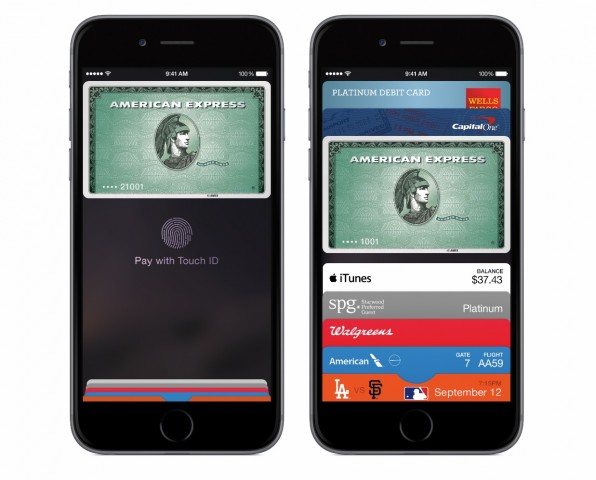
    Apple were late to that fight with their Pay service only being released a few months ago however according to a report by ITG Investment Apple’s service is already ahead of PayPal in terms of usage among new adopters.

    While PayPal have an impressive range of technologies, it’s clear they have found themselves wrong footed by Apple and have new companies like Stripe also challenging their market position.

    Apple Pay may be getting the headlines, but at present Google Android still dominates the mobile commerce industry according to another research company Criteo.

    In their State of Mobile Commerce report, Criteo claims that globally Android is well ahead in smartphone transactions. An interesting aspect of Criteo’s report is how far behind many nations such as Japan, South Korea and Germany the United States is in the take up of mobile commerce.

    Criteo’s report shows the battle to control the e-commerce space is far from over, however if Apple Pay can grab a large chunk of the payments market then the company will have a strong hold on key part of global industry. It remains a high stakes and uncertain battle.

    Similar posts:

    • No Related Posts
  • The mobile payments industry has a USB moment

    The mobile payments industry has a USB moment

    Has Apple Pay legitimised mobile payments? It appears so, reports the New York Times. Since the launch of Apple’s payments service, Google and other mobile payment providers are claiming usage has doubled with customers exploring the systems.

    If this is true, it’s similar to how Apple legitimised the USB port in 1998 with the release of the iMac.

    Prior to the iMac the USB port was a bit of an oddity, on most PCs the sockets sat unused and the few devices available on Windows computers worked reliably, as Bill Gates himself found out during a live demonstration at the 1998 Comdex show.

    Unlike Apple Pay, the move to USB on Macs wasn’t welcome and it was a high stakes decision by Steve Jobs given that Apple’s existence was still precarious and its user base was still made up of largely of true believers who had been through years in the wilderness with the company.

    Those users also had many thousands of dollars invested in Apple Device Bus (ADB) devices, all of which became redundant with the move to USB. Many customers at the time swore this was the last straw and they would move to Windows PCs.

    Apple’s users didn’t carry out their threats and stayed with the company whose move to USB turned out to be a winner for the entire computer industry.

    For Apple USB’s success meant their customers were no longer locked into a proprietary technology, for manufacturers they were able to start moving off archaic serial and parallel ports while for Microsoft the shift meant a better range of more reliable devices — although their operating systems struggled with USB until the release of the far more stable Windows XP.

    It appears in this respect Apple Pay is repeating history in giving a boost to a technology that has been struggling to find traction in the market place.

    The difference this time is that the payments industry is a far bigger market with far more implications for the broader economy than the computer peripherals segment.

    If Apple raise the boat on payment systems, there are some incumbent businesses who are going to find themselves in a very different marketplace in five years time.

    Similar posts:

    • No Related Posts