Tag: payments

  • Old business and new tech

    Old business and new tech

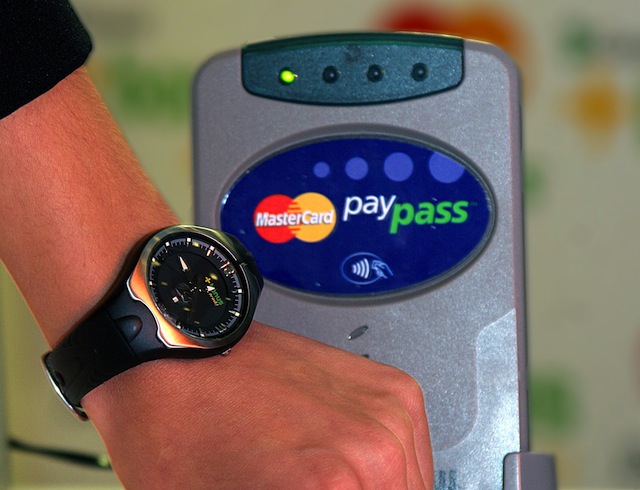
    The payments war has been well and truly on as companies like Stripe, Apple and PayPal battle it out to control the next generation of currency.

    One of the more hapless bystanders in this has been the CurrentC consortium, a group of US retailers set up to take advantage of mobile technology and bypass merchant fees.

    This weekend news leaked out that some of the consortium members have disabled Near Field Communications functions in their store Point of Sale systems to prevent Apple Pay and Google Wallet from working while they wait to roll out CurrentC.

    In a deep dive review of CurrentC, Tech Crunch looks at how the service works and its limitations. One of the things that jumps out in Tech Crunch’s review is just how cumbersome the system is compared to its competitors.

    Despite being founded in 2011 and having the backing of some of America’s biggest companies, CurrentC is two, or possibly three, iterations behind other services which illustrates the problem of incumbents trying to innovate their way out of problems.

    No doubt the committee model of CurrentC hasn’t helped the development process along with the aim being addressing the consortium’s fixation with merchant fees rather than making things easier for customers.

    It’s hard not to conclude that CurrentC is doomed and the actions of retailers in blocking competitor’s products is only staving off the inevitable. When old businesses embrace new tech they have to be thinking of their customers’ problems, not theirs.

    Similar posts:

  • Facebook becomes the storefront

    Facebook becomes the storefront

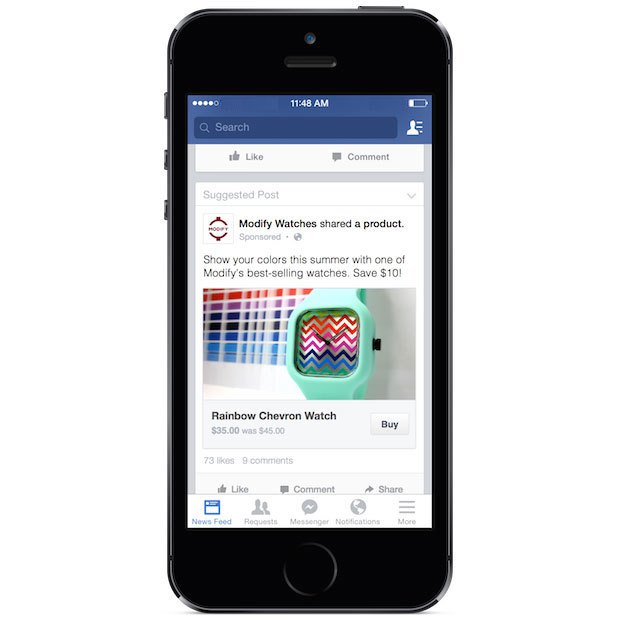
    Last week payments service Stripe confirmed they had partnered with Facebook to power the social media platform’s ‘buy now’ feature.

    The buy now button concept ads a button to posts, either sponsored or organic, in a user’s feed which lets them purchase the product being mentioned. This could be a powerful call to action for those advertising on Facebook and a potentially substantial revenue stream for the social media service.

    Late last month Stripe co-founder John Collison spoke to Decoding the New Economy about the evolution of online payments and Facebook’s role in the industry.

    “We’ve seen Facebook’s announcement a little while back that they’re letting you pay with your Facebook credentials. You can have a little ‘buy with Facebook’ button and if your card details are on file with Facebook then you don’t have to fill out all your details.”

    Stripe’s strategic advantage

    At the time Collison wasn’t letting on just how integral his company would be to Facebook’s payment services and coupled with company’s privileged position with Apple Pay, Stripe seems to be in a leading position with some of the biggest and well positioned players in an industry that’s being turned upside down.

    Those changes are good news for business as I wrote for Technology Spectator last week with the increased competition in the sector is making it easier for new companies to enter their markets.

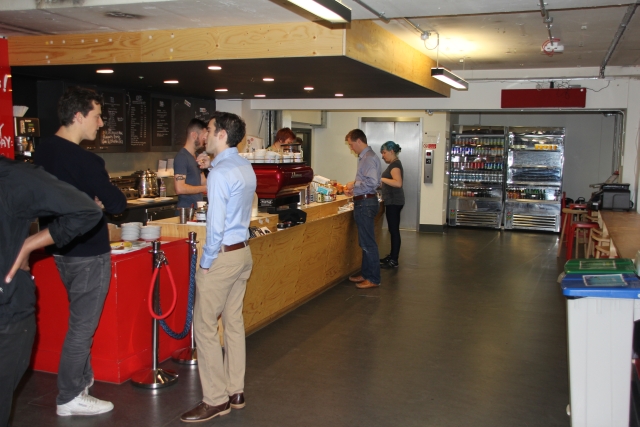
    Making it easier for new entrants is something that drives Stripe’s Collison; “I think one of the things that’s held back online commerce for so long is there is such a high barrier to it and so if you go to a coffee shop and you pay for your coffee — you swipe your card and that’s that.”

    Letting businesses sell more

    “It seems to me that in five to ten years time we will not be in the same world where people like Facebook and Google are improving the identity story,” continued Collison. “This is exciting because it means merchants can sell more.”

    The integration of Buy Now into Facebook’s services also indicates a different direction for social media services beyond being the passive marketing platforms many see them as being today.

    It may well be that social media platforms are more the storefront than the billboard.

    Similar posts:

    • No Related Posts
  • This is not toy time

    This is not toy time

    We’re past the time where business owners can dismiss new technologies as toys says Profitable Hospitality’s Ken Burgin.

    Ken’s Profitable Hospitality website is a must read for anybody in the industry and I was lucky enough to be the the guest of his 99th podcast where we discussed payment systems, marketing and the challenges facing restaurant and cafe operators in a changing marketplace.

    In the podcast we discuss PayPal’s plans for the retail sector along with how startups like Stripe look to disrupt the sector and what Apple’s announcements last week will mean to the payments industry.

    The key message from the podcast is the entire sector is facing massive changes both from technology and changing consumer behaviour.

    Like many other industries, the successful restaurant and cafe businesses over the next decade will be those who have the flexibility to adapt to a very different world.

    Similar posts:

  • Time to strike deals

    Time to strike deals

    It didn’t take long for the competition in the payments market to heat  up after the announcement of Apple Pay last week as PayPal launched a campaign asking if you’d trust your financials to a business who can’t protect your selfies.

    While PayPal  pokes fun at Apple, there are more serious competitive pressures developing as the companies start negotiating with credit card providers and banks to reduce their rates. This is something that will be an immediate benefit for businesses of all sizes who are prepared to renegotiate their contracts.

    Most businesses, big and small, are poor at monitoring what they pay for a service; while they’ll shop around and negotiate when they’re looking for provider, they’ll let often these contracts go for years without reviewing them – something that utilities like banks, telcos and power companies take advantage of.

    I was reminded of this earlier this week at a lunch with some senior Qantas accountants who were quite open about how every supplier’s contract was constantly reviewed and discounts were aggressively pursued. It’s a tough life for the airline’s subcontractors.

    Times are tough for Qantas though, having sustained a 2.8 billion Aussie dollar loss last year along with constant declines in market share and stock prices. So it’s not surprising they have an aggressive cost cutting strategy in place.

    Many other industries are now looking at the same problem as the global economy is now in a phase of at best anemic growth for the foreseeable future, which makes it essential for all businesses to start reviewing their costs.

    With the banking sector now being disrupted by companies like PayPal and Apple, it might be time for all businesses to ask some hard questions of their banks and payment providers. The time is right to strike a deal.

    Similar posts:

  • Activating main street

    Activating main street

    The future of retail is being fought out on three fronts believes eBay’s Michael Camplin  — global, local, mobile and data.

    At eBay’s Commerce Innovation Showcase at its San Jose head office Champlin shows visiting partners, media and government officials part of the payments giant’s vision for that future.

    “It’s about connecting buyers and sellers across the globe,” says Champlin. “Local is important for us because even with the growth of the online ecommerce revolution that we’re in the middle of right now we still see 75% of commerce happens within fifty miles of the customer and 90% of that happens in bricks-and-mortar stores.”

    “So to be able to connect buyers and sellers in those local stores is a major push we have at eBay.”

    paypal-innovation-tour-003

    The first presentation in the tour demonstrates a day in the life of an eBay customer from the bedroom of a fictional customer, Reese McLaren, a funky young guy shopping for new equipment ahead of a camping trip. Champlin illustrates how Reese can order, pay and collect through a store’s integrated online service from his home.

    On the other side of the transactions, store employees use the PayPal apps like Red Lazer and Braintree to complete the order. A key part of that is using beacon technologies to log a customer into the store to alert staff that a customer has arrived to collect an order.

    paypal-innovation-tour-015

    At the next stage of the tour, we visit some demonstration stores; first we start with the Burger Bistro where eBay’s Eric Armstrong shows how restaurant’s point of sale system is integrated with PayPal services, showing waitstaff who is logged in through the company’s app.

    Integrating PayPal’s services into the establishment’s point of sale system means customers can order through the PayPal Wallet service and waitstaff know if a customer has paid through the app.

    paypal-innovation-tour-012

    The app also speeds up settling customers’ bills as diners can pay the check through their phone and not bother with using cash or swiping credit cards.

    One key point with PayPal Wallet is that users can enter any payment form that suits them and choose whichever option suits them at the time including direct bank transfers and credit cards.

    paypal-innovation-tour-006

    Another area that PayPal are pushing out are coupon offers. At present the company is subsidising them as they test how the services work. The objective is to offer a digital equivalent of everything people currently have in their wallets.

    For staff, eBay are offering the ability to bring your own device for point of sale systems with cloud base apps turning staffs’ tablets and smartphones into POS terminals.

    paypal-innovation-tour-028


    Tying into the Point of Sale capability is the PayPal Now service that allows establishments to swipe credit cards directly into the app through a dongle that reads the chip or stripe. Despite the rise of online payment services, swiping credit cards is still the main way US customers pay their bills.

    paypal-innovation-tour-031

    Despite the continued popularity of credit cards, eBay are hoping to move customers over to the online services through ease of service; the one stop authentication service means customers are logged into the payment platform as soon as they check into a location.

    One area PayPal sees great opportunity in stadiums and major events where attendees automatically check in and can then access food and souvenir stands without having to re-authenticate or authorise each purchase they make.

    paypal-innovation-tour-039

    A key part of eBay’s retail strategy is the use of beacons to monitor customers entering establishments. The one illustrated is the PayPal beacon that was a limited release earlier this year. The device doesn’t have its own battery, instead relying on a USB socket for power.

    Two weeks after this tour Apple launched its Pay service with its range of integrated APIs to offer many of things shown in this showcase. eBay and its Braintree subsidiary was conspicuously missing from the listed partners.

    For PayPal and eBay the field has suddenly become more competitive, this is a sector that is now at the forefront of the battle between today’s internet empires.

    Similar posts:
    • No Related Posts