PCs can do what? Is the question being asked in a new campaign being run by Intel, Microsoft, Lenovo and Dell.
Judging from the reaction to the companies’ effort whatever PCs can do, it’s unlikely to help their at best stagnant market share.
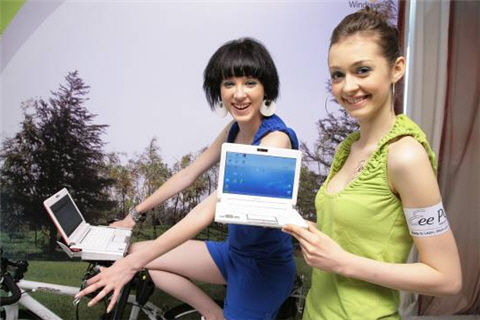
PCs can do what? Is the question being asked in a new campaign being run by Intel, Microsoft, Lenovo and Dell.
Judging from the reaction to the companies’ effort whatever PCs can do, it’s unlikely to help their at best stagnant market share.
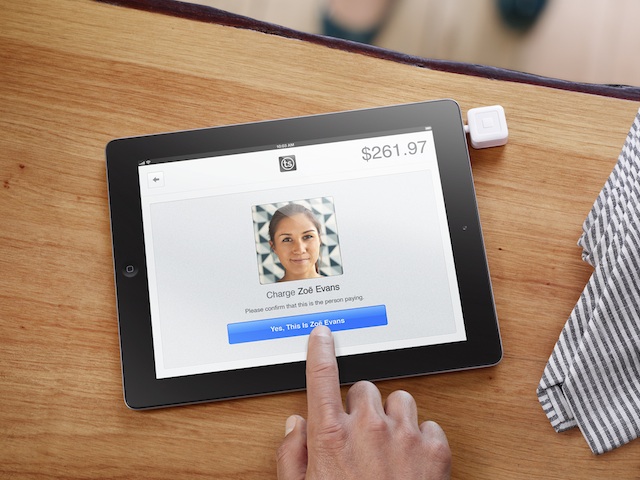
Ahead of tomorrow’s announcements by Apple, the strategic leaks are happening fast on both the next version of the iPad and Google’s Nexus appearing in the media today.
The problem for tablet manufacturers is that sales have stagnated in recent times with the products no longer flying off the shelves.
Part of the reason for this is customers are happy with their existing products; a three year old tablet will do most of things a brand new one will do so there’s little reason for upgrading.
For vendors like Apple and Google it’s further proof that the PC industry model of three year upgrades is firmly dead, the sector will need something more than planned obsolescence to drive growth.
HP’s CEO Meg Whitman announced today that the company will be splitting in two with its Printer and PC division being carved away from its consulting services.
The two new companies will be Hewlett Packard Enterprises and HP, the latter being the old printer and PC division.
For HPs shareholders this split is a decade too late as the printer and PC division is in an industry where declining margins are the norm.
It’s not hard to think though that both businesses are ultimately doomed, it wouldn’t be surprising to see the smouldering ruins of both companies being picked up by companies like India’s Wipro or China’s Lenovo in the not too distant future.
That HP is divesting isn’t surprising as the trend is moving away from the big conglomerates model of the past decade; two weeks ago eBay announced it will be splitting its PayPal division and the float of Alibaba will almost certainly see Yahoo! begin to hive off businesses that have underperformed under their corporate umbrella.
An era where the key to growth in the technology industries doesn’t involve buying competitors and startups to build online empire will leave the Silicon Valley greater fool business model somewhat lost. It might be time for a few venture capital and seed funds to think about their pivot.
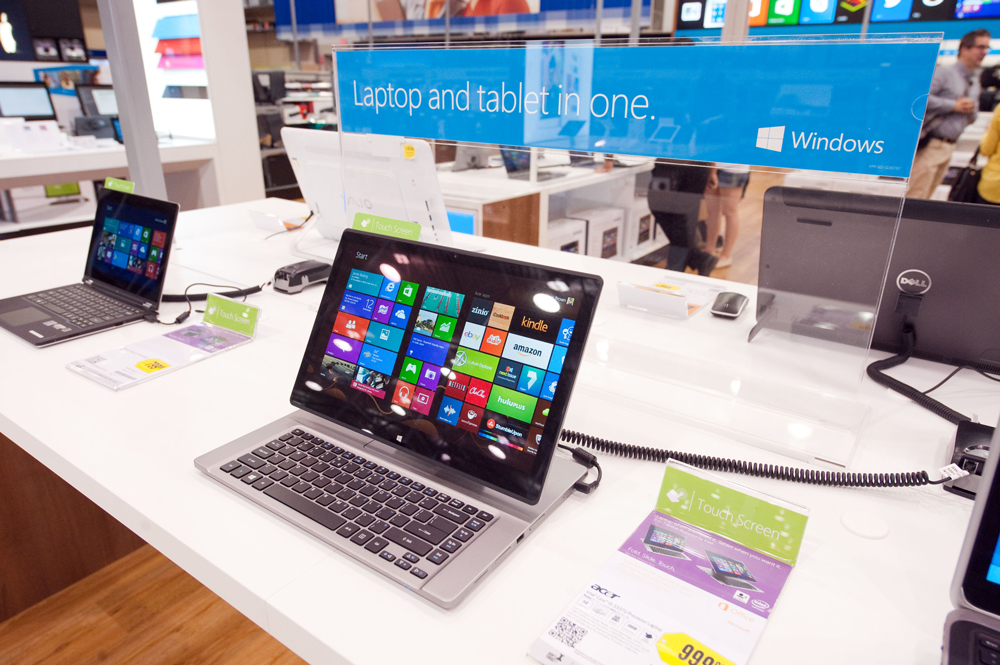
On Tuesday Microsoft are expected to announce their new Windows 10 operating system at a media event in San Francisco.
If the rumours are true, then the new system will be launched almost exactly two years after Windows 8 was released amid hopes that it would stem the PC industry’s decline.
Windows 8 didn’t deliver with most people being frustrated with the system’s inconsistent interface that tried to be unified desktop, laptop and tablet operating system which managed to be unsatisfactory on all of them.
As a consequence, users avoided Windows 8 like the plague with industry analysts Netmarketshare claiming most of Microsoft’s customers are buying systems kitted out with Windows 7 or just sticking with decade old Windows XP systems.

Making matters worse for Microsoft is the decline in personal computer sales in general with IDC estimating global shipments of both portable and desktop system will drop 3.8% in 2014.
These declines are already well established in the trends being seen in Microsoft’s business with the company’s Windows division showing an accelerating decline in profit margins.

Should that decline continue with Windows 10, it may well be that Microsoft will have to consider the future of product.
As it is, the market may be deciding for them as users increasingly switch to tablets and smartphones. We may also see a wave of cheap Chinese made laptops running versions of Google Chrome or other Linux based systems also threatening the existing PC sales base.
Either way, a lot rides on what Microsoft announces in San Francisco this week. It could be the end of an era that defined the mass adoption of computers.
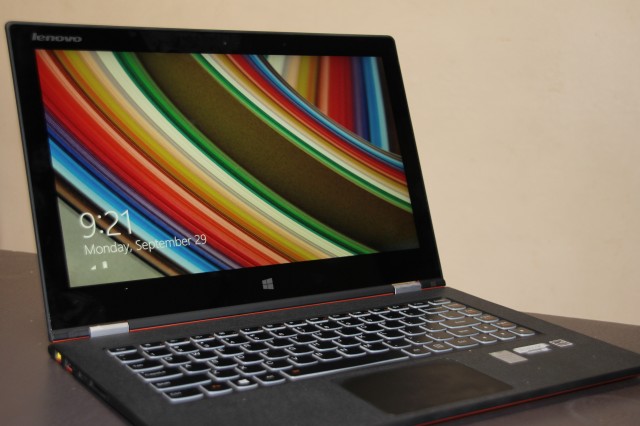
Can a laptop be a tablet computer? The Lenovo Yoga Pro 2 tries to balance the needs of both in a package designed for home and small business users.
The laptop computer market is in a difficult place at the moment as both consumers and businesses move to tablets and smartphones so it’s interesting to get hold of the Lenovo Yoga Pro 2 to see how one of the leading portable manufacturers is responding to the changing industry.
One of the best ways of testing a portable device is to take it on a long trip, so a couple of 14 hour transpacific flights and trips around San Francisco, the Napa Valley and Silicon Valley proved a good workout for the Yoga Pro.
From a hardware perspective the Yoga is an impressive device with 8Gb of RAM, 256Gb solid state hard drive and a 1.8GHz i7 chip. The screen is a very nice 13.3″ 3200 x 1800 high-resolution display.
Rounding out the hardware specs are two USB ports — one 3.0 and the other 2.0 — along with a Micro HDMI output, webcam, inbuilt mic, headphone jack and an SD Card reader. All the basics expected in a mid range ultrabook that weighs in at a respectable 1.4kg.

In using the Yoga as a laptop, the device works well with the keys being crisp and responsive although the position of the glidepad and the backspace key being alongside the home key caused problems for this clumsy touch typist.
One of the problems with the larger form of ultrabooks is their usability when travelling economy on a plane; if the passenger in front of you reclines then it becomes difficult to use the device. This isn’t a problem specific to the Lenovo Yoga, but it is a drawback that the industry seems not to have considered in its move to the larger screens.
If you’re not travelling on planes, the weight and form factor works well and makes the Yoga 2 Pro a nice device to use while on the move. In an office environment it’s a standard mid to upper range laptop with good fast specifications.
For battery life, Lenovo claim “up to nine hours” for the Yoga Pro but in practice standard office use sees about five hours worth of juice with a full recharge taking under an hour. It’s lucky most transpacific flights now have power sockets.
While 1.4kg is good for a laptop it’s lousy for a tablet computer with the Yoga Pro 2 weighing in a kilo heavier than the iPad and 500g (one pound) heavier than the Microsoft Surface Pro. This makes it awkward to use over extended periods and the keyboard doesn’t feel right as the backing to a tablet.

The Yoga’s weight problem illustrates the core conflict for a device that wants to be a laptop and a tablet as the different demands for each type of device make if difficult for designers to meet both markets.
In the Yoga 2 Pro’s design, it’s clear the engineers had to make a choice between compromising either on the tablet or laptop functionality. As it turns out the designers decided to go with releasing a good Ultrabook laptop with compromised tablet functions — this was the correct choice for the Yoga.
Probably the greatest problem though for the Yoga Pro 2 in tablet mode lies in software with Windows 8 being far from adequate as a tablet operating system with a confused interface, an inconsistent user experience and unpredictable responses to touch screen commands.
For companies like Lenovo who are persisting with Windows as their operating system, it’s becoming critical that they start demanding better design from Microsoft before they find their market being overwhelmed by Android and iOS devices offering a superior user interface.

While the Windows 8 irritations aren’t a deal breaker for the Yoga, it does limit the device as a tablet computer and its something anyone considering it instead of an iPad or Android tablet should keep in mind.
Overall, the Lenovo Yoga Pro 2 is good Windows Ultrabook for home and small business use offering the benefits of an ultrabook with the flexibility of being able to flip into a tablet for specific uses.
The device isn’t cheap, but the range of features and good hardware specs make it a decent purchase for small businesses, sole proprietors or workers operating from home who need a versatile Windows computer.