Tag: PCs

  • Can Microsoft beat the PC marketplace’s structural decline?

    Can Microsoft beat the PC marketplace’s structural decline?

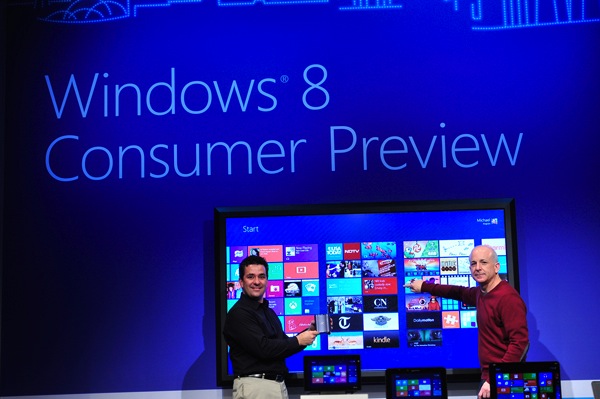
    In New York on Thursday Microsoft will have a marathon launch of their Windows 8 system and the futures of many of their hardware partners lie on the success of the new system.

    For Microsoft, Windows 8 could be the last throw of the dice for the desktop operating system that has sustained the company for thirty years.

    The figures aren’t good for Windows as Microsoft’s 2012 profit and loss shows, here are the figures broken out by operating unit segment from the company’s annual report.

    Year Ended June 30, 2012 2011 2010
    Revenue  bn $  bn $  bn $
    Windows & Windows Live Division 18,818 18,787 18,789
    Operating Income (Loss)
    Windows & Windows Live Division 11,908 11,971 12,193

    The core Windows & Windows Live Division has stagnant revenues and a slowly declining profit margin. We’ll leave the huge losses in the online division for a future post.

    Since the days of the first MS-DOS deal with IBM, Microsoft’s core business has been the licensing of operating systems to PC manufacturers and now that model is in trouble.

    For instance Dell had an 8% drop in revenue resulting in a worrying 22% drop in operating profit, their PC dominated consumer division suffered a fat 22% drop in sales and recorded a miniscule .5% profit margin. Similarly Asus had 25% drop in sales to record a 2011 loss.

    The pain being suffered by PC manufacturers’ sales and margins will almost certainly be shared by Microsoft as companies like Dell, HP and Asus simply can’t afford to pay the licensing fees which have sustained the Redmond business model for so long.

    Microsoft and their partners hope – or pray – that the PC decline is a temporary hiccup in computer sales similar to the traditional lull seen before the release of a new system.

    History’s not on their side with research company Asymco expecting sales of tablet computers to overtake PCs sometime in late 2013.

    This is not a cyclical trend – the PC industry is in structural decline; the traditional Windows upgrade cycle is dead and Google are running interference with their Chromebook networked laptops.

    Moving onto tablets and smartphones in this light makes sense for Microsoft and given the PC manufacturers have failed dismally to deliver decent tablet computers or phones over the last 15 years so it’s understandable the software giant wanted to develop their own hardware or team up with a struggling company like Nokia.

    The declining margins in personal computers means we’re seeing the end of the Windows desktop ecosystem. With the rise of the web and cloud computing the type of operating system we use is like arguing between Toyota and BMW drivers; one might be more prestigious but both will get you where you want to go.

    For Microsoft the challenge is to replace those Windows licensing rivers of gold with similar revenue streams through their phone and tablet products but with Apple and Google already dominating those fields, is it too late for the company that dominated personal computing? The next six months will tell us.


    Similar posts:

  • The irrelevant operating system

    The irrelevant operating system

    Last decade, people queued around the block to buy the latest version of Windows, today no-one cares. What next for a market that has become commoditised?

    When you visit a website your browser reports, among other things, what type of system you’re using. Net Applications – a US based web monitoring company who analyse online browsing statistics – keep a regularly updated list of what people are using when surfing the net.

    On their latest statistics, Windows XP finally fell below 50% in September 2011, just on ten years after it was released. Windows 7 is taking over from XP while Apple steadily gain market share.

    These statistics show how the operating system has become irrelevant, only really dedicated geeks really care anymore about their version of Windows or whether a computer is running an Apple Mac or Microsoft product.

    As most computer users are drifting to cloud computing services and consumers are increasingly using their PCs to access online games and social media sites, it doesn’t really matter anymore what systems are used as long as they work.

    For many in the computer industry, this is a problem as they desperately want to sell a product in a market that has become commoditised. It’s another example of the PC industry’s broken business model.

    It’s not just the computer industry with this problem, the 3D TV hype of 2010 was a desperate attempt to sell new television sets in a market that had stalled; recession hit consumers had no desire to replace their perfectly good TVs that were less than a decade old, just like Windows XP users.

    This year’s Consumer Electronics Show that launches in Las Vegas this week will see similar desperation as the various PC and mobile phone manufacturers trying to generate excitement about their new products.

    For the journalists and PR folk at the CES the problem is customers largely don’t care anymore. As the failure of 3D TV illustrates, consumers aren’t buying the hype.

    Just as with operating systems, most customers want something that works, if you’re going to get them to replace older proven technology you’ll have to show where the new product adds value.

    The era of products flying off the shelves because they are new and shiny is over – just ask Microsoft about it’s operating systems.

    Similar posts:

  • The death of the netbook

    The death of the netbook

    “You don’t want to buy one of those of things,” said the electronics store assistant, “they don’t have much memory and the CPUs in the notebooks and ultra books are better.”

    I was shopping for a cheap netbook for the kids, each of which had been saving up to buy one as they are sick of me yelling at them for playing Minecraft on my work system, and the consensus from the store staff was to do everything to steer folk away from the cheap systems.

    This is understandable as most electronic store staff are on commissions, and these are lean on cheap computers. It’s much better to sell a thousand dollar unit – with upgraded warranties and accessories – than a low margin, one off unit.

    For manufacturers, similar problems exists; these cheap unit cannibilised their higher priced products with better margins. Dell recently announced they are getting out the netbook market and others are following.

    Netbooks themselves are in trouble as the market they addressed for cheap, portable, Internet connected devices is now largely covered by smart phones and tablets which offer better battery life and usability.

    Interestingly, the battery life argument was even used by the computer store salesfolk who pointed out – correctly – that the newer laptops have better power management than their cheaper netbook cousins.

    While the netbook as a category is dead; the concept itself isn’t. As the uptake of tablet computers like the iPad show, Internet connected portable devices are becoming the computer of choice for many people and the advantages of a laptop form factor; a proper tactile keyboard, USB ports and other external connectors are still attractive.

    Probably the worse thing for the manufacturers and retailers is the price points are now established in customers’ minds – $400 is what people want to pay for laptops, which doesn’t bode well for those higher priced systems.

    Those manufacturers can’t even get into the tablet computer market as Apple now own that sector that the PC vendors and Microsoft squandered a decade’s lead with substandard equipment and badly designed software.

    Despite the best efforts of the electronic store’s salesfolk, my kids ended up buying cheap, low specced netbooks out of their savings and those systems run Minecraft quite nicely. Which is another problem for shops and manufacturers stuck with a 1990s business model.

    Similar posts: