Tag: politics

  • Hillary Clinton’s bid for the future

    Hillary Clinton’s bid for the future

    As the 2016 US Presidential election settles down into a competition between Republicans and Democrats, Hillary Clinton has released her vision for the American tech industry.

    Hillary Clinton’s Initiative on Technology & Innovation is a comprehensive document laying out the candidate’s plans to increase the American workforce’s skills and the nation’s infrastructure.

    What’s particularly notable about the Clinton plan is her aim of “building the tech economy on main street,” which is “focused on creating good jobs in communities across America.”

    Spreading the tech industry’s jobs, and wealth, beyond a few middle class enclaves is an important objective for all nations in the twenty-first century and Clinton’s objectives are an indication that the US political establishment is beginning to understand this.

    Other countries should be noting Clinton’s objectives to raise the skills of workers, build the tech infrastructure and get investment into smaller communities as something they too have towards.

    In an Australian context, Clinton’s initiatives highlight the missed opportunity of the Turnbull government’s Innovation Statement, a narrowly focused and weak document that has done little to encourage investment and even less to reform skills training.

    The Clinton move though shows technology, training and stimulating new businesses will be one of the imperatives of nations as they deal with a rapidly changing economy.

    Similar posts:

    • No Related Posts
  • A need for better political leaders

    A need for better political leaders

    Brexit, the rise of Trump and the unrelenting negativity of the Australian election campaign underscore the consequences of playing a negative game in politics.

    For thirty years, the pattern in western democracies has been to belittle your opponent and demonise relatively powerless minorities such as welfare recipients, immigrants and refugees.

    The rise of Donald Trump and the Brexit are symptoms of large segments of society losing confidence in their political leaders, something that isn’t surprising after thirty years of constant negativity from the political classes.

    Exacerbating that distrust of the political establishment is the working and lower middle classes wore the brunt of the economic changes of the 1980s and 90s with their work prospects never really recovering. A reality that has not been acknowledged by political leaders.

    As we enter another period of dramatic technological change that’s going to have massive effects on the workforce, we’re going to need better leaders.

    Similar posts:

  • Subverting the house rules

    Subverting the house rules

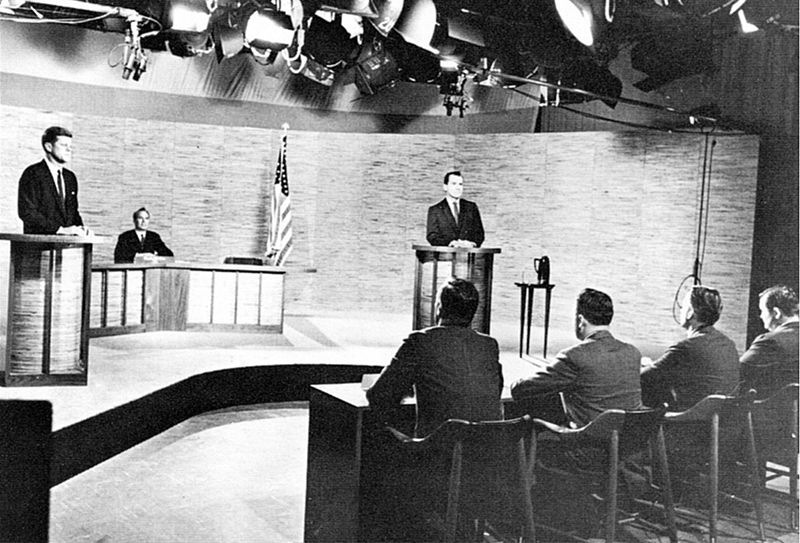
    It seems the Arab Spring has come to the US Congress where Democrat representatives protesting the house’s refusal to vote on gun control legislation have occupied the house.

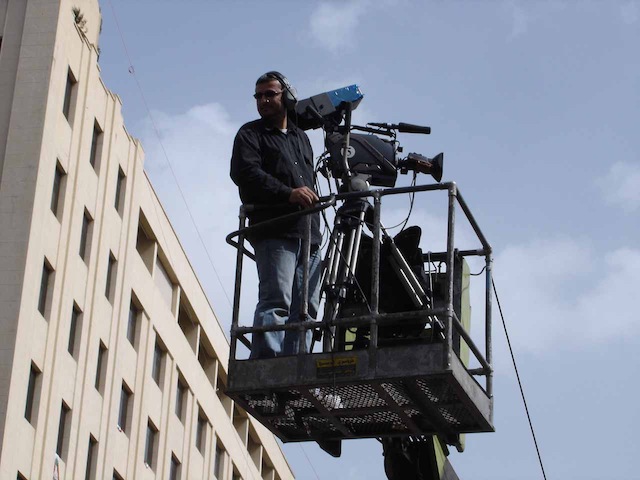
    House speaker Paul Ryan, a Republican, ordered the chamber’s TV cameras to be shut off but the occupying members responded by streaming their own media feeds through Facebook and Periscope.

    Once again we’re seeing how new media channels are opening up with the internet. While they aren’t perfect, they do challenge the existing power structures and allow the old rules to be subverted.

    Similar posts:

    • No Related Posts
  • How Australia might miss the smartcities movement

    How Australia might miss the smartcities movement

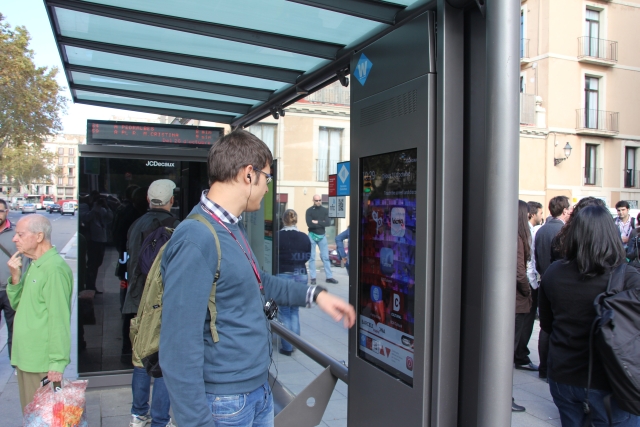
    On Monday I attended the Australian Israel Chamber of Commerce KPMG Internet of Things (IoT) & Smart Cities Briefing in Sydney’s Darling Harbour. It was an event that left me worrying about how the nation’s governments are dealing with the connected society.

    The event was held under the Chatham House Rule so I’m unable to attribute quotes or identify the views of individual speakers however the conversation was mainly around the difficulties of getting Australia’s three levels of governments working together and their reluctance to share data.

    Probably the most worrying comment was how Australian public servants aren’t empowered to make decision that would take advantage of smart cities technologies.

    When politics eats everything

    If anything this view illustrates a deeper problem in Australia where public policy and decision making is subsumed by politics. Exacerbating this is the insistence of opportunistic ministers and their chronically unqualified party advisers to micromanage decisions that should be made by qualified professionals.

    A fear of delegating decision making quickly morphs into tendency to avoid accountability with decisions being made behind closed doors and contracts hidden from public view by the ‘Commercial In Confidence’ fiction that put contractors’ privileges over the public good.

    That reluctance to share information also feeds into implementing smartcity technologies. With data being jealously guarded by government agencies, city councils and often corrupt ministerial offices, the currency of the smartcity – data – is locked away rather than used for the public good.

    Accidental releases of data

    One of the participants pointed out how in Australia government data is often released by accident and the siloing of data between government agencies and private contractors makes access difficult.

    The real concern though was at during the question and answer session, in a response to a question from the writer asking if Australia’s business and government leaders are oblivious to the global changes, one of the panellists stated “boards are now convinced digital has a seat at the table.” That is hardly assuring.

    Probably the biggest concern though for this writer was after the lunch. One of the other attendees, the CEO of  a major supplier to Australian councils, mentioned how the equipment he supplies was ‘pretty dumb’ and he was closing down the overseas operations of his business as they were losing money.

    Inward business cultures

    That inward looking attitude of catering to a domestic market that’s oblivious to global shifts seems to be almost a parody of the management books that talk about Kodak’s demise earlier this century or the fate of buggy whip manufacturers a hundred years before. Yet that is the mindset of many Australian businesses.

    Exacerbating industry’s insular mindset, Australia’s planners seem to have a fantasy that the nation’s cities are like Barcelona rather than Chicago. The truth is Australia’s car dependent cities have more in common with their North American counterparts than European centres, something planners are reluctant to admit.

    Being car dependent doesn’t preclude effectively applying smartcity technologies, in fact there might be more benefits to sprawling communities as vehicles becomes connected and driverless automobiles start appearing. However applying what works in Amsterdam to Sydney, a city that is more like Los Angeles, is probably doomed to failure.

    “A smart city needs smart people to succeed” is a mantra I’ve heard a number of times. The question right now is whether Australia has enough smart people in positions of power to execute on the opportunities in the 21st Century. The roll out of smartcities may prove to be an early test.

    Similar posts:

  • Politics enters the age of disruption

    Politics enters the age of disruption

    One of the key features of modern western nations is how stable politics is with very few major parties being less than fifty years old and many boasting a history lasting back a century or more.

    Now in the US and Australia we’re seeing the slow motion implosion of the established parties of the reactionary side of politics – it would be misleading to describe the schoolboy ideologies of most American Republicans or Australian Liberals as being ‘right wing’.

    Tony Wright in the London School of Economics blog asks What Comes After the Political Party?

    Wright’s view is political parties are doomed to extinction as their memberships dwindle and this is an opinion shared by many watching the declining participation in formal politics over the last fifty years.

    One result of that declining participation has been the steady increase in power of the machine apparatchiks who’ve increasingly replaced boots on the ground with corporate funding.

    The consequence of that increase in power has been a steady disconnect between the concerns of the electorate and the priorities of the party leadership.

    In the US that disconnect resulted in the Republicans blindsided by the rise of Donald Trump and the Australian Liberal Prime Minister increasingly looking like Grandpa Simpson as his party shuffles towards what increasingly looks to be a ballot box disaster.

    Both parties are likely to rip themselves apart as the contradictions of the modern reactionary movement – dismantling public services while increasing government powers – come home to roost with the ideologues and pragmatists within the organisation fighting bitterly.

    The truth is political parties are no more permanent than businesses, or indeed nations, and in a time of economic change it isn’t surprising old parties die and new ones are formed.

    While political parties won’t cease to exist, the new political parties that will rise from the wreckage of today’s will be different in both their philosophies, organisation and membership.

    Parties that were formed in the horse and carriage days or the early era of newspapers and radios are always going to find the internet era to be a challenge, that they are being run by men whose political theories haven’t moved for fifty years only guarantees their demise.

    In many ways, what’s changing politics is exactly what’s changing business. However the politicians and their supporter seems far more oblivious to change than their commercial counterparts.

    Similar posts: