Tag: politics

  • The risk of misunderstanding China

    The risk of misunderstanding China

    In the early 1990s I was working for a British company in Hong Kong and regularly commuting to Taipei. On a Cathay Pacific flight back from Taiwan one Friday afternoon, I found myself on the same flight as the organisation’s Asia-Pacific director who graciously got me into the lounge for a beer.

    Over that beer he told me how earlier in the year he’d been asked by one of the pukka English directors why he was bothering spending so much money in business development for ‘third world countries’ like Taiwan and South Korea.

    Jeff, as we’ll call the director, laid down a challenge to his board. “Come out and have a look for yourself,” he told them.

    Some of the UK based directors took Jeff up and flew out to Hong Kong, first class on BA of course, and then continued on to Taipei where they suitably amazed to be greeted by a first world city.

    “They genuinely believed they were going to fly in a DC-3 and be met by a bunch of rickshaw wallas,” laughed Jeff, a long standing English expat. “The Brits don’t get East Asia.”

    It seems things haven’t changed much as veteran venture capital investor Mike Moritz made a similar point at a speech in London yesterday that the West doesn’t understand China, particularly Europe.

    “People underestimate China, especially in Europe,” Business Insider quotes Moritz as saying. “They have very little sense of the size, strength, and scale of ambition of the leading Chinese technology companies.

    Moritz pointed out the fund he leads, Sequoia Ventures, is now placing over half its money in non-US companies with Chinese businesses being high on the list.

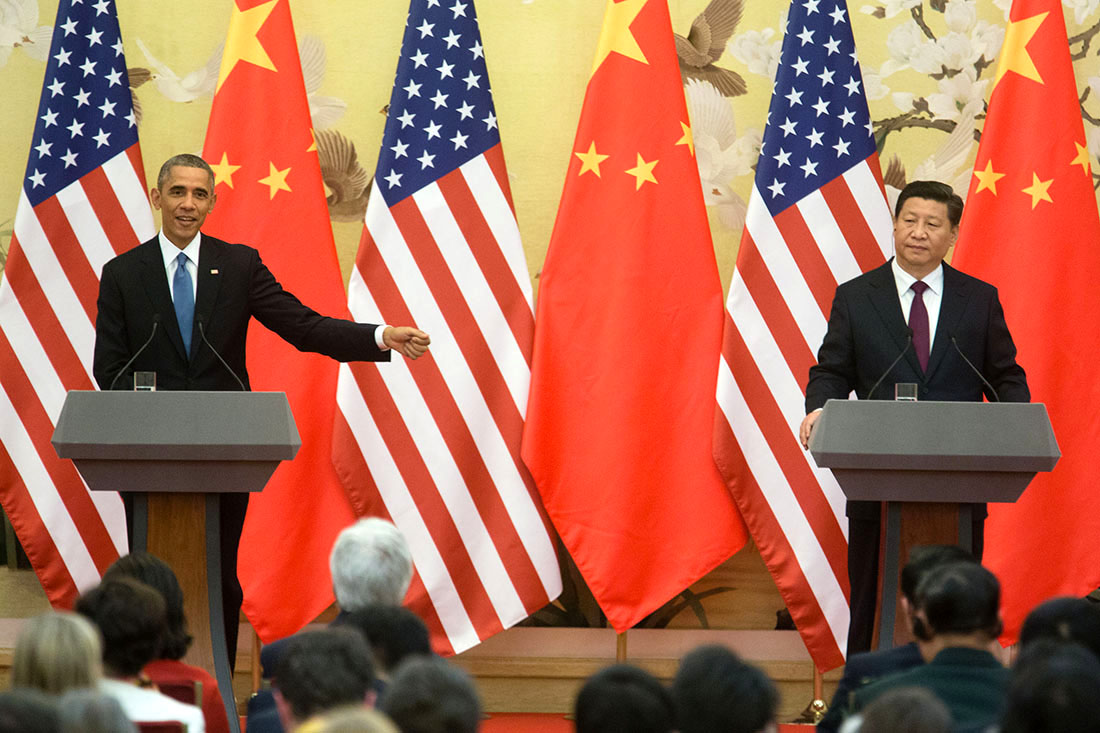
    The West’s misunderstanding of China goes beyond business, with The Economist warning that many nations are soon going to have to choose between the PRC and the United States as Beijing sets up its own network of global alliances and trade accords.

    So far the United States has responded to this with clumsy efforts like the Trans Pacific Partnership, an attempt to quarantine China’s influence in the Western Pacific that actually gives PRC  based businesses a competitive advantage over nations that enter the deal which does little more than strengthen US corporate interests.

    Already in Africa, the results of China’s economic efforts are being seen. A good example is the new Ethopian Railway where the Chinese were quick to fund a project that EU and World Bank lenders had dragged their feet on.

    Just as English businessmen in the 1990s misunderstood what was going on in East Asia, it seems ignorance of Chinese growth and intentions are even more widespread today. There may be some shocks coming for countries like Australia who assume today’s realities are tomorrow’s.


    Similar posts:

    • No Related Posts
  • The new one percent

    The new one percent

    Today San Francisco goes to the polls and one of the many questions being put to voters is Proposition F, an initiative to put restrictions on short term rentals.

    Also known as the AirBnB initiative, Proposition F is also being seen as part of San Francisco residents’ push against the tech community’s takeover of the city.

    In countering the Proposition F supporters, AirBnB hasn’t helped its case with a clumsy public campaign and an aggressive $8 million war chest to support the initiatives opponents, but the real problems for the service lie in the hostility towards the tech and startup community in general.

    A notable thing about the new tech community is how their staff are isolated from the community around them. Probably the worst example of this in Southern California where Google has been accused of harassing homeless people on the public footpaths around its Venice Beach complex.

    While having onsite facilities may make sense in remote Silicon Valley business parks, in city areas like San Francisco this only creates hostility from those who feel displaced by the new elite.

    The remoteness of the new tech elite is also shown in their companies’ attitudes towards customer support. Services like AirBnB, Facebook and Google consistently try to reduce their support overheads by pushing responsibility onto users and contractors by making it difficult, if not impossible for the public to contact them.

    Inevitably that remoteness from the general community breeds distrust and hostility. Which is what we’re seeing now being directed towards AirBnB.

    Paradoxically, despite the hostility towards the tech community and AirBnB, they are probably not the reason for San Francisco’s soaring property prices as around the world the price of homes is soaring as the effects of cheap money filter through investment markets.

    As long as those prices keep soaring beyond the reach of working and middle class residents, AirBnB and the tech community can expect to continue feeling the pressure. Although it’s not hard to think though that a bit of humility might help their case.

    Similar posts:

  • Paul Krugman and the era of Bad Ideas

    Paul Krugman and the era of Bad Ideas

    We live in a time where lessons of the past have been unlearned and being right about events does not necessarily mean you will be vindicated, said Nobel Laureate and New York Times writer Paul Krugman in a Festival of Dangerous Ideas event at the Sydney Opera House last night.

    Krugman’s talk was on how bad ideas in economics have taken hold and are difficult to shake, the reason being in his view because, as the economist John Stuart Mill said to Parliament in 1866, “although it is not true that all conservatives are stupid people, it is true that most stupid people are conservative.”

    A refusal to admit errors

    One of the notable aspects of today’s age of bad ideas is how those who proven wrong refuse to admit their errors with Krugman citing the 2010 public letter signed by 23 prominent academics, economists and money managers to Federal Reserve chairman Ben Bernanke warning Quantitative Easing would unleash inflation.

    They were wrong but when 9 of the 23 signatories were interviewed by Bloomberg Business last year, not one of them would admit they were mistaken.

    For Krugman, it seemed hard to hide his exasperation with these people as he explained, “If you took at all seriously what is taught in economic textbooks then where we are is not surprising” and pointed out anyone who had studied the Great Depression and Japan’s lost decades could see how events were going going to transpire.

    Defeating half baked ideologies

    What Krugman didn’t discuss during the session was how did we get to a state where many of our political, business and community leaders outright reject the lessons of history and established knowledge, preferring instead often half baked ideologies.

    A half century ago, things were different. Ayn Rand’s first television interview with Mike Wallace in 1959 illustrates the prevailing mindset among America’s elites. Wallace is taken aback at Ayn Rand’s philosophy of the individual’s desires and needs above all.


    For Wallace’s generation that had been through the Great Depression and World War II, the importance of collective effort in an industrial society were well understood. In just over a decade, the US would successfully put a man on the moon and the rise of Silicon Valley and today’s tech industry were results of that effort.

    Today it’s hard to see that sort of communal effort in the face of self interest and wilful, if often profitable, ignorance. For Krugman, his advice for those wanting to push back against this prevailing attitude is not to be too polite and keep in mind that satire and sarcasm are necessities in today’s world.

    Being an informed citizen

    For those pushing back, facts and research are critical, and Krugman advised one of the audience questioners who was despairing about the quality of information available in the media that the ability to be an informed citizen is greater than ever before.

    Krugman’s talk covered many of the Bad Ideas that have got our economy and institutions to where they are today, the challenge for today’s generations is to overcome the narrow, half baked ideologies that dominate today’s policymaking.

    In a festival that, despite its name, is notable for a lack of truly dangerous ideas, perhaps suggesting those Good Ideas for the next generation would truly be the antidote for the last thirty year’s lazy and shallow thinking.

    Paul attended the Festival of Dangerous Ideas as a guest of Intel Australia.

    Image of Paul Krugman byEd Ritger/The Commonwealth Club of California via Flickr

    Similar posts:

  • Discussing a post Capitalist future

    Discussing a post Capitalist future

    Is capitalism dead? Journalist Paul Mason discusses his book outlining a post capitalist future on a Guardian Live panel that covers how technological change is undermining the foundations of what we understand to be capitalism today.

    While it’s arguable that capitalism is dying, more likely its evolving away from the current corporatist, consumerist model driven by easy credit, the panel makes some excellent points about how technology is changing the underpinnings of our society’s economic structures.

    While the video’s long at 90 minutes, it’s well worth watching for some interesting observations on how our society and economies are evolving in a connected century.

    Similar posts:

  • Managing the great transition

    Managing the great transition

    At present the global economy is beset with low expectations; trade is at its lowest point in 20 years, many of the worlds economies are teetering on the edge of depression and investment is barely keeping ahead of depreciation.

    The world is slowing and The Great Transition report by Colonial First State Global Asset Management looks at the reasons and some of the effects of this change.

    Senior economic and market research analyst James White suggests in the report that the current state of affairs is a permanent shift as global productivity rises due to Chinese production and the widespread digitisation of most industries.

    Compounding the problem in White’s view is the traditional measures of economic growth understates the size of the service economy as between ten and twenty percent of transactions go through the ‘black economy’ in most countries.

    In looking at their own field, the Colonial First State researchers suggest that investment strategies are going to change as ‘capital light’ industries begin to dominate advanced economies.

    While White and his co-author Stephen Halmarick are optimistic about what the changes mean and suggest a focus on people and attracting global capital as the key to competing during the Great Transition, the challenge is on policy makers to increase human capital in their economies.

    The question though is what can individual countries do to be competitive in this context? While nations like Switzerland and Singapore can quickly develop pro-investment policies, it’s harder for larger and more diverse societies.

    Perhaps the services driven economic model is really only one for high wealth, small nations with well trained and skilled workforces? If that’s the case, then the Great Transition might be a tough time for many of the world’s developed economies.

    Similar posts: