Tag: politics

  • Links of the day – dead malls, economics and politics of the future

    Links of the day – dead malls, economics and politics of the future

    Today’s interesting links revolve around economics – those of shopping malls, the future and how politics might react to a world where the majority’s incomes are lower and far more precarious than we’re used to.

    The economics of dead malls

    Shopping malls were the town square of the late Twentieth Century consumerist society. Now in many parts of the US the shopping mall is dying as economics and culture turns against them.

    The New York Times looks at the economics of shopping malls and how they are affected by changes to society, particularly the decline of working class incomes and the middle class squeeze. In the meantime high end malls seem to be doing extremely well.

    Having opened in 1986 with a renovation in 1998, Owings Mills is young for a dying mall. And while its locale may have contributed to its demise, other forces played a crucial role, too, like changing shopping habits and demographics, experts say.

    A number of factors are working against old fashioned shopping malls including growing wealth disparity, falling middle and working class incomes along with fundamental changes to the economy which mean retail businesses, along with other industries, are going to have to adapt to a very different future.

    Journey through the landscape of the future

    Some of those changes to the global economy are described in Deloitte’s Centre For The Edge’s The hero’s journey through the landscape of the future, first published in July last year.

    The Deloitte think tank describes a world where the workforce is more casualised – dare one say more precarious – and the barriers to business far lower than today.

    Democracy in the 21st Century

    Changes like those described by Deloitte don’t happen without consequences and economist Joseph Stiglitz suggests this will change our democratic institutions.

    Sadly Stiglitz doesn’t suggest the changes that might happen apart from observing the current system that seems to be baking in inequality probably isn’t sustainable.

    In a world where incomes are less stable and economic standards of livings are falling for the majority of people, the current beliefs that underpin the philosophies of political parties and government agencies become redundant. How today’s governments react to these changes will be an important question for how our societies look in the 21st Century.

    Similar posts:

    • No Related Posts
  • Acknowledging the human costs of disruption

    Acknowledging the human costs of disruption

    As we talk of the dramatic changes facing business and society today it’s worthwhile noting a  much greater displacement happened in the Twentieth Century as electricity, the motor car and communications drove the greatest increase in standards of living that humans have ever seen.

    Our great-great grandparents lived through a period of change far greater than that we will see as their lives and communities were radically transformed.

    Many common jobs in the early 1900s had ceased to exist by the middle of the century as cars replaced horses, mains electricity replaced town gas and refrigeration changed shopping habits. In the second half of the century affordable motor vehicles and television saw our cities reshaped around suburban life, a process now being reversed.

    The structural change to economies saw a shift in population and jobs; a hundred years ago thirty percent of the US labor force was employed in agriculture, today it’s around two percent. Despite the shift, jobs were eventually found for those displaced from farms.

    Shifting from an agricultural economy to an industrial society didn’t come without costs however,  the price paid by the affected communities and individuals was huge as documented by Steinbeck’s Grapes of Wrath and Dorothea Lange’s photos.

    While it’s unlikely we’ll see the deprivation of The Great Depression repeated in a modern welfare state, it’s important to recognise the real human costs of technological change. For politicians and community leaders it could define how history judges them.

    Similar posts:

  • It’s time to educate our politicians

    It’s time to educate our politicians

    In mid 2003 I put an employment ad online for two computer technicians. I was expecting a healthy response as it was the depths of the computer industry’s depression following the tech wreck two years earlier.

    A healthy response is what I got. Two thousand job applications came in; it took me a week to wade through them.

    I was reminded of that story with the Federal government’s recent thought bubble requiring those on unemployment benefits to apply for forty jobs a months.

    Like most of the business community I was appalled at the thought of being buried under hundreds of pointless job applications that served nothing but to fulfil a Liberal Party staffer’s ideological fantasies.

    Within a week an Adelaide grandfather had come up with the idea of a jobseeker app that would automate the task which shows just how far out of touch both sides of politics have become with the modern world, particularly the digital economy.

    The Australian political classes’ lack of understanding of technology has been on painful display over the last week with the Federal government’s fumbling over proposed data retention laws; one gets the impression George Brandis needs other people to use the toaster for him, let alone be trusted to use a computer without assistance.

    This incomprehension of what’s driving the modern economy among our political leaders is no longer a joke – when the Prime Minister himself proudly states ‘I am not a geek’, it’s clear this nation is being led away from having any serious role in the 21st Century.

    In fairness, this is not the fault of any single party or individual; it’s the result of Australians – particularly Australian businesses – voting like sheep for the blue team or the red team at every election.

    As a consequence, Australian politics is now dominated by comfortable, arrogant and somewhat dim careerists who have little in skills beyond being able to float to the top of the shallow, fetid sewers that are the party political machines.

    This is our fault and it is where Treasurer Joe Hockey is right in bemoaning how business won’t stand up and strongly lead the nation’s reform agenda.

    Unfortunately for Joe, a true reform agenda is about making the nation more competitive in an era where the world’s economy is radically changing. The old ‘ship out resources and watch your property go up in price’ model that has sustained the Aussie economy is not a recipe for long term success.

    If Australia is going to compete in the Twenty-First Century then we are going to have to invest in modern training, education and capital equipment while putting in the tax and social security systems that reward genuine entrepreneurs and job creators over property speculators and corporate ticket clippers.

    Right now Joe, and his friends in both the Liberal and Labor parties, are doing exactly the opposite.

    Joe’s right. We need to voice our concerns loudly. We also need to demand our politicians at least take the time to understand the basics of the technologies that are radically changing today’s world.

    Next time you see a politician, of either colour, try to get five minutes of their time to explain how technology is changing your business. Hopefully it might make them pause before the next thought bubble.

    Similar posts:

  • Business class syndrome and travelling hard class

    Business class syndrome and travelling hard class

    “Why are you travelling by train?” I was asked by the expat project manager as I planned a site visit to a factory being built by our company on the outskirts of Bangkok.

    For me, that two hour third class train trip was an opportunity to get out of the pampered bubble that is life as an expat in a country like Thailand and get a brief, if incomplete, picture of daily life in a rapidly changing nation.

    Travelling Business Class

    Business Class Syndrome — a view of the world seen through the prism privileged lifestyle that isn’t shared by most people — is a phenomenon that afflicts many of our business and political leaders who are insulated from the real world.

    Over the past three days I’ve been dipping in and out of various economic forums as the B20 and the Young Entrepreneurs’ Alliance conference being held in Sydney this week ahead of the G20 Heads of Government meeting being held in Cairns next October.

    Both events illustrate Business Class Syndrome as global experts travel the world discussing issues like youth unemployment, third world growth and startup businesses that are beyond their experience.

    None of this is to say the speakers at these events were wrong or dishonest, just their ideas — however well informed and intentioned — are developed through a selective view of the world.

    Taking the privileged view

    That selective view has to be kept in mind when reading the recommendations of such experts. White, middle aged, western men don’t have a monopoly on the planet’s good ideas.

    In the case to the Bangkok project managers the expats didn’t really care about what was going on; their job was to build and move on, which they (and I) did.

    However I hope those hard seat journeys left me a little more understanding about Thailand than those who wouldn’t leave an airconditioned site hut.

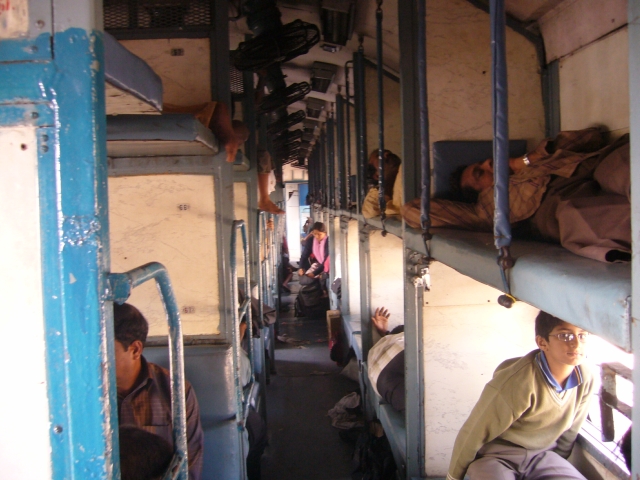
    Indian Railways sleeper image by dforest via wikimedia

    Similar posts:

  • Living in the 1970s – Australia looks backwards

    Living in the 1970s – Australia looks backwards

    An interesting observation about life in Australia over the last twenty years is how the nation decided to look backwards and become insular in many fields.

    One of the manifestations of this insularity is the sensitivity towards outside criticism by many of the nation’s business and political leaders.

    Today saw an example with two Members of Parliament on the ABC’s The World Today program responding to criticism from a former Thatcher government minister, Lord Deben, over the government’s climate change policies.

    GEORGE CHRISTENSEN STATEMENT (voiceover): The last time I checked, the House of Lords, that undemocratic anachronism in a modern British democracy, and its Privy Council, had no jurisdiction over Australia, thank God.

    Yet Lord Deben has waded into Australian affairs, whingeing about what we are doing regarding climate change when we contribute less than 2 per cent to total global carbon dioxide emissions.

    If this whingeing pom thinks the carbon tax was actually doing something for the planet, can he please advise us lowly commoners how many degrees the Earth would have cooled to because of the carbon tax?

    IAN MACDONALD: I think the Australian Government and Australian policy should be run by Australians not by some retired English Lord.

    MacDonald’s and Christensen’s sensitivity towards criticism from a ‘whingeing pom’ is notable – as is their contempt for the British House of Lords despite being members of a political party that supports the English Queen as Australia’s head of state.

    On their own, the ramblings of a pair of insular rural apparatchiks doesn’t count for much but the same hostility towards educated outsiders was on show two days earlier when US economist Joseph Stiglitz appeared on ABC Television’s Q&A program.

    An early audience question to Stiglitz set the scene;

    Thank you for taking my question. My question is for Professor. Sorry, excuse me. What gives you the right, as an American, to come to Australia and criticise our budget, especially the $7 co-contribution payment, which is capped at $70 per year?

    The ‘what gives you a right as an American?’ theme was gleefully picked up by Professor Judith Sloan, the token government apologist on the panel – faux news balance beings as alive and well in Australia as much as anywhere else in the world – who dismissed many of Stiglitz’s observations on the Australian economy as being the misguided views of an ill informed outsider.

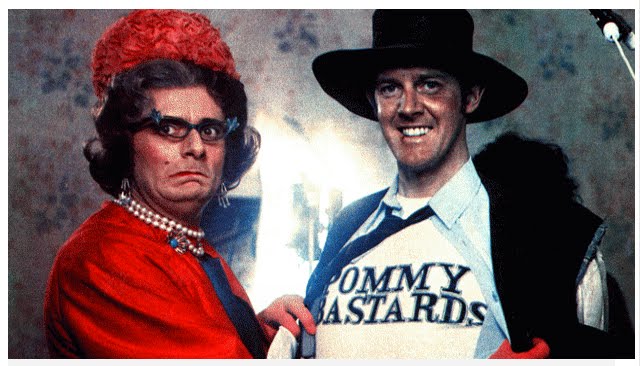
    Dismissing the whingeing poms and arrogant yanks harks back to an earlier time in Australia’s development. It may well be the nation has gone back to the days of Barry Mckenzie where Down Under is the working man’s paradise that the rest of the world desperately wants to be part of.

    Strangely, the immigration officials in that 1972 movie could well pass for today’s Australian politicians.

    As it turned out, the 1970s were a tough decade for Australia as it looked like the luck had run out. It may well turn out the Twenty-First Century is a lot tougher for the Lucky Country.


    Similar posts: