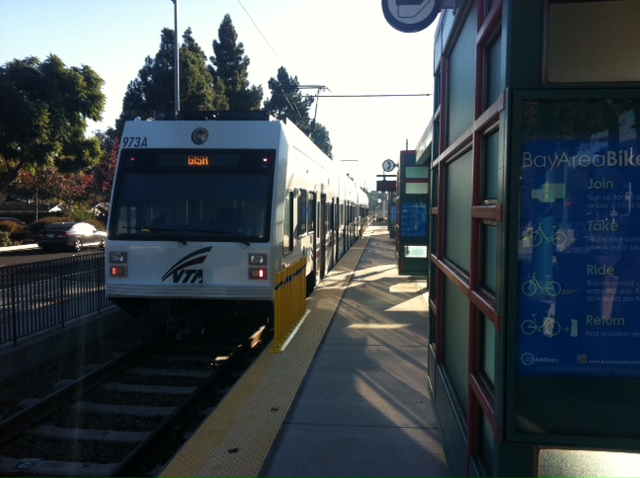
One of things that stands out when discussing economic development with city governments is the importance of public transit for towns aspiring to be smart cities.
This was particularly notable in interviewing Gordon Innes, CEO of London and Partners, about British capital’s building upon the legacy of the 2012 Olympics and its quest become the digital capital of Europe.
At the centre of these developments is public transit, something mentioned by both Innes and Laurel Barsotti of the City of San Francisco.
Innes sees public transport as essential to London’s growth, “it’s absolutely critical to the physical growth of the economy.”
“In the run up to the Olympics nine billion was spend in upgrading the tube and Dockland Light Railway and that opened up all of East London’s economy in way because it wasn’t accessible or attractive for businesses.”
“Stratford now is the best connected train station in Europe,” declares Innes. “That part of the city and around the Docklands is much more accessible and that’s bringing in investors. It wouldn’t have happened if the transport infrastructure wasn’t there.”
In San Francisco, Laurel Barsotti sees a much more subtle advantage for the city in having, by US standards, a comprehensive public transit system in its bus, light rail and subway system.
“A lot of the entrepreneurs creating those companies are concerned their employees see people using their products,” says Barsott. “They want them riding the bus to and from work and see people interacting with their products.”
While in Barcelona, the public transport system is forming part of the local Smart City program where bus stops are Wi-Fi base stations and a fundamental part of the town’s communications network.
For cities, it may well be that having decent public transit systems is going to be the competitive difference in being a key part of the 21st Century economy.
Those parts of the world not investing in transport networks may find they are being left behind in the new economy.
Similar posts: