Tag: research

  • David Cameron and the Internet of Things

    David Cameron and the Internet of Things

    Last year I interviewed the CEO of London and Partners, Gordon Innes, on how Britain’s capital is making a bid to become Europe’s Silicon Valley.

    At the opening of CeBIT last night, UK Prime Minister David Cameron increased the country’s bid with a plan on building Britain’s capability in the digital industries.

    Cameron portrayed the moves as being a partnership with Germany. This may be partly because he was being gracious towards his host and also because the Brits might not see Germany as being a competitor in these fields.

    The fields that Cameron highlighted are deploying 5G networks, more efficient use of spectrum and increasing research into the Internet of Things.

    A research boost is a notable as it may give the Brits a foothold in an area that’s evolving rapidly as the Internet of Things raises a whole range of security, privacy and governance issues.

    While there’s still a sniff of Harold Wilson’s 1963 White Heat of Technology speech in the Cameron government’s policies, at least the British government is articulating policies for the 21st Century.

    It may well be that Cameron’s digital revolution will be no more successful than Wilson’s technological revolution fifty years ago, but at least it will be a brave attempt.

    Similar posts:

    • No Related Posts
  • “He looks like a geek”

    “He looks like a geek”

    The unseemly media scrum around alleged Bitcoin inventor Dorian Nakamoto has not been the press’ finest hour.

    What’s more worrying though is a Business Insider interview with Sharon Sargent a ‘forensics analyst’ who was part of the Newsweek investigative team.

    A systems engineer by training with experience in computing security, military protocol analysis, and artificial intelligence, Sergeant said everything she found converged on an individual with a background apparently similar to hers — and who ended up sharing a name with Bitcoin’s creator.

    “I said, ‘I think I know this guy — he wears a pocket protector, he has a slide rule, he comes from that genre,’ which was very different from other characterizations,” she told BI by phone Friday.

    He wears a pocket protector and uses a slide rule? Hell yeah, not only did he create Bitcoin but he’s probably a witch as well.

    One hopes Newsweek have found the right man.

    Picture courtesy of forwardcom through sxc.hu

    Similar posts:

    • No Related Posts
  • Mortein and The Queen

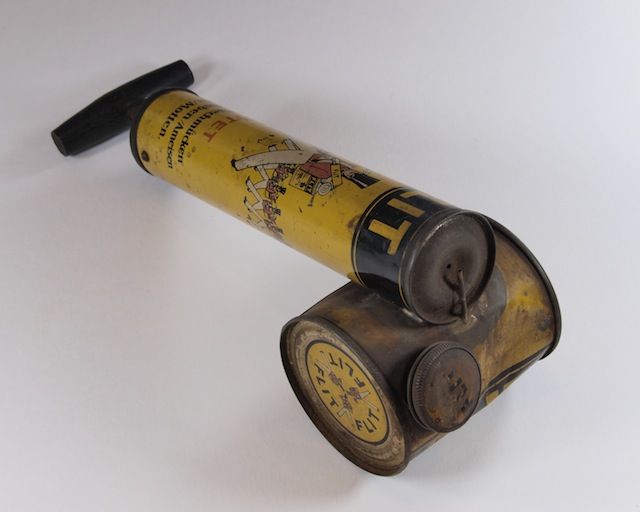
    Mortein and The Queen

    A great little story from the Australian government’s research arm, the CSIRO, tells the story of how the Queen Elizabeth II lead the commercial insect repellent industry and how intellectual property has changed.

    The story tells how the original experiments were carried out in 1940 to see what substances were best in repelling mosquitos as part of the preparation for a tropical war against Japan.

    After the war, research continued and during the 1963 Royal Tour of Australia, the Queen was sprayed with the government repellant to keep flies off her while she played golf.

    Journalists following the Queen noted the absence of flies around the official party, and word about CSIRO’s new fly-repellent spread. A few days later representatives from the company making Mortein insecticides called Doug Waterhouse for his formula, which he passed on freely, as was CSIRO’s policy at the time and the rest, as they say, is history.

    It’s unthinkable today that any research organisation would give intellectual property away and a modern agreement would include hansom royalties for the formula.

    There’s an argument that giving away the intellectual property helped innovation and public health, but in these stingy and cash strapped days it’s hard to see how government scientific organisations could survive without royalty payments.

    It certainly is true that the past is a different country.

    Fly spray can courtesy of Wikipedia

    Similar posts:

    • No Related Posts
  • Finding the perfect customer

    Finding the perfect customer

    With the rise of social media we’ve spoken a lot about customers’ ability to rate businesses and overlooked that companies have been rating their clients for a lot longer. The same technologies that are helping consumers are also assisting companies to find their best prospects.

    A business truism is that Pareto’s Rule applies in all organisations – 20% of customers will generate 80% of a company’s profits. Equally a different 20% of clients will create 80% of the hassles. The Holy Grail in customer service is to identify both groups as early as possible in the sales cycle.

    Earlier this week The New York Times profiled the new breed of ratings tools known as consumer valuation or buying-power scores. These promise to help businesses find the good customers early.

    While rating customers according to their credit worthiness has been common for decades, measuring a client’s likely value to a business hasn’t been so widespread and most companies have relied on the gut feeling of their salespeople or managers. The customer valuation tools change this.

    One of the companies the NYT looked at was eBureau, a Minnesota-based company that analyses customers’ likely behaviour. eBureau’s founder Gordy Meyer tells how 30 years ago he worked for Fingerhut, a mailorder catalogue company that used some basic ways of figuring out who would be a good customer.

    Some of the indicators Fingerhut used to figure if a client was worthwhile included whether an application form was filled in by pen, if the customer had a working telephone number or if the buyer used their middle initial – apparently the latter indicates someone is a good credit risk.

    Many businesses are still using measures like that to decide whether a customer will be a pain or a gain. One reliable signal is those that complain about previous companies they’ve dealt with; it’s a sure-fire indicator they’ll complain about you as well.

    What we’re seeing with services like eBureau is the bringing together of Big Data and cloud computing. A generation ago even if we could have collected the data these services collate, there was no way we could process the information to make any sense to our business.

    Today we have these services at our fingertips and coupled with lead generators and the insights social media gives us into the likes and dislikes of our customers these tools suddenly become very powerful.

    While we’ll never get rid of bad customers – credit rating services didn’t mean the end of bad debts – customer valuation tools are another example of how canny users of technology can get an advantage over their competitors along with saving time in chasing the wrong clients.

    Similar posts:

  • Feeling the currents

    Feeling the currents

    Internet and marketing everyman Seth Godin makes an interesting point on his blog post Silencing The Bell Doesn’t Put Out The Fire.

    Seth’s point is that satisfying vocal complainers doesn’t address underlying problems in the business and cites the Dell Hell saga of Jeff Jarvis as an example of where load complaints were a symptom of a much deeper issue within the business.

    For Dell, this had been the choice to focus on the low value, high volume market segments. To compete there it meant cheap components and selling to comparatively uneducated, price sensitive consumers.

    Compounding that decision was Dell’s decision to partly address the inevitable cost pressures they had put themselves under by outsourcing their support lines to truly dire, lowest price providers.

    As a consequence of abandoning its service culture, Dell rapidly gained a reputation as being unreliable and unhelpful. One only has to look at the Dell Hell comments on Jeff’s original posts to see how damaged Dell’s name was.

    I encountered Dell’s shocking support during that period first hand in PC Rescue, one customer asked me to troubleshoot her Dell PDA after their support line had reduced her to tears.

    Very quickly I discovered why, the installation software supplied by Dell didn’t work properly – testing was obviously another victim of budget cuts – and the tech support people were working with an early version.

    We managed to fix the problem without the “help” of Dell’s helpdesk and the client swore never again to buy Dell. She’s now a happy Apple customer who is a happy to pay a slightly higher sticker price for a better product and service.

    The real concern was that during this period Dell’s management were oblivious to the problems they were suffering in the marketplace, they were meeting their KPIs and appeared to be growing sales while the business itself was about to go over a cliff.

    Dell’s management could have recognised this had they chosen to, the company had plenty of market intelligence, customers surveys and their support logs to tell them they had a problem. It wasn’t in their interests to do so.

    Today every business has those tools to monitor what customers are saying about them. Google Alerts, Facebook and – if you’re in hospitality – Tripadvisor, Yelp or Eatability.

    With social media it’s easy for the bad message to get out; it’s also easy for management or owners to watch out for problems.

    Dell only survived the Dell Hell experience because they were big and well capitalised, no smaller business could have survived similar damage done to their reputation.

    Smaller businesses don’t have the luxury of ignoring their customers until the screams become too loud.

    Similar posts: