Tag: robotics

  • Automating the farm with drones

    Automating the farm with drones

    Can unmanned aircraft solve Australia’s feral animal problem? Startup Ninox Robotics believes sending military-grade unmanned aerial vehicles (UAVs) into the country’s outback can help farmers control pests such as wild dogs and pigs on their sprawling properties.

    “Australian landholders and managers have been struggling against the problem of invasive pest species for decades, including feral dogs, pigs, deer and rabbits,” says the co-founder and CEO of privately owned Ninox, Marcus Elrich.

    Government steps in

    Regulatory requirements on commercial drones such as their only being allowed for line of sight operations during daylight hours and below 400m has limited the deployment of UAVs in large scale agricultural applications, particularly with feral animals that tend to come out at night.

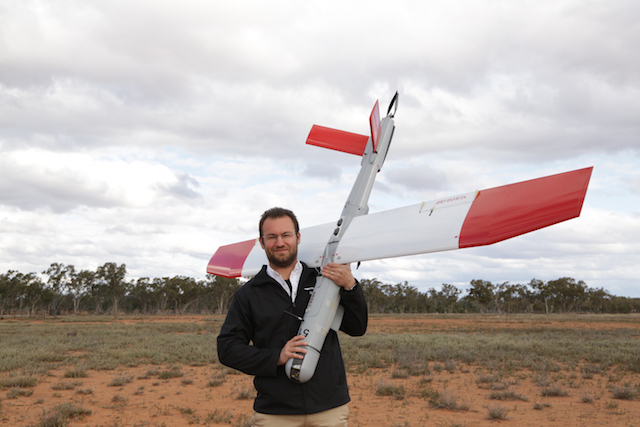
    Ninox’s drones, supplied and operated by Israeli UAV supplier Bluebird, are licensed to operate in the dark and up to 50km from their base. They also have a detachable head that allows operators to switch cameras for different operations, allowing for normal cameras during daytime and infrared at night.

    The trial, being conducted by Ninox Robotics, is the most ambitious civilian drone trial ever conducted in Australian airspace. It utilises state of the art UAVs with advanced real time thermal imaging capabilities to detect invasive pests in rural areas.

    Currently Ninox only has approval from the Australian Civil Aviation and Safety Authority (CASA) to run three-week trials at selected sites in southern Queensland and northern New South Wales.

    Services to farmers

    Should the trials be successful and Ninox obtain a wider operating license from CASA, Elrich is looking at offering the service to farmers, government agencies and utility companies for operations ranging from pest control to asset and stock management along with search and rescue roles for emergency services.

    While the use of military drones is substantially more expensive than commercial drones with the costs currently around $3,000 per flight, Elrich believes the service is competitive with manned helicopter operations that many properties in rural Australia require.

    Should the drones be successful on Australia’s sprawling farms, it’s going to be another example of how the current wave of technologies is further automating agriculture. There’s a lot more labour to be saved with these devices.

    At present Elrich and Ninox see pest management as the initial application, but there’s many other ways farmers can be using robot technologies.
    Similar posts:

    • No Related Posts
  • Could a robot put you out of business?

    Could a robot put you out of business?

    Transaction based businesses are in the firing line as robots and algorithms are taking over the tasks that are the mainstay of many service businesses.

    In How To Know if a Robot Will Take Your Marketing Job, Gartner consultant Martin Kihn identifies two factors that indicate roles at risk of being overtaken by technology.

    “The two dimensions relate to the things computers do best: (1) repetitive tasks, and (2) structured data,” states Kihn. “If you’re a knowledge worker, your biggest enemy is routine. To the extent your work is predictable, it’s codable . . . and you’re a target.”

    Kihn describes a curve where repetitive, structured jobs are at risk of automation while at the other end are more abstract analytic roles which are relatively safe from the algorithms and robots.

    will-a-robot-take-your-job

    While Kihn is focusing on marketing jobs, his message is clear for all occupations and businesses – if your company makes most of its revenue from low skill, easily automated tasks then it is ripe for being overtaken by algorithms or robotics.

    Even for businesses that are higher up the value chain, there are roles that can be replaced within the enterprise; a good example are the mining companies replacing high paid drivers with automated pit trucks.

    There are even many management jobs that may be affected as artificial intelligence advances. Approving spending or hiring requests for example can be largely dealt with by algorithms with only the rare exceptional case requiring a manager to intervene.

    So the executive suite may well be just as vulnerable as the lower status roles in an organisation.

    MIT professor Andrew McAfee who Kinh quotes has been clear that we’re on the cusp of massive change in the workplace as robots, algorithms and artificial intelligence progress. It may well be there are far more jobs and businesses at risk than we think.

    Similar posts:

  • You can’t wait for government to lead digital change

    You can’t wait for government to lead digital change

    Last week’s events in Canberra shows business can’t wait for the government to lead industry change. If you want to keep up with technology, you’re going to have to do it yourself.

    In the wake of the Global Financial Crisis many of my business clients were in trouble as banks tightened their lines of credit and consumers slammed their wallets shut. After a decade of running businesses, it was time to get a job.

    The job I found was with the small business division of the New South Wales Government’s then Department of State and Regional Development where I quickly discovered how many companies and ‘entrepreneurs’ came looking to the government for money and leadership.

    While there were some state government support programs available for exporting, high-tech and biotech businesses almost all of those approaching the Department were hopelessly unqualified for the assistance that was at best only involved marginal amounts of money.

    The toughest part of my job was gently turning those people away without upsetting them too much. Often I failed and part of the reason for that was that many of those believed the government would take leadership in a changing digital world and fund ideas that would help the state’s and nation’s competitiveness.

    I was reminded of my brief period as a public servant and the futile attempt for  with last week’s disasters for the Australian tech sector; the Prime Minister’s claim that social media is little more than digital graffiti and the still born announcement of a Chief Transformation Officer.

    Last week’s announcement of Chief Transformation Officer who happens to have no budget – the UK office the local initiative is based upon received more than a hundred million dollars in the Brits’ last budget –  is probably the best indication of how far behind the ball Australian governments, particularly the Federal level, are in dealing with a changing economy.

    A Chief Transformation, or Digital, Officer can be an important catalyst for change but to achieve that they have to have the support of the organisation’s leadership; if the CEO or minister isn’t on board then the CTO or CDO is doomed to irrelevance.

    The Prime Minister’s blithe dismissal of social media as being digital graffiti over the weekend shows just how little support an office charged with managing the Australian government’s transition to digital services will get from the executive. The sad thing is none of the likely alternatives – on either side of politics – to the current Prime Minister seem to be any more across the changes facing governments in a connected century.

    One good example of the profound changes we’re seeing is in agriculture; this feature on farming robots shows just how technology and automation is changing life on the land. These applications of robotics are going to affect every industry, including government.

    As we’ve discussed before, if you want digital leadership then you’re going to have to provide it yourself . If you’re going to wait for the government, then times are going to overtake you. How are you facing the changes to your business and marketplace?

    Similar posts:

  • Links of the day – touring an old nuclear plant and terrorists misusing Twitter accounts

    Links of the day – touring an old nuclear plant and terrorists misusing Twitter accounts

    From a quiet Sunday here’s some of the stories that have kept me occupied; terrorists misusing their Twitter accounts, what chefs really think of smartphone toting customers and more musings on the future of work in an age where robots and algorithms dominate.

    To kick off the post, what does a nuclear power plant looks like after it’s been shut down?

    Touring a decommissioned nuclear plant

    Yesterday former New York Governor Mario Cuomo passed away, one of the most contraversial moves of his administration was closing down the state’s only nuclear power plant at Shoreham, Long Island.

    In March last year Nick Carr had an opportunity to tour the abandoned site and posted the story of this visit onto hist Scouting New York website.

    Where will all the workers go?

    Economist Nouriel Roubini adds to the discussion about jobs in an age of robotics and algorithms in Where Will All The Workers Go? In his Project Syndicate piece, Roubini focuses on how the current wave of automation will affect jobs in emerging markets.

    Today, for example, a patient in New York may have his MRI sent digitally to, say, Bangalore, where a highly skilled radiologist reads it for one-quarter of what a New York-based radiologist would cost. But how long will it be before a computer software can read those images faster, better, and cheaper than the radiologist in Bangalore can?

    Like the rest of us he doesn’t have any firm answers except to suggest we may have to accept a new age of under-employment. This has serious consequences for today’s consumerist societies and the economic assumptions that underpins them.

    The risks of Instagramming your Jihad

    A clumsy Kiwi jihadist gave away the location of secret training camps in Syria through his Twitter account reports the iBrabo website. Mark Taylor joined an insurgent group in June this year and publicly burned his New Zealand passport on declaring he had no intention of returning to his homeland.

    A few months after destroying his travel documents, The New Zealand Herald reported Taylor wanted to return home. All of which proves the point of The War Nerd that the best way the west can deal with its suburban jihadists is to give all of them a one way business class ticket to Syria.

    How do chefs really feel about cell phone use in restaurants?

    Many articles have been written about how restaurateurs are driven to distraction by mobile phone users in their establishments, but how true are those tales.

    The Daily Meal interviewed a dozen US chefs about their attitude towards diners taking selfies and instagramming their meals. It turns out they are more concerned about their customers enjoying their meal rather than being upset at them shooting photos.

    Hyundai connects their cars to Google Android watches

    Korean conglomerate Hyundai has joined the connected car race with an Android Wear app that works with the company’s Blue Link system. The app, designed to work on Google’s wearable devices as well as smartphones, will work allow users to lock, open and locate their cars.

    It’s another example of how car manufacturers are integrating wearable and mobile apps into vehicles and it’s a small taste of what’s possible when the smart home and the connected car start talking to each other.

    Similar posts:

  • Designing the self driving car

    Designing the self driving car

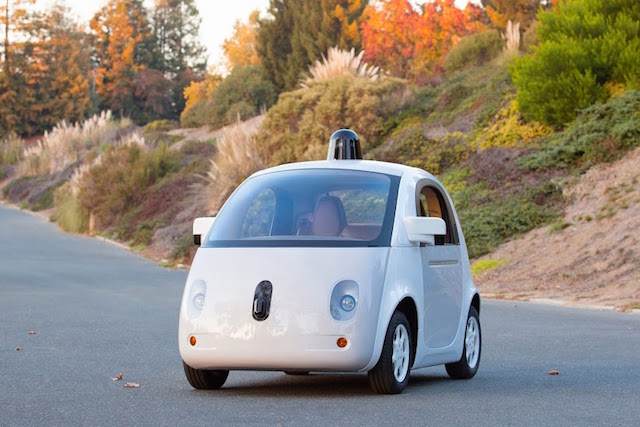
    “It certainly looks like an engineer designed it,” was one of the first reactions to Google’s announcement of its first full prototype self driving car.

    Certainly Google’s driverless vehicle looks odd, sort of like an overgrown carnival dodgem or an cartoon character police car.

    One of the interesting aspects of the driverless car is that many features into today’s automobiles aren’t necessary if you don’t have a driver – the obvious aspects being that a steering wheel, handbrakes and dashboard displays become unnecessary.

    Google have a video from earlier in the year showing the design and unveiling of the prototype. One of the fascinating aspects of the new device is how Google propose it can empower the sight impaired and disabled.

    The prototypes are stripped down vehicles with only a top speed of 25mph, with only two seats and little, if any luggage space. As the Oatmeal reports, riding in them is a little boring after the first few minutes.

    Looking at the Google vehicles it’s difficult not to think we could design something radically different if we moved away from our own prejudices of what a car should look like.

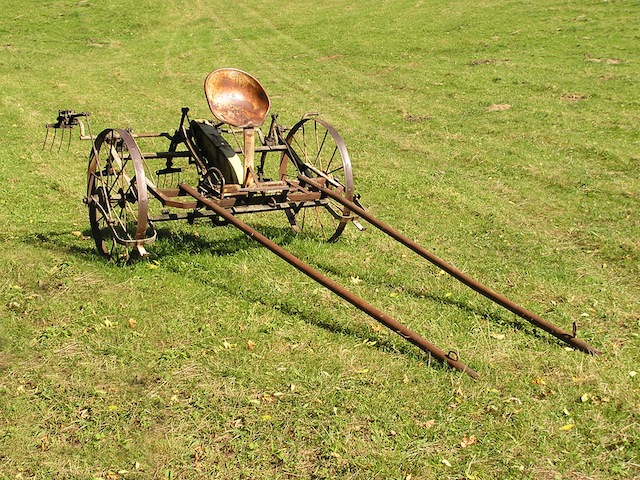
    At the beginning of last century, motor cars looked similar to the horse carts that were the standard transportation of the day; it was only in the 1930s the automobile fully took the form we recognise today.

    So it’s worth considering how we can optimise these vehicles to meet our needs and comfort rather than build them around the requirements of Twentieth Century technologies and usage.

    Tomorrow’s driverless cars will probably look very different to today’s vehicles and similarly our communities will adapt to a very different way of travelling. We will almost certainly find our cities will be very different when the driverless car becomes the norm.

    We need to think how to design them for that future, however far away it may be.

    Similar posts:

    • No Related Posts