Tag: robots

  • Human bullies and autonomous vehicles

    Human bullies and autonomous vehicles

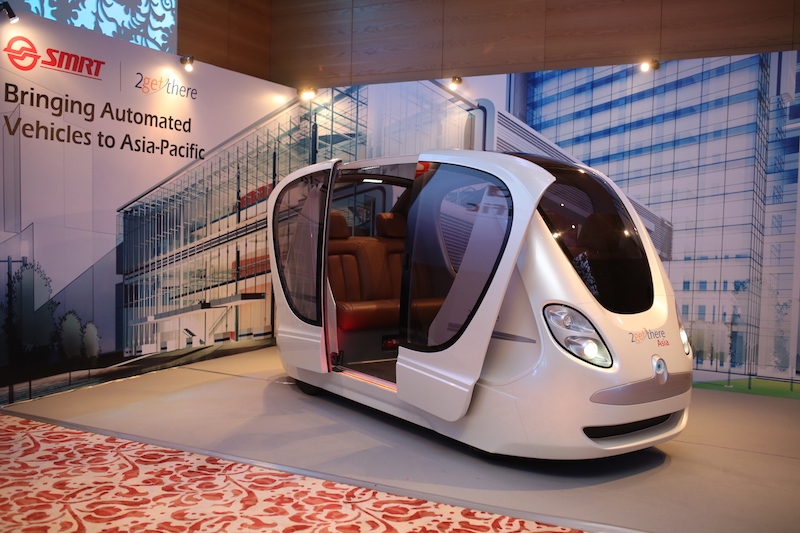
    What happens when drivers encounter autonomous vehicles on the highways?

    Conventional wisdom is the roads will be carnage as logically thinking robots literally collide with irresponsible humans.

    The Chief Executive of Mercedes-Benz America has a different take, it may be that humans quickly learn to bully safety conscious and law abiding autonomous vehicles on the road.

    Speaking at a motoring conference in Las VegasDietmar Exler suggested the immediate future will see aggressive drivers taking advantage of driverless vehicles programmed to avoid collisions and risky situations.

    This raises an interesting question – will autonomous vehicles actually make the roads less safe in the earlier days despite being safer themselves?

    How humans interact with new technologies is never a certain thing, and the idea that people will bully robots is a delicious, and plausible idea. It does raise though some interesting possibilities as robots become common in our lives.
    Similar posts:

    • No Related Posts
  • Automating the world of pizza making

    Automating the world of pizza making

    First they came for the pizza makers.

    Alex Garden, a former head of production of online game developer Zynga, is the co-founder of Zume. His company is automating pizza making.

    “It’s going to be a long time before machines can do everything people can do, probably not in my lifetime,” he tells Bloomberg.

    Pizza making though isn’t already untouched by automation. A visit to the local Pizza Hut or Domino’s shows how the process is already standardised and partly automated at many fast food chains.

    Like coffee making, the machines are supplanting many skilled tasks and service industry jobs that were once thought to be beyond automation. The nature of work is changing and in turn invalidating many of the assumptions about employment held by policy makers.

    Those with a 1980s view on how service sector industries will be the drivers of employment may have to reconsider their theories.

    Zume and Gaden may have some way until they fully automate the pizza supply chain, but humans will increasingly be a smaller part of it.

    Similar posts:

  • Robots replace Chinese factory workers

    Robots replace Chinese factory workers

    Taiwan’s Foxcomm, the world’s biggest electronics manufacturer, has announced it will replace 60,000 Chinese workers with robots.

    As the cost of robotics falls and the price of Chinese labour increases, the economics of automating low skilled work increasingly looks attractive.

    While automating manual work is process that’s been familiar for three centuries, this automation is now heading into the management suite as artificial intelligence increasingly becomes a viable alternative for lower level supervisory roles.

    The workplace of the future is going to look very different to today’s, all of us need to be asking if we have the skills that will be needed by it.

    Similar posts:

    • No Related Posts
  • Microsoft and the AI future

    Microsoft and the AI future

    Despite the embarrassment of their foul mouthed racist bot, Microsoft are pressing on with a move into artificial intelligence.

    Ahead of this week’s Launch event in San Francisco, Microsoft’s CEO Satya Nadella laid out his vision for the company’s Artificial Intelligence efforts in describing a range of ‘bots’ that carry out small tasks.

    Bloomberg tagged Nadella’s vision as ‘the spawn of clippy’, referring to the incredibly irritating help assistant Microsoft included with Office 97.

    Tech site The Register parodied Clippy mercilessly in their short lived IT comedy program Salmon Days, as shown in this not safe for work trailer. While The Reg staff were brutal in their language and treatment of Clippy, most Microsoft Office users at the time shared their feelings.

    While Clippy may be making a comeback at Microsoft, albeit in a less irritating form, other companies are moving ahead with AI in the workplace.

    Robot manufacturer Fanuc showed off their self learning machine a few weeks ago which shows just how deeply AI is embedding itself in industry. Already there are many AI apps in software like Facebook’s algorithm and Google’s search functions with the search engine’s engineers acknowledging they aren’t quite sure what the robots are up to.

    For organisations dealing with massive amounts of data, artificial intelligence based programs are going to be essential in dealing with unexpected or fast moving events. Those programs will also affect a lot of occupations we currently think are immune from workplace automation.


    Similar posts:

    • No Related Posts
  • Exploring the downsides of artificial intelligence

    Exploring the downsides of artificial intelligence

    Microsoft Research ran an experiment last week on their artificial intelligence engine where they set a naive robot to learn from it was told on Twitter.

    Within two days Tay, as they named the bot, had become an obnoxious racist as Twitter user directed obnoxious comments at the account.

    Realising the monster they had created, Microsoft shut the experiment down. The result is less than encouraging for the artificial intelligence community.

    Self learning robots may have a lot of power and potential, but if they’re learning from humans they may pick up bad habits. We need to tread carefully with this.

    Similar posts:

    • No Related Posts