Tag: robots

  • Replacing Japan’s workers with robots

    Replacing Japan’s workers with robots

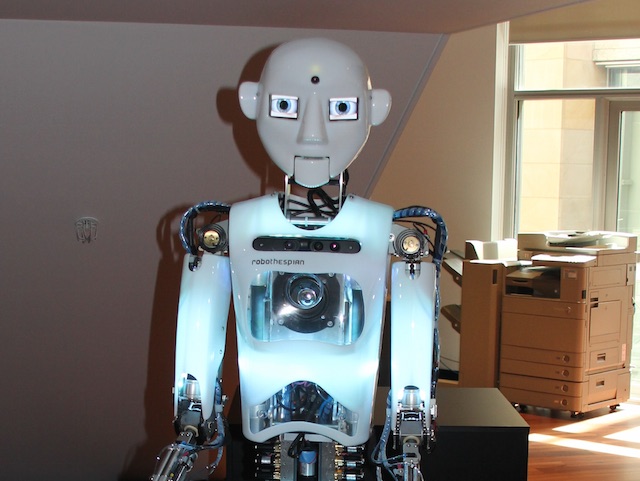
    Nearly half of Japan’s jobs could be done by computers, robots or artificial intelligence in the near future, says the Nomura Research Institute.

    In working with Oxford University’s Martin Program on Technology and Employment, the Nomura Research Institute examined 601 job classifications that currently employ 42.8 million Japanese.

    Using the Oxford University methodology, the Japanese researchers estimated more than two thirds of the roles could be automated with nearly half of all Japanese workers being potentially replaced by computers.

    Previously the Martin program has estimated  47 per cent of the United States’ workforce and just over a third of Britain’s are vulnerable to similar changes. Anyone who’s visited or lived in Japan wouldn’t be surprised at the relatively high level of vulnerability given the degree of manual jobs still being done in Japanese society that were long ago lost in the rest of the western world.

    For Japan, replacing workers with robots isn’t a bad option given the population is aging force and the nation is at best reluctant to import immigrants to address skills shortages. It’s not surprising the country is probably the most advanced at deploying robots in workplaces.

    How this will work for an aging Japan that has to support an increasingly older population will be fascinating to see. For other western countries – or even China – facing similar pressures, the Japanese will be providing important lessons.

    Similar posts:

    • No Related Posts
  • Automating the farm with drones

    Automating the farm with drones

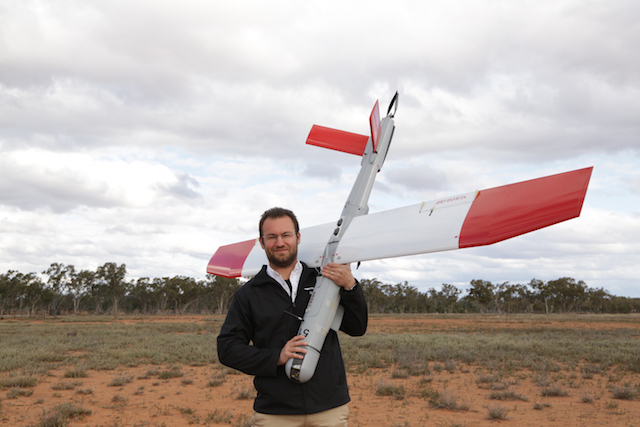
    Can unmanned aircraft solve Australia’s feral animal problem? Startup Ninox Robotics believes sending military-grade unmanned aerial vehicles (UAVs) into the country’s outback can help farmers control pests such as wild dogs and pigs on their sprawling properties.

    “Australian landholders and managers have been struggling against the problem of invasive pest species for decades, including feral dogs, pigs, deer and rabbits,” says the co-founder and CEO of privately owned Ninox, Marcus Elrich.

    Government steps in

    Regulatory requirements on commercial drones such as their only being allowed for line of sight operations during daylight hours and below 400m has limited the deployment of UAVs in large scale agricultural applications, particularly with feral animals that tend to come out at night.

    Ninox’s drones, supplied and operated by Israeli UAV supplier Bluebird, are licensed to operate in the dark and up to 50km from their base. They also have a detachable head that allows operators to switch cameras for different operations, allowing for normal cameras during daytime and infrared at night.

    The trial, being conducted by Ninox Robotics, is the most ambitious civilian drone trial ever conducted in Australian airspace. It utilises state of the art UAVs with advanced real time thermal imaging capabilities to detect invasive pests in rural areas.

    Currently Ninox only has approval from the Australian Civil Aviation and Safety Authority (CASA) to run three-week trials at selected sites in southern Queensland and northern New South Wales.

    Services to farmers

    Should the trials be successful and Ninox obtain a wider operating license from CASA, Elrich is looking at offering the service to farmers, government agencies and utility companies for operations ranging from pest control to asset and stock management along with search and rescue roles for emergency services.

    While the use of military drones is substantially more expensive than commercial drones with the costs currently around $3,000 per flight, Elrich believes the service is competitive with manned helicopter operations that many properties in rural Australia require.

    Should the drones be successful on Australia’s sprawling farms, it’s going to be another example of how the current wave of technologies is further automating agriculture. There’s a lot more labour to be saved with these devices.

    At present Elrich and Ninox see pest management as the initial application, but there’s many other ways farmers can be using robot technologies.

    Similar posts:

    • No Related Posts
  • Your TV is watching you. ABC Nightlife February 2015

    Your TV is watching you. ABC Nightlife February 2015

    Paul Wallbank joins Tony Delroy on ABC Nightlife nationally from 10pm Australian Eastern time on Thursday, February 19 to discuss how technology affects your business and life.

    If you missed the show, the program is available for download from the ABC site.

    For the February 2015 program Tony and Paul look at robot driven hotels, the internet of rubbish bins and how your TV could be listening to you.

    Last year a lawyer read the terms and conditions of his new Samsung TV and discovered that the company recommended people don’t discuss sensitive information around it. This has lead to widespread, and justified, concerns that all our smart devices – not just TVs but smartphones and connected homes – could be listening to us. What happens to this data and can we trust the people collecting it?

    The internet of rubbish bins

    It’s not only your TV or smartphone that could be watching you, in Western Australia Broome Shire Council is looking at tracking rubbish bins to make sure only council issued ones are emptied.

    Shire of Broome waste coordinator Jeremy Hall told WA Today  the council’s garbage truck drivers had noticed more bins than usual were getting emptied and a system needed to be put in place to identify “legitimate” bins.

    While Australian councils are struggling with rubbish bins a hotel in Japan is looking to replace its staff with robots and room keys with face recognition software. The Hen-na Hotel is due to open later this year in Nagasaki Prefecture, the Japan Times reports.

    Join us

    Tune in on your local ABC radio station from 10pm Australian Eastern Summer time or listen online at www.abc.net.au/nightlife.

    We’d love to hear your views so join the conversation with your on-air questions, ideas or comments; phone in on 1300 800 222 within Australia or +61 2 8333 1000 from outside Australia.

    You can SMS Nightlife’s talkback on 19922702, or through twitter to @paulwallbank using the #abcnightlife hashtag or visit the Nightlife Facebook page.

    Similar posts:

    • No Related Posts
  • Where will the jobs come from? ABC Nightlife radio

    Where will the jobs come from? ABC Nightlife radio

    If you missed the program it’s available from the Soundcloud site.

    Paul Wallbank joins Tony Delroy on ABC Nightlife across Australia from 10pm Australian Eastern time on Thursday, November 27 to discuss how technology affects your business and life.

    Last week a US company showed off its robotic security guard, with the boast it costs less than half the wages of a human officer. It isn’t just security guards, baristas or taxi drivers, many knowledge based jobs — from call centre workers to lawyers — can be done by computer programs, or algorithms.

    Even the building industry isn’t immune from the robots as 3D printing moves into making houses by squeezing concrete out of computer controlled nozzles.

    In almost every occupation technology is changing the way we work and reducing the number of workers needed to do a job. So where next for employment in the Twenty-first Century?

    Meet the K-5 robot security guard

    For this month’s Nightlife we’ll be discussing how the robots and algorithms are taking over the workplace and what this means for our communities and businesses.

    Join us

    Tune in on your local ABC radio station from 10pm Australian Eastern Summer time or listen online at www.abc.net.au/nightlife.

    We’d love to hear your views so join the conversation with your on-air questions, ideas or comments; phone in on 1300 800 222 within Australia or +61 2 8333 1000 from outside Australia.

    You can SMS Nightlife’s talkback on 19922702, or through twitter to @paulwallbank using the #abcnightlife hashtag or visit the Nightlife Facebook page.

    Similar posts:

  • Robochick takes on the penguins

    Robochick takes on the penguins

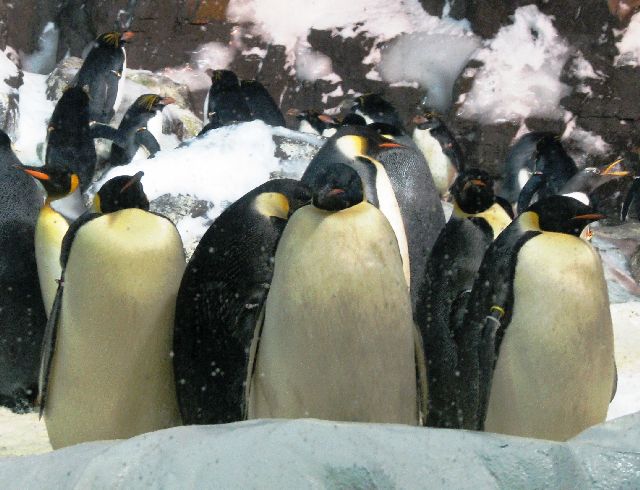
    An interesting little story about a robot penguin chick appeared on the I F***ing Love Science website a few days ago.

    French  researchers wanted to monitor penguin colonies in Antarctica, the problem traditionally has been that lumbering humans tend to distrupt the birds’ colonies. To overcome the problem the researchers designed a very basic dummy penguin chick which they could drive into the colonies.

    It worked very well with both the young birds and adults accepting the robot into their community which gave researchers great insights into the birds’ social structures.

    While it’s a cute example, the robot penguin shows just how many applications we’re going to see in the next few years for intelligent devices that can go into places that would be inaccessible for humans. For many industries this is going to dramtically change the way they work.

    Image courtesy of Alex Bruder through Free Images.

    Similar posts:

    • No Related Posts