Tag: san francisco

  • Travel Review – Kenmore Residence Club, San Francisco

    Travel Review – Kenmore Residence Club, San Francisco

    San Francisco is an expensive city to stay, so a place at $80 a night that includes breakfast and dinner is bargain that can’t be ignored.

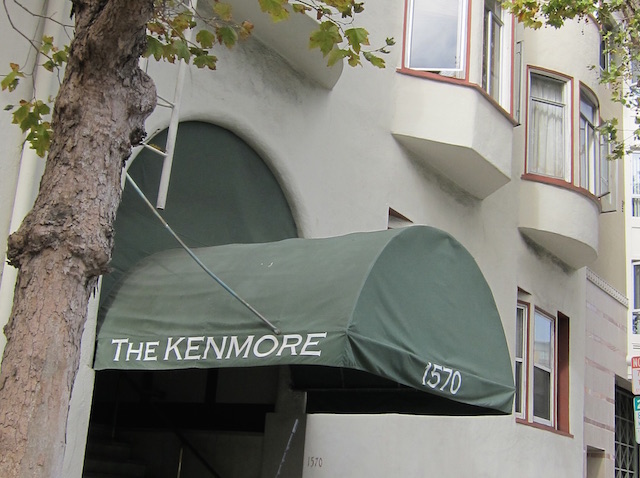
    The Kenmore Residence Club  is a slightly run down Victorian building in the Pacific Heights neighbourhood, just over a mile from San Francisco’s Union Square.

    Given the price and location, it would be unfair to judge the place on its looks. Its 65 rooms vary from doubles with ensuites for $140 a night to singles with shared bathrooms for $80.

    The singles with shared baths are surprisingly large rooms with a double sized bed and a walk in wardrobe. Also included in the room are a fridge, wash basin and flat screen TV. Sheets are changed twice a week along with the included hand and bath towels.

    WiFi included

    As almost always with cheaper hotels and hostels, Wi-Fi is included in the room rate and is surprisingly good throughout the building. In the room I stayed in, 308, the internet access was sufficient to work with and stream radio although Skype required sitting in one of the hallway sofas.

    In other rooms patchy Wi-Fi may also be a problem as many of the other guests – which seemed to be mainly Japanese and German backpackers – were working on laptops in the hallway sofas.

    Working in the room was fine with a basic desk, a not uncomfortable chair and plenty of power points. The view of the opposite peeling paint on the opposite wall meant there was little to distract an attention deficient worker.

    Shared Facilities

    Those German and Japanese tourists mean the two shared bathrooms on each floor are quite clean – apart from one unfortunate morning where someone had been sick. This wasn’t such a problem as it was always possible to find a vacant room. Soap dispensers are in the bathrooms but for showers it’s probably best to buy your own.

    On the ground floor the dining room seats around forty people for breakfast between 7am and 9am and dinner, Monday to Saturday, between 5.30 and 7. If you’re in San Francisco for sightseeing or business, it’s hard to get back in time for dinner so don’t budget on eating too many evening meals there.

    The meals themselves are adequate with a self service salad or breakfast bar and a cooked option. The dinners were fairly stodgy while the eggs or pancakes are fine at breakfast but the bacon and sausages are forgettable. I found myself eating just fried and scrambled eggs with toast and loading up with salad and fruit.

    If you don’t eat in the hotel, it’s only two blocks away from Japantown where there’s no shortage of good and cheap ramen, sushi and other Japanese restaurants. There’s also a Whole Foods and Walgreens within three blocks if you want to make your own meal.

    Getting there

    Should you want to get down to the touristy parts of San Francisco, the 38 Muni bus down Geary Street is the quickest and most reliable way to Union Square and the Ferry Building. Two blocks away on Van Ness, the 18 will take you to Fisherman’s Wharf and on weekends the 76X goes to the Golden Gate Bridge and Marin Headlands.

    Coming back from Union Square, the number 2 and 3 buses stop almost outside the hotel but are far less frequent or reliable than the Geary services. If you need a Clipper Card or Muni Passport the Walgreens a block away on the corner of Post and Gough street is the place to visit.

    The neighbourhood itself is quite safe although south of the Cathedral and into the Hayes Valley things get somewhat less salubrious and walking around that part of SF at night is not recommended by the locals. A stroll back from Union Square or the Embarcadero though isn’t unpleasant.

    Doing your laundry

    Another benefit with the Kempton is the coin operated laundry in the basement. If you’ve been travelling for a while – I’d spent the previous week in San Jose – being able to wash your clothes is a godsend, laundry powder and change is available at reception and you’ll need lots of quarters for the driers.

    Staff at the hotel seem to be mainly made up of long term residents who are working to defray their rent, this means they are a quirky mixed bag of characters. Some are a bit gruff while others are delightfully helpful, again it’s not the Marriott Marquis and the rates reflect that.

    There are some downsides to the Kempton, the rooms aren’t particularly quiet – this is something to be expected at cheaper hotels and there are no strong boxes or other security beyond the door locks in the room. While the place seemed safe, nervous travellers may want to consider their storage of passports and valuables.

    On balance, The Kenmore is a bargain in one of America’s most expensive cities. If you’re prepared to deal with the quirks and stay a little bit out of the San Francisco tourist spots then the price is unbeatable.
    Similar posts:

    • No Related Posts
  • Mapping AirBnB in San Francisco

    Mapping AirBnB in San Francisco

    The San Francisco Chronicle has a great feature mapping apartment rental service AirBnB’s effects on the city’s economy.

    By trawling through the AirBnB database, The Chronicle found 4,800 properties for rent in the city to glean a great deal of information that the company is not keen to share.

    A key point from the survey is that over 80% – 3200 – of the properties are householders renting out spare rooms or their places while they are away, which is exactly what AirBnB claim their service is designed for.

    The other, professional hosts are what’s attracted the wrath of regulators in cities like New York, where it appears unofficial hotels are skating around taxation and safety regulations.

    A new breed of middleman

    Catering for these professional hosts has seen another group of middlemen service pop up and The Chronicle features Airenvy, a service that helps landlords manage their properties.

    Airenvy is now the biggest San Francisco host, managing 59 properties on behalf of its clients and charging 12 percent commission for dealing with the daily hassle of looking after guests. Since launching in January it employs twelve staff.

    Unlike many of the internet middlemen, Airenvy does seem to add value to the renting process above being a simple listing service. For absentee hosts, the fees would seem to be worthwhile in reducing risks and problems.

    Filling the gaps

    A unique thing about San Francisco is the concentration of hotels around Union Square with 20,000 of the city’s hotel rooms within a ten minute walk of the Moscone Centre.

    For non-convention visitors, particularly those visiting family or friends, AirBnB is an opportunity to get a place out of downtown.

    The price ranges reflect the service’s diversity as well; from $18 a night for a couch through to $6,000 for a mansion. The average though is close to a typical hotel rate of $226 a day.

    The effects of AirBnB

    What the survey shows is AirBnB has diversified San Francisco’s accommodation options without the problems being encountered in New York.

    That isn’t to say there aren’t problems – the Silicon Valley model of pushing responsibility and consequences onto users leaves a lot of risk for the both the service and its customers – however AirBnB is another example of how industries are evolving as information becomes easier to find.

    Another thing this survey shows is the new breed of data journalism and how analysing the numbers can be the foundation of building great stories.

    The AirBnB and the changing global travel industry is a great story in itself as the San Francisco Chronicle has shown.


    Similar posts:

    • No Related Posts
  • San Francisco’s stuggle with property prices

    San Francisco’s stuggle with property prices

    “You’re not wanted here” is the message from San Francisco residents protesting against tech workers and tycoon moving into the city.

    Over the last year the protests against the ‘Google Buses’ that ferry tech company workers from San Francisco to Silicon Valley has steadily ratched up with protests against high profile individuals, people vomiting on the buses and Google Glass wearers getting their devices smashed.

    Around the world, from London and Berlin to Auckland and Hong Kong, cities are worrying about the diversity of their cities as the global asset bubble inflates property prices beyond the reach of ordinary citizens.

    In many respects San Francisco is probably unique in its relationship to Silicon Valley and its restricted geography, but it’s hard not to think if the current technology stock falls on the US stock markets became a Tech Wreck style bust then the city’s problems might solve themselves.

    The challenge for all major cities around the world is to manage the current boom in property prices that threaten to drive out lower paid workers essential to vibrant economies – although ultimately anything that can’t be sustained won’t be sustained and it’s hard to see how housing can run too far ahead of wages before a reversal happens.

    In the meantime though we can expect to see many cities struggle with the same issues that face San Francisco.

    Similar posts:

    • No Related Posts
  • Cities of Industry

    Cities of Industry

    The latest Decoding The New Economy interview feature Laurel Barsotti, Director of Business Development at the City of San Francisco discussing how the city refound it’s entrepreneurial mojo.

    A notable point about Laurel’s interview is how she has similar views to Barcelona’s Deputy Mayor Antoni Vives about the importance of industry to San Francisco.

    For some time it was an article of faith in the Anglo-Saxon world that the west had become post-industrial economy where manufacturing was something dispatched to the third world and rich white folk could live well selling each other real estate and managing their neighbours’ investment funds.

    “Opening doors for each other” was how a US diplomat described this 1980s vision according to former BBC political correspondent John Cole.

    It’s clear now that vision was flawed and now leaders are having to think about where manufacturing, and other industries, sit in their economic plans.

    Barcelona’s and San Francisco’s governments have understood this, but others are struggling to realise this is even a problem as they hang on to dreams of running their economies on tourism, finance and flogging their decidedly ordinary college courses to foreign students.

    For some political and business leaders this is a challenge to their fundamental economic beliefs. It’s going to be interesting to see how they fare in the next twenty years.

    Similar posts:

  • Travel review: Marriot Marquis, San Francisco

    Travel review: Marriot Marquis, San Francisco

    San Francisco’s Marriot Marquis is a welcome place to rest after a tough flight or a long day at a conference, just be careful when you take on the coffee machine.

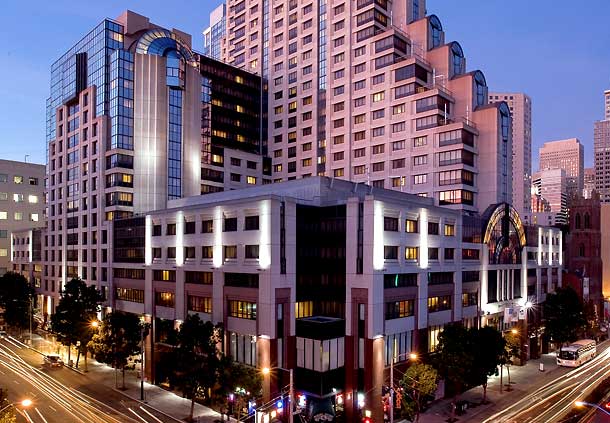
    The first impression of the Marriot Marquis San Francisco when you step out of a cab is that it is a very busy place. Being situated next to the city’s Moscone Centre makes it is the centre for the convention trade which overruns the hotel when a big convention like Dreamforce is on.

    Something all major conference destinations do well is dealing with crowds and the Marquis is no exception. The reception desk is efficient, fast and friendly – right down to having no problem with a check-in earlier than the stipulated 4pm. Exactly what a traveller needs after a cramped 13 hour flight.

    The room

    A standard room at the Marquis is a comfortable size with a genuine king sized bed. Beside the bed is a clock radio that is simple to set and actually works, this is something many other hotels should take note of.

    There’s plenty of room to spread out with a good sized bath, plenty of storage space and a deep wardrobe. In the wardrobe is the standard digital safe for valuables.

    On the TV there is the usual range of cable TV, free to air stations and in-house movies. Interestingly the cable selection included Russia Today but not the BBC World Service or Al-Jazeera.

    Power sockets are plentiful including two mounted on the writing desk for easy laptop charging. Wireless networking, which costs an extra $14.95 a day, gives reasonable download speeds and is more than adequate for most cloud computing tasks.

    The Coffee Machine of Doom

    Unlike the user friendly beside clock the one cup drip coffee machines are quite possibly the most difficult devices ever installed in a hotel room.

    in room coffee maker at the san franciso marriott marquis
    The evil Marriott coffee maker

    Thinking the first one was broken, I sent it back. It turned out it wasn’t but I never quite got the knack of figuring out how to work them.

    Along with being horribly user unfriendly, the disposable cartridges in the thing are horribly environmentally unfriendly. Generally give the things a miss and visit one of the many good coffee shops in the neighbourhood.

    Fitness Centre

    The fourth floor fitness centre features the usual range of equipment but in a complex the size of the Marriott expect it to be busy at peak times, at 7am the place was packed.

    The swimming pool and fitness centre at the Marriott Marquis San Francisco hotel
    The Marriott Marquis’ swimming pool

    Upstairs on the fifth floor is a respectable 30ft swimming pool which doesn’t get too busy, however more than four lap swimmers at one time will be difficult. The pool is quite shallow at one end and enthusiastic tumble turners should take care at the end of their laps. Note the pool opens at 6am, half an hour after the rest of the fitness centre.

    Location

    For attending conferences at Moscone the location is unbeatable and being right on Market Street in downtown San Francisco with Union Square, Westfields and all the major shopping outlets close by.

    Harbourside tourist attractions are some distance from the hotel although the Marriot is close to the Powell terminus of the city’s iconic cable cars to Fisherman’s Wharf. The vintage K-Line street car service also runs to Fisherman’s Wharf via the Embarcadero waterfront.

    Both the BART and Metro are around the corner at the Powell Street Station – the BART takes half an hour to San Francisco airport but it’s unlikely you’ll need that if you can afford to stay at the Marriot. Cabs to the hotel are around $65 including a 20% tip.

    Overall

    It’s difficult to fault the hotel as the service is friendly and efficient while the rooms are comfortable with all the features required for a good business stay.

    Overall, if you’re not on a tight budget and you’re attending a conference at the Moscone Centre or have business in the SoMA district then the Marriot Marquis is a good choice. If you’re in San Francisco for the tourist experience or you have business in the Financial District then you’ll probably find hotels closer to what you’re in town for.

    Paul travelled to San Francisco and stayed at the Marriott courtesy of Salesforce to attend their Dreamforce conference.

    Similar posts: