
Tag: sharing economy

  • Working in the gig economy

    Working in the gig economy

    Just what do people think about the on-demand, or gig, economy? A survey by public relations company Burston-Marsteller looked at those who use and provide services for companies like Uber, AirBnB and Instagram.

    Unsurprisingly the majority of users are have positive experiences with on-demand services which allows them to access product they couldn’t afford otherwise.

    More important are the views of the contractors, and those who are doing these jobs for the flexibility are matched by those who’d rather have full time employment but can’t find a role.

    Strikingly, the longer a contractor has worked for one of these services the more likely they are to find the company’s practices exploitative and more than half believe the platforms are gaming the regulations.

    Overall, it shows participants in the ‘sharing economy’ have no illusions about the caring aspects of the services that employ them, unlike many of those touting the benefits from the sidelines.

    Similar posts:

    • No Related Posts
  • The limits of the sharing economy

    The limits of the sharing economy

    What happens should you have an accident while staying at an AirBnB rental?

    The answer won’t surprise anyone with the sharing economy’s business model, as Zak Stone tragically found out when his father was killed while staying in a Texas AirBnB rental.

    Stone’s story is only redeemed by the rental’s home insurance covering the claim, had they not things would have become very expensive for everyone.

    The conclusion of the story isn’t satisfactory as AirBnB, while sympathetic to the Stone family, isn’t about to accept any liability while those booking through the service remain at the whim of the property owners’ insurers.

    Ultimately what the Stone’s tragic tale shows is just how flawed the comparisons between hotel chains and booking platforms, the line “AirBnB is the world’s biggest accommodation service but it owns no hotel rooms” is a trite as saying the local travel agent owns no aircraft.

    The model of the ‘sharing economy’ services depends upon pushing as many costs as possible onto the users and providers, while that might be sustainable it creates a new set of costs and risks for customers which aren’t really understood.

    Similar posts:

    • No Related Posts
  • San Francisco’s Proposition F fails

    San Francisco’s Proposition F fails

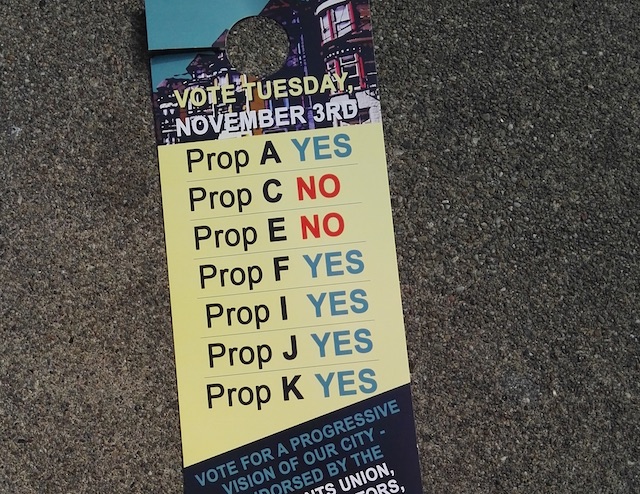
    Proposition F, the local government initiative to restrict short term rentals in San Francsico, failed in that city elections yesterday.

    Needless to say, AirBnB is pretty happy about this but the problems of unaffordable cities will continue.

    Update: Emboldened by their victory in San Francisco, AirBnB now intends to roll out ‘community groups‘ to fight regulations across the US.

    Airbnb says it will provide resources and some infrastructure to these local groups but expects hosts and guests to ultimately run them as the clubs proliferate in the same “grassroots” manner that Airbnb itself has grown. The clubs are meant to organize and advocate for home-sharing with their local city councils and elsewhere in the community. When pressed, Lehane declined to specify how much, exactly, Airbnb would spend on the clubs.

    This overt politicising – it’s hard to call it ‘astroturfing’ when the company is so open about it – is interesting on a number of levels and it illustrates shows how the promise of renewed community engagement and activism through the internet has been usurped by corporate interests.

    Similar posts:

    • No Related Posts
  • Uber becomes a US Presidential issue

    Uber becomes a US Presidential issue

    As services like Uber change the definition of employment, the company finds it has become an issue for the US Presidential race.

    The New York Times reports how the Democratic candidates, led by Hilary Clinton, and the Republicans are carving out their positions on the sharing and on-demand economies.

    Notable in the current discussion is low little support there is for the incumbent taxi companies and their drivers which shows how in most states and cities the medallion and licensing regulations have been used to stifle competition and discourage service.

    For cab drivers that characterisation is somewhat unfair given cabbies themselves in many cities are exploited and are as much the victims of a bad systems as the passengers.

    That the future of work and the structure of these services is now in the political spotlight, the issues raised by the new business models are going to get more examination and – hopefully – some ideas on addressing the changes needed to deal with a very different workforce in the 21st Century.

    Similar posts:

  • Creating a new class of worker

    Creating a new class of worker

    With the ‘sharing economy’ becoming more widespread and freelance workers possibly being the norm in the future, the question of how are they defined arises.

    The simple answer is they become contractors after the California Labor Commission ruled for an Uber driver in a dispute over expenses incurred on the job. However it’s still possible that the level of control many of these services exert over workers may see many defined as employees.

    For the ‘sharing economy’, the definition is important as the business model depends on shifting all the costs onto the contractors and customers. The service, like Uber and AirBnB, is only there ostensibly as a platform to match buyers and sellers.

    Buzzfeed’s Caroline O’Connor suggests a third definition of worker, a ‘dependent contractor’. Under this category contractors would receive social security benefits, insurance and other features of permanent employment with the flexibility of being on call.

    In many ways O’Connor’s suggestion is similar to the national insurance schemes of many European countries where workers contribute towards their eventual retirement or for the benefits they may receive should they be unfortunate to become sick or unemployed.

    While the suggestion is worthwhile, it’s still not hard to see how the ‘sharing economy’ companies would want to put their contractors in whatever category reduces their costs and risks.

    The discussion about workers’ protection and social security benefits needs to be had as we enter a period of economic change not dissimilar to the 1920s or late nineteenth Century where work patterns changed and there was substantial dislocation.

    As the 1920s saw the start of concepts like unemployment and sickness benefits, we will need new employment and social security concepts develop to cater for the new economy and modern workforce.

    Similar posts: