Tag: smartcities

  • Cisco and the connected stadium

    Cisco and the connected stadium

    One of the challenges facing sports administrators and leagues around the world is that the quality of broadcast coverage has become so good it’s become increasingly harder to get fans out to the games.

    Coupled with the constantly improving television coverage, fans are also expecting more as they go to games with their smartphones and tablets. Part of the solution for venue managers is to roll out smart stadium facilities that enhance spectators’ experience at the games.

    Mike Caponigro, Cisco’s head of Global Solutions Marketing for Sports and Entertainment, sees the smart stadium as complementing the ground experience and Cisco are working with over three hundred venues in thirty countries around the world.

    Improving the live experience

    “Live is always going to be best,” states Caponigro. “You can’t replace that tribal passion of the crowd. No matter how excited I get in my living room or with some friends in a pub you’re never going recreate that enthusiasm.”

    However the expectations of sports fans are changing Caponigro points out citing how HD television and the internet is changing the experience for spectators outside the stadium, “fans don’t want to be removed from that action.”

    Cisco started their Connected Stadium program when the Oakland Athletics were looking at moving home stadiums seven years ago. While Oakland decided to remain at their existing stadium the company realised the market for connected stadiums was potentially huge, “it really pushed our thinking on how could we service an industry sector that hadn’t been well served.”

    Accelerating innovation

    “Arguable you’ve seen more innovation in that last seven years in the sports and live entertainment field than in the five decades prior to that,” says Caponigro who attributes the rate of change to consumer adoption of smartphones. “Now we’re working with three hundred properties in thirty countries around the world.”

    “What fans are saying is that in order to continue to go to events there are things that need to be tweaked around the experience,” Caponigro states. “We did a study two or three years ago that found seventy-five percent of fans bring a smartphone to the venue. In the latest studies we’re finding ninety percent.”

    Those fans are expecting a reliable signal to share information and access data. At last year’s Superbowl the crowd consumed 6Tb of data, half of which was outward traffic. “That just reinforces that fans aren’t just consuming services but it’s also become an increasingly social environment.”

    Improving revenues

    One of the areas Caponigro sees as an opportunity for connected stadium administrators is in seat management citing the Golden State Warriors NBA team that have used BlueTooth beacons to drive their seat upgrade application to generate $300,000 in additional revenue.

    Fans have two frustrations with attending live games says Caponigro, is the convenience of getting to and from the game and not getting a good view of the play from their seats.

    The ‘single seat experience’ as Caponigro describes it, uses the stadium’s smart vision TVs and the apps on spectators’ phones to give fans the same access to replays and stats that viewers watching the game on TV or the internet can access.

    Making transport easier

    Getting to and from the game is another advantage the smart stadium technologies offer both spectators and stadium administrators, by giving real time information on parking and public transport status crowds can be better managed and fans can have a smoother experience travelling into and away from the event.

    In the future, Caponigro sees the next wave of innovation integrating back of house services into the connected stadium giving administrators greater understanding of concession sales and crowd movement.

    Another opportunity lies in bringing player biometrics to the spectators, “you might find out if Ronaldo is really as cool as he looks when he takes a penalty” grins Capringo.

    While it’s still early days for the connected stadium, like many Internet of Things applications businesses are exploring the limits. For sports fans, they can expect a richer experience being delivered to their smartphones and seats.

    Similar posts:

    • No Related Posts
  • Smart poles and smart cities

    Smart poles and smart cities

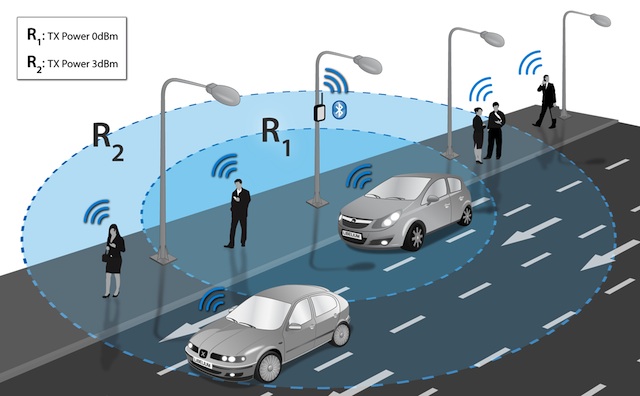
    Are street poles the key to rolling out a smart city? Lutz Heuser, CTO of Urban Software Institute believes these are the easiest way to connect a community and roll out mobile and Internet of Things technologies across a town.

    “For us it’s the perfect example of how infrastructure can change things very quickly,” Heuser told Decoding The New Economy at the AIIA Internet of Things summit in Canberra last week.

    Heuser sees the street poles as an easy success for cities looking to connect services and assets with most towns and utility companies replacing poles on a regular basis which provides an opportunity to roll out smart technologies.

    “If you put in some extras like communications, sensors and environmental monitors and all of a sudden you create a whole new ecosystem that helps the citizens and the environment.”

    Heuser sees funding as another advantage in using street poles to rollout smarcity technologies as the energy savings in modern LED lights as providing enough incentives for municipalities to replace older infrastructure.

    The key though is leadership, both in business and politics, this is essential in Heuser’s view in getting the best return for smartcity and IoT investments.

    As technologies like smart parking meters and connected rubbish bins roll out and municipal staff like garbage collectors and enforcement offices need real time connectivity, cities increasingly are going to rely upon wireless services. The humble street pole may well turn out to be the answer to what is otherwise an expensive problem.

    Similar posts:

    • No Related Posts
  • Rolling out the smartcity – the role of government and business

    Rolling out the smartcity – the role of government and business

    “It’s amazing what can be achieved when government is committed and prepared to partner with industry,” was the AIIA Internet of Things summit MC’s reaction to a presentation from Steve Leonard on Singapore’s quest to become a connected city today.

    Leonard, the head of Singapore’s IDA, had laid how the nation had embarked on a smartcity project due to the pressures of increased population and an ageing society. The government sees technology as a way to deliver health services more effectively and use scarce resources more efficiently.

    One of the areas Leonard cited was in traffic management where the city’s bureaucrats asked “how can we double the traffic on our roads without building anything new?”

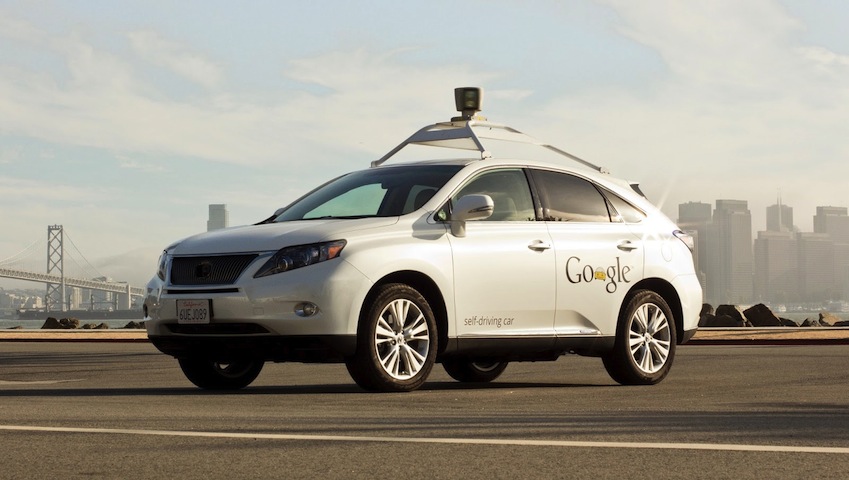
    The answer lies in smartcars and autonomous vehicles, Singapore has partnered with MIT to run a driverless car pilot on some of the city’s roads. Leonard points out that cars can travel closer together when run by computers rather than being driven by humans.

    For governments traffic management is one of the easiest ways to introduce the internet of things into smart cities says Lutz Heuser, Chief Technology Officer of Germany’s Urban Software Institute.

    Heuser worries that many cities are “sitting on the fence” when it comes to rolling out IoT and smartcity initiatives and sees “the humble lightpost” as being one of the ways technology can be rolled out into urban environment.

    Smart censors in the street lights
    Smart censors in the street lights

    This echoes the Geek’s tour of Barcelona where street light poles are a key part of the city’s digital infrastructure, providing a base for sensors and the Wi-Fi connectivity needed for devices like intelligent rubbish bins and digital services.

    One of the advantages of using intelligent, or at least half smart, lightpoles is that local governments are replacing them on a regular basis – around three quarters of Europe’s poles are more than twenty-five years old – which means they can be rolled out as part of a planned maintenance programs.

    Having rolled out connected city initiatives like Barcelona’s smartbins or Singapore’s ‘fibre hydrants’ – fibre nodes around the city that government and emergency services can tap into when needed – local businesses can then leverage off that infrastructure to further improve the well being of citizens.

    For governments, the rolling out of smartcity technologies is to deliver better services more efficiently. As Singapore and Barcelona have showing, by working with local businesses it becomes far easy for agencies to deliver real improvements in their communities.


    Similar posts:

  • Building community knowledge

    Building community knowledge

    One of the promises of big data and the internet of things is that local governments will be able to gather information about the state of their infrastructure.

    A good working example of this is Google’s Waze, the Israeli traffic monitoring startup bought by the search engine giant two years ago.

    Waze gathers information about traffic delays and transit times from users then aggregates them to give a picture of commuting times. It has always been a good example of how collaborative data can work.

    This week Google announced the service will share its information with a handful of transit agencies and councils to improve their knowledge of the traffic choke points in their cities.

    In return the agencies will give their transit information to Waze.

    Waze’s story is a good example of how sensors and people, in this case smartphones and their users, are going to gather information on infrastructure and cities. The key is going to be in making sure that data isn’t locked into proprietory databases.

    Similar posts:

    • No Related Posts
  • Touring the Barcelona smart city project

    Touring the Barcelona smart city project

    Last year I posted the Geek’s Tour of Barcelona, looking at the town’s smartcity initiatives after visiting the city for Cisco’s Internet of Things World Forum.

    At the Australian Internet of Things Forum in Newcastle last month I cobbled together a quick presentation around the topic to illustrate what smartcities can deliver.

    This was particularly topical for Newcastle as the New Lunaticks and the local business community are supporting the Kaooma project run by Vimoc Technologies in one of the city’s entertainment districts.

    Kaooma – which is an entrant in Cisco’s IoT Innovation Grand Challenge – is particularly interesting because it’s a wholly private project with little, if any, formal government support as opposed to London’s Regent Street Internet of Things initiative that’s part of a billion pound regeneration of the precinct.

    Australia’s Newcastle, the world’s largest coal port, has a number of challenges itself as the country’s once in a century mining boom unwinds and city deals with a neglected downtown in the face of a rapidly changing economy.

    While the Barcelona project is in early days, the presentation shows how cities are using the Internet of Things today and gives us some hints on how those uses will evolve over time.

    Paul travelled to Barcelona as a guest of Cisco Systems

    Similar posts:

    • No Related Posts