Tag: smartphones

  • Daily links – Chinese tourists, mars landers, Zappos management

    Daily links – Chinese tourists, mars landers, Zappos management

    Where do Chinese tourist like to travel to? One of today’s links looks at where the modern PRC tourist likes to go. Other links include how jaywalking became a crime, Samsung’s attack on the low end Indian smartphone and how disguised Starbucks may be popping up in your suburb.

    Kicking off today’s links is an examination of how Zappos’ CEO and founder Tony Hsieh is carrying out a daring experiment on the management structures of his company.

    Zappos’ strange management experiment

    No-one can accuse Zappos’ founder Tony Hsieh of thinking inside the box, his experiment with new form of management called holacracy is another example of how he tries to do things differently. Whether it will be successful or not remains to be seen.

    How Jaywalking became a crime

    Vox tells of how cars took over our cities’ streets during the early Twentieth Century. It’s an interesting description of the political, social and economic forces at work as the effects of the automobile started to be felt by our communities.

    Lost spacecraft found on Mars

    “It was a heroic failure.” Britain’s Beagle space mission to Mars ended in mystery when the lander vanished just before Christmas 2002. Now it’s been found. I find this story quite touching.

    Your local cafe might be a stealth Starbucks

    Like McDonalds, Starbucks is facing structural changes in its market. One of the ways both companies are responding by launching experimental new stores. Some of which might be near you without you knowing.

    Samsung launches a sub $100 Tizen phone in India 

    Just as the car changed the Twentieth Century the smartphone may well be one of the critical technologies that shapes this era. Cheap phones in emerging markets are the equivalent of the Ford Model T a hundred years ago.

    Samsung’s move is a response to the Chinese manufacturers who are dominating that market. That Samsung is using their own Tizen operating system rather than Android which most of the Chinese companies use is something worth watching.

    Where are Chinese tourists going

    As Chinese manufacturers look to emerging markets as their economic future, the country’s tourists are exploring the world. This article laments how those PRC travellers are ignoring London and the UK but also has some interesting observations about the destinations they prefer.

    Similar posts:

    • No Related Posts
  • Daily links: The IoT goes to sea, building the innovation state and Boko Haram

    Daily links: The IoT goes to sea, building the innovation state and Boko Haram

    The scale of the carnage Boko Haram has inflicted on remote parts of Nigeria is becoming more apparent every day and satellite imagery shows just how much damage the insurgent group is doing to communities in its territories.

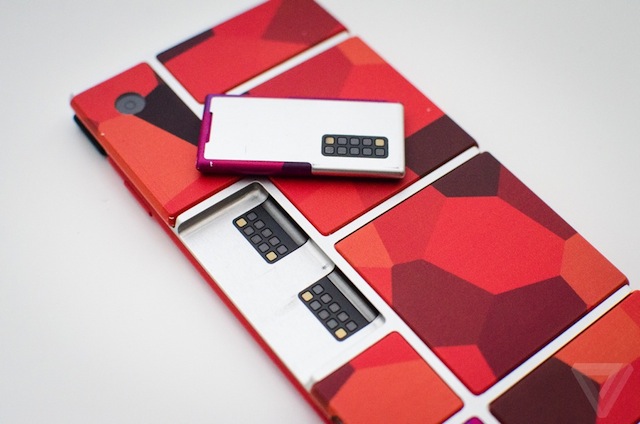
    Closer to home, Google’s Project ARA gets another outing, we look at how economies can deal with the jobless future, what a terrible aunt Ayn Rand was and how the IoT is going to sea.

    The IoT goes to sea

    At the CES show two weeks ago Ericsson launched their new maritime cloud service that promises to connect ocean going ships to the same services available on land

    Google unveils more about Project Ara

    Project Ara is Google’s attempt to reinvent the smartphone, the project came a little closer to completion with the company showing off some of its progress

    Creating the innovation state

    What do we do in a world where most people’s jobs have gone? Create an innovation state rather than a welfare state could be an answer suggests one economist.

    The extent of Boko Haram’s massacres

    Words fail to describe the horrors being visited on the people of Nigeria.

    Ayn Rand was a terrible Aunty

    What happened when one of Ayn Rand’s nieces asked aunty for a $25 loan?

    Similar posts:

  • Links of the day – redesigning the car and South China Mall.

    Links of the day – redesigning the car and South China Mall.

    The CES extravaganza continues in Las Vegas with a wave of announcement, most of which I’m ignoring, however the motor industry continues to show off new developments with Mercedes displaying their vision of how a driverless car will look.

    Other interesting links today include an analysis of the ill fated South China Mall’s flaws and how Amazon is reorganising its R&D efforts after the failure of the Amazon Fire.

    Mercedes redesigns the car

    A little while back I suggested that we could do better in redesigning the driverless carMercedes have gone ahead and done it.

    Mercedes’ redesign of the driverless car indicates just what can be done when we rethink what passengers will need in the vehicles of the future.

    Ford recalls a vehicle for a UI upgrade

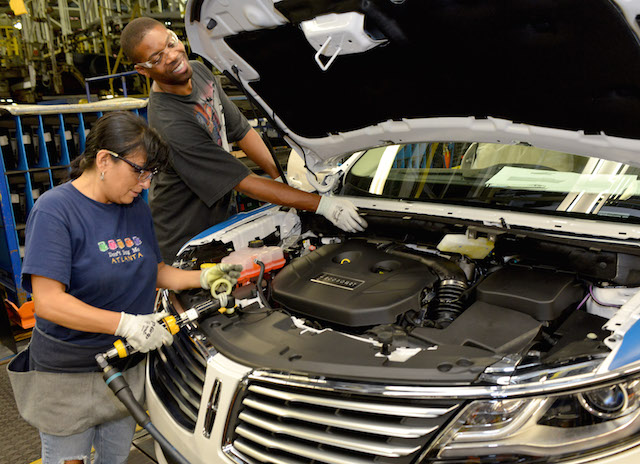
    Ford has recalled its Lincoln MKC SUV models for a software upgrade after discovering drivers were shutting down the cars by accident.

    What’s notable with this story is how software changes are now one of the main reasons for recalling vehicles and how design flaws in an automobile’s computer programs are relatively quickly discovered and resolved.

    We will probably find in the near future car manufacturers will carry out the upgrades remotely rather than ask owners to bring their vehicles into dealerships.

    A long running security flaw is exposed

    In August 2013 a security researcher warned UK online greeting card vendor Moonpig that its system exposed up to six million users’ account and financial details. Until Monday the company had ignored him. This is a tale of classic management disregard for customer security and one area where business culture needs to dramatically change.

    Rumours of an AOL – Verizon merger

    It’s a speculative story but if a merger between US telco Verizon and former internet giant AOL goes ahead it may mark another wave of telcos moving into content services, although it’s hard not to think that Verizon could spend its money more wisely.

    After a flop, Amazon restructures its R&D

    The Amazon Fire was by all measures a miserable flop as a smartphone however it seems the company learned some important lessons from the device’s market failures. Instead of abandoning its research efforts, the online behemoth is increasing it’s R&D budget and reorganising its development division.

    Design fails of the South China Mall

    South China Mall just south of Guangzhou has been the poster child of Chinese malinvestment during the nation’s current boom. In a blog post from 2011, a shopping mall expert visits the development and points out the major design faults in the complex which may well have doomed the project from the beginning.

    Similar posts:

    • No Related Posts
  • BlackBerry’s classic struggle

    BlackBerry’s classic struggle

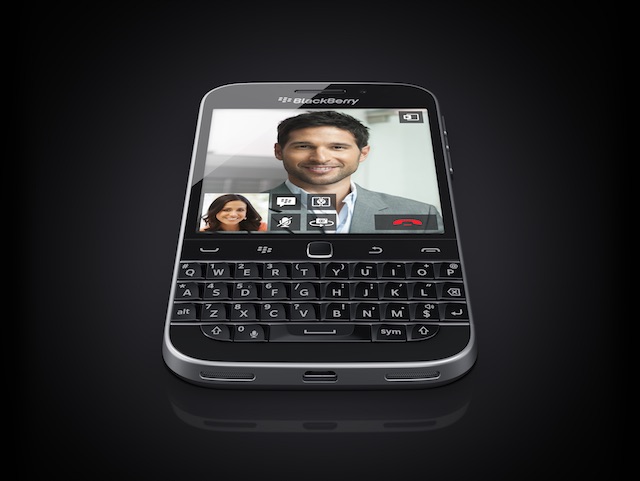
    Earlier this week BlackBerry released its Classic handset – the device the company hopes will rekindle its fortunes in the smartphone market in appealing to the thousands of loyal corporate users still wedded to their old devices.

    For BlackBerry the stakes are high with the handset business still being worth over half the company’s earnings last financial year, although hardware revenue dropped 43% to $3.8 billion over that period.

    “Handsets are still an important part of our business in terms of revenues,” BlackBerry’s President of Global Enterprise Services, John Sims told Decoding the New Economy in an interview last month.

    The main market for the Classic are the corporate users still sitting on their old handsets, “there are tens of millions of BlackBerry users who are still sitting on their old handsets.” Sims said. “The classic, when it comes along is targeted at that market. We know people are waiting.”

    “When you get on a plane people start taking out their devices I can guarantee you’ll see BlackBerry Bolds with almost every person in business and first class. They may have another device too – a Samsung or something as well.”

    Sims’ belief was that bringing back the shortcuts and keyboard of the older devices would encourage users wedded to their old devices to buy the new smartphone.

    The first response to the new BlackBerry Classic hasn’t been enthusiastic with Larry Dignan in the Canadian Globe and Mail describing it as “a curmudgeonly phone” – a worrying description coming from the home team. Dignan goes further in questioning BlackBerry’s hope the Classic will attract the users it needs.

    BlackBerry remains convinced that its hardcore enterprise users are crying out for the unique set of features only it can offer. But after using it for several days I don’t think the Classic is old fashioned enough to please traditionalists, and its callbacks to a dead era of smartphone mobility are more than enough to cripple the device for new users.

    For BlackBerry, the success or otherwise of its handsets is going to be critical in the company’s transition to a security, software and internet of things business. The early indications are that the company has a struggle ahead.

    Similar posts:

    • No Related Posts
  • Painting a target on the competition

    Painting a target on the competition

    “We’re coming for our competitors” is the warning BlackBerry’s President of Global Enterprise Services, John Sims has for the marketplace in an interview last month.

    Sims laid out how BlackBerry’s future lies in managing big data, providing collaboration tools and securing the internet of things. In the short term however, the company needs emerging markets to keep its mobile handset market going.

    In an interview last month on Australia’s Gold Coast at the Gartner Symposium, Sims laid out some of BlackBerry’s vision of the company’s future.

    Securing the endpoints

    The key product is the BlackBerry Enterprise Services which Sims sees as providing the endpoint security for corporate mobile devices and for the internet of things, something that ties into the company’s QNX investment.

    For the moment though its handsets are a key part of the company’s immediate future and Sims sees the latent demand from lapsed BlackBerry as essential to success, “there are tens of millions of BlackBerry users who are still sitting on their old handsets.”

    “The classic, when it comes along is targeted at that market. We know people are waiting.”

    “When we went from the Gold to the Q10, too much changed. You had to go from the BBOS to the BlackBerry 10 and that’s a big change, we changed the keyboard, we took away shortcuts and we changed too much at the same time. With the Classic we’re almost doing a retrofit.”

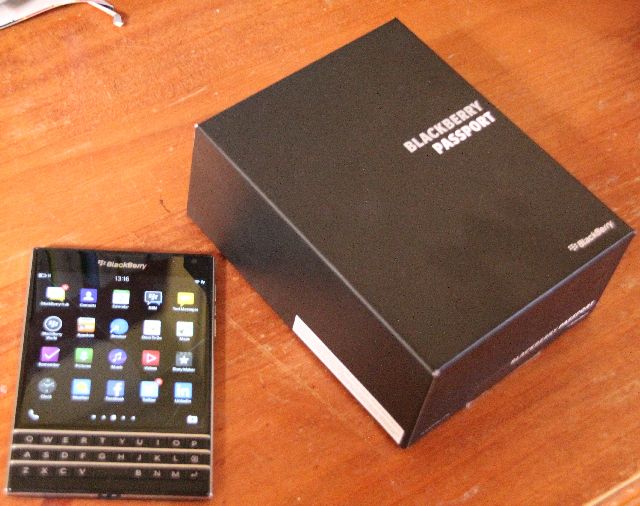
    With the recently released Passport smartphone, Sims says the company is struggling to keep up with demand,  “The Passport has done well,” he said. “The problem with it is us, not demand. It’s a supply issue not a demand issue.”

    A week after that interview, BlackBerry announced the company would give Canadian buyers of the Passport subsidies of $600. How that ties into the narrative of a popular device isn’t quite clear.

    Sims hopes the release of the Classic won’t suffer from supply problems, “we think is going to be more popular so we can be sure when it comes out we’ll be able to get that into the market in sufficient quantities to meet demand.

    Discovering emerging markets

    The other hope for BlackBerry’s handset business lies in developing markets, “Latin America is very important,” Sims says. “India’s very important and then there are number of important South East Asian markets.”

    Part of that emerging market strategy is tied into selling mid priced smartphones into the market, Sims says. “People will say ‘the Z3 is a low end device’, if you go visit Indonesia the Z3 is not a low end device. It’s a middle market device.”

    “Xiaomi is doing the low end devices at less than a hundred bucks and we’re doing a device at around $170. So we’re focused on the middle market, people who are professionals or aspiring professionals.”

    “With those people in those markets we want to establish the BlackBerry brand as something they are comfortable with,” says Sims in outlining how he sees getting the handsets into business people as being the driver for the company’s other services and products.

    Struggling with China

    China remains an enigma for BlackBerry however, “in the last couple of years we haven’t focused on China, it’s a huge market and it’s hard for external parties to be successful on their own. Local partnerships are important.”

    “John Chen (BlackBerry’s CEO) was recently in China and met with some of the local partners to talk about the possibilities of the future. It’s very preliminary and there’s nothing of any substance there yet but it is on our horizon that we’ve got to have something in the China Market.”

    We’re coming for you

    Despite the struggles BlackBerry has with its handset business, Sims is defiant about the company’s position in the endpoint security market.

    “Ultimately it becomes a question of scale, we’ve got scale because we have a global network. None of the other EMM vendors – Good, Mobile Iron or Airwatch – none of them have the Big Data requirements that we have.”

    “A year ago BlackBerry was defensive. We’re not defensive any more. People like Airwatch, Mobile Iron or Good should thank us that we were asleep at the wheel a few years ago and that allowed them to build their companies. That party’s over.”

    “We’re coming after them. We have targets painted on each of those companies and as we execute our enterprise strategy we’re coming after them. If I was them I’d be feeling the breathing on the back of the neck.”

    For BlackBerry the future lies in security services and the internet of things, though for the short term the company’s cash flow and market position depends upon sales of its handsets.

    As the interview with John Sims shows, the company’s success depends upon a few key assumptions coming true; that’s a high risk market.

    Paul travelled to the 2014 Australian Gartner Symposium on the Gold Coast as a guest of BlackBerry.

    Similar posts: