Tag: society

  • Towards the post car society

    Towards the post car society

    We don’t often think about it, but the design or our cities reflect the technologies of the day. Right now the way we live is built around the motor vehicle, but are we moving into a new era?

    After a visit to Ford Australia’s Centre of Excellence For Design and Engineering, Neerav Bhatt has some thoughts on the role of the motor car in an era where people don’t have to travel to their workplaces.

    One of Neerav’s points is that car use is falling among younger workers, a trend that’s happening across the western world.

    Much of this is put down to the generations of Millennials and Gen-Ys being more interested in technology purchases rather than cars along with changing work patterns.

    A more fundamental reason could be that we’re reaching the end of the motor car era.

    If there is one technology that represents the Twentieth Century it is the motor car; the automobile has shaped our cities, our lifestyles and our culture.

    However we are now in the Twenty-First Century.

    The three eras of motoring

    Roughly speaking, we could break the Twentieth Century’s love affair with the motor car into three phases; development, consolidation and dependency.

    In the first period, the automotive industry was developing with thousands of manufacturers experimenting with the technology and production methods. At the same time governments were beginning to build road networks and communities were demanding improved links.

    By the beginning of World War II, the motor car was an important part of life but ownership was largely restricted to affluent households and business.

    Following World War II governments made huge investments in road networks and automobiles became cheaper to own.

    This gave a generation a new taste of freedom as you could go anywhere with a tank of gas. It also changed the layout of our suburbs as people could now travel further to work, allowing them to move into bigger houses on the fringe of town.

    As government investment was focused on road building, passenger train and tram networks were starved of capital with many cities abandoning their transit systems altogether.

    Suburbs built in the early to mid Twentieth Century had evolved around trams and the legacy of that can still be seen today. However customers no longer wanted to fight for parking spots on crowded streets designed for horse drawn carriages and trams.

    Responding to this developers started building supermarkets and shopping malls which became popular largely because they offered easier parking. Cheaper goods made available by improved logistics systems – another effect of the motor car – was the other main reason.

    The beginning of dependency

    With the advent of the 1970s oil shock, the role of the motor car turned from being a tool of liberation into one of dependency. The suburbs of the 1960s and 70s had been built around the assumption of universal car ownership and cheap fuel. When fuel ceased being cheap, then households budgets were affected.

    Not coincidentally after the oil shock the reversal of ‘white flight’ – the movement of the middle classes to outer suburbs – started with the gentrification of inner suburbs that had been abandoned by the working class.

    Through the 1970s and 80s the cost of owning a motor car became more expensive as governments stopped externalising the costs of maintaining roads and saw car use and petrol taxes as a revenue source.

    At the same time the obvious effects of saturating society motor cars became obvious as roads increasingly became choked and planners began to realise that building more roads only attracted more traffic.

    Times of decline

    By the turn of the Twenty-first Century technology had also started to move away from centralised offices and factories. Today technologies like the internet and increasingly 3D printing mean that workers don’t have to commute vast distances. Automation also means many levels of management are no longer necessary.

    Changing work patterns is also affecting incomes, with car ownership being expensive many employees – particularly young workers – don’t want to buy automobiles.

    This all means that the era of the motor car is coming to an end, it’s not going to vanish quickly but the decline has started.

    For business, this means the post World War II assumptions that saw the rise of the supermarket, shopping mall and big box discount store are no longer valid.

    Some managers, most notably those of doomed department stores, won’t learn these lessons and will pass into history like the stagecoach companies.

    Just as the end of the horse and carriage era saw the demise of buggy whip makers and blacksmiths, the rise of the motor car saw an unprecedented rise in wealth, employment and productivity. Not only were the lost jobs created elsewhere, but many more were created.

    While the motor car isn’t going to disappear overnight, the decline has started and our society is adapting. For business and government leaders, the task is to understand those changes and adapt.

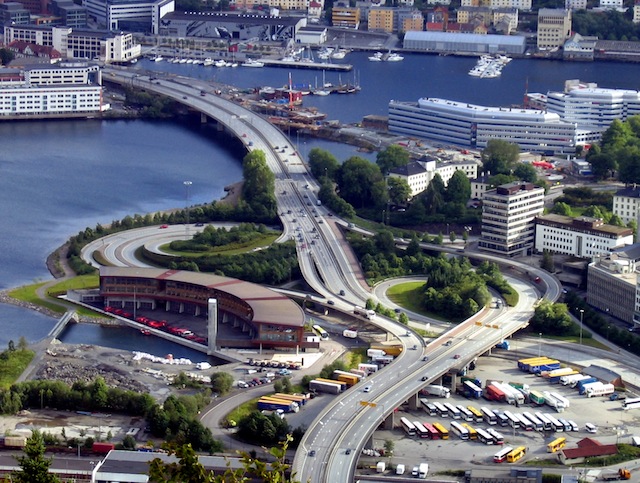
    Image courtesy of a Norwegian motorway by Ayla87 through SXC
    Similar posts:

  • Digital hunter gathering

    Digital hunter gathering

    It has come to this – we’ve had the digital natives, the digital immigrants and now we have the digital hunter-gatherers.

    This is the logical end of the ‘sharing economy’ philosophy which sees retweets, mentions and Facebook likes a hard asset.

    Unfortunately having 100,000 Facebook friends giving the thumbs up to your latest retweet of an article of dubious value doesn’t translate into income – most of the digital curators find themselves living a hunter-gatherer lifestyle.

    Life as a hunter gatherer is not pretty or easy – it’s short and brutal. The only certainty as a hunter gatherer is if you don’t find something to eat today, you will starve tomorrow.

    In some ways, it’s fair to say the modern social media expert is not dissimilar to the prehistoric hunter gatherers in that their days are numbered and starvation is a near certainty.

    One conceit of modern times is that life was so much better in the pre-industrial era; that before the industrial revolution people worked less and primitive man lived a noble life unshackled by possessions.

    That’s all nonsense. Mankind shifted to an agricultural and then an industrial society because life is a lot better than fighting sabre toothed tigers for buffalo or trying to live on berries.

    Myths like this are part of masking the steady decline in middle and working class incomes. George Freedman, the CEO of the Stratfor security consultancy, discussed this in his blog post The Crisis of the Middle Class and American Power.

    The rise of the precariat, workers employed on a casual or project based basis, is part of that erosion of incomes. As Freedman says, the “the decline of traditional corporations and the creation of corporate agility that places individual workers at a massive disadvantage”.

    In this respect, today’s digital hunter gatherers are more like the day labourers of a hundred years ago where workers, like my great-grandfathers, would wait at the gates of the factories or docks hoping to be picked for the day’s work.

    One of the truths of today’s workforce is that it’s a harder place than a generation ago and the expectation of naturally rising incomes is gone for the bulk of the population.

    This means we have to re-imagine our own roles in a changed economy. The assumptions of the post-war economy which have sustained us for over fifty years no longer hold.

    Hunter gathering hopefully won’t be option which we end up with.

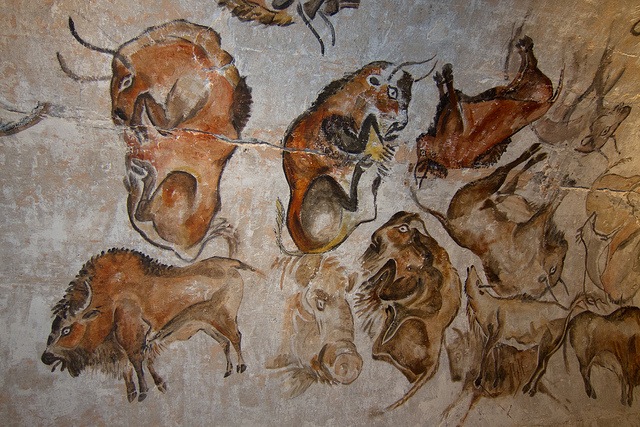
    Reproductions at the Museo del Mamut, Barcelona 2011 from quinet on Flickr

    Similar posts:

  • Santa says buy more stuff

    Santa says buy more stuff

    Around the world, today marks the annual peak of consumerism. It’s interesting how one of the most important dates in the Christian calendar has been adopted by commercial interests.

    In non-Christian countries, particularly in East Asia, the lack of a religious tradition shows the modern ritual for what it is – an orgy of consumerism driven by a century of advertising and opportunistic businesspeople.

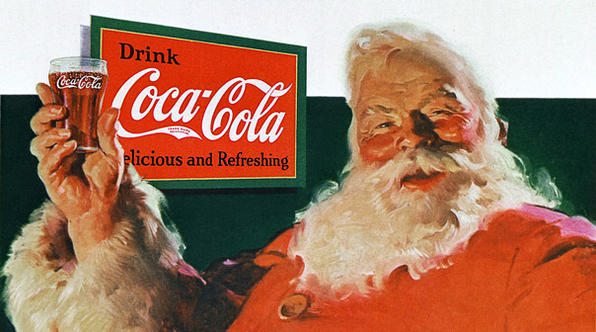
    For the western cultures, the biggest symbol of the occasion is Santa Clause, a figure largely invented by the Coca-Cola Corporation.

    It’s often said that successful religions co-opt the festivals and practices of earlier beliefs, many European Christian celebrations are said to be modern interpretations of older rites which marked key harvest and calendar dates.

    Today the religion of consumerism has co-opted the older Christian festivals which makes Christmas the grand celebration of consumption that it is.

    Religions though are a product of their times, the successful ones adapt to change and thrive for centuries while many wither away as their relevance to society and the economy fades.

    The Western religion of consumerism is at one of these points now after a century of unchecked growth.

    Will Consumerism continue to thrive as living standards rise in Asia and Africa or will it fade as overfed Americans and Europeans wear out their credit cards and look to defining themselves by something more than the expensive toys they can buy?

    Should Consumerism fade, will it be replaced with older traditions or will something else rise to meet the needs of 21st Century society?

    Is hard not to hope for the consumerist orgy that is the modern Christmas celebration to fade, if not for our communities then at least for our waistlines and bank balances.

    Similar posts:

  • Big Data, Bad Data

    Big Data, Bad Data

    “What about bad data?” an audience member asked me at a recent presentation where we looked at how social media and big data were changing business.

    His question came from an experience where he had sacked a staff member who now refuses to change their status as being employed by his company.

    The former employee wants to keep up appearances that they are still being employed and this causes reputation problems for their old employer.

    All of this makes that LinkedIn information on the employee and the business junk data. Rather than being useful, it’s misleading noise and that is a risk to LinkedIn’s business.

    This ties into Facebook’s problem with groups, if people can be added without their consent then the risk of mischief making and false information increases. In turn, this makes Facebook’s targeted advertising less effective.

    Similarly, Google’s aim to become an “identity service” becomes less feasible when the information they’ve gathered isn’t accurate – again something that is increases with their opaque policies and poor support.

    In Terry Gilliam’s movie Brazil, a man is arrested and dies under interrogation because of a fly getting stuck in a typewriter. We’re in the age of a billion flies being stuck in typewriters.

    LinkedIn, Facebook and all the other social media and “identity” services need to build in systems where those mistakes can be managed and the consequences limited. If they can’t do this then their value and relevance will be limited.

    Big Data shouldn’t mean bad data, and we all need to be confident that the data about us and the data we use in our lives is reasonably accurate.

    Similar posts:

  • Mosquitoes of the Internet

    Mosquitoes of the Internet

    Sydney Morning Herald urban affairs columinst Elizabeth Farrelly recently fell foul of one the big fish that inhabits the shallow, stagnant intellectual pond that passes for Australia’s right wing intelligentsia.

    As a result, Elizabeth found her personal blog infested with insulting comments from the Big Fish’s Internet followers.

    What focused their ire was Elizabeth complaining about a delivery truck parked across a bike lane. A bit like this genius.

    The funny thing with the righteous defence of the poor truck driver’s rights to privacy and blocking cycleways is where it the driveways to the gated communities for self-righteous and entitled self retirees that these commenters inhabit were blocked in a same way many of them would be reaching for the blood pressure pills.

    One of the great things about the Internet is that it allows all of us to have our say without going through the gatekeepers of the newspaper letters editor or talkback radio producer.

    The down side with this is that it gives everyone a voice, including the selfish and stupid – the useful idiots so adored by history’s demagogues.

    Luckily today’s Australian demagogues aren’t too scary and the armies of useful idiots they can summon are more likely to rattle their zimmer frames than throwing Molotov cocktails or burning the shops of religious minorities.

    Most of these people posting anonymous, spiteful and nasty comments are really just cowards. In previous times their ranting and bullying would be confined to their family or the local pub but today they have a global stage to spout their spite.

    These people are the irritating mosquitoes of the web and they are the cost of having a free and vibrant online society.

    It’s difficult to have a system where only nice people with reasonable views that we agree with can post online. All we can do is ignore the noisy idiot element as the irritations they are.

    This is a problem too for businesses as these ratbags can post silly and offensive comments not just on your website but also on Facebook pages, web forums and other online channels.

    Recently we’ve had a lot of talk about Internet trolls, notable in the discussion is how the mainstream media has missed the point of trolling – it’s about getting a reaction from the target. In that respect The Big Fish and his army of eager web monkeys have succeeded.

    The good thing for Elizabeth is her page views will have gone through the roof. That’s the good side of having the web’s lunatic fringe descend upon your site.

    Similar posts: