Tag: society

  • Good critic, bad artist?

    Good critic, bad artist?

    With the passing of art critic Robert Hughes I’m re-reading a passage of his autobiography, Things I Didn’t Know.

    In Hughes’ passage describing his leaving Australia he talks of attempts at painting and makes an observation about art criticism that is true of every field.

    “You do not have to be a good painter to be a good art critic,” he said. “But there is, to me, something a little suspect about an art critic who has never painted and who cannot claim to grasp even the rudiments of intelligent drawing.”

    The same could be said of any critic – knowing the technicalities, skills, difficulties and effort enables a critic to make informed judgement. That isn’t to say they are superior at their trade than those they criticise.

    It’s been said that we are all two bad decisions from ruining our lives or careers. That’s true in the artistic or professional fields – many managers, entrepreneurs, politicians, artists or just men going through middle aged crises have come unstuck from making the wrong choice at the wrong time.

    It’s why we always have to view the stories of great success with caution, as the winners’ tales are tinged with survivor bias and for every winner there a field of skilled, hard working people who didn’t succeed.

    In some fields, like arts and sport, the winners have to have skills before they will even get a chance of winning. Although there are many who could have be successful but weren’t because they never had an opportunity to pick up a paintbrush, guitar or ball at a key moment in their lives.

    That isn’t quite so true in more subjective fields like business, politics or journalism. In those callings it is possible for a suburban apparatchik, dour accountant or talentless hack to rise because of their mentors, rat cunning or just pure dumb luck.

    One of a critic’s roles is to call out those talentless but lucky hacks and in doing so they do society a great favour.

    In a world where spin and PR often trump good policy or ethical behaviour, we have to pay attention to the informed critics who help us filter out the misinformation and lies that is part of our information diet.
    Similar posts:

  • On being a hater

    On being a hater

    The phenomenon of the “Internet hater” has been one of the unfortunate developments of the web.

    Just as entry barriers for new businesses are low, so too are the restraints on clueless and anonymous idiots posting comments like “drop ded you faggot” or “hope you get canser bitch” onto web forums and social media pages.

    English comedian Isabel Fay has a great rebuttal to the haters with a clip that co-opts some of Britain’s top comics with their experiences.

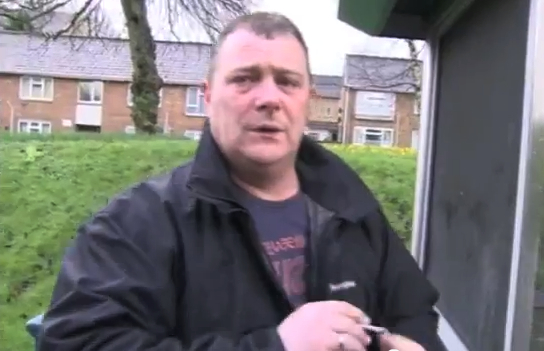
    These haters are sad little people as the BBCs Panorama program found when it tracked down one individual who had posted offensive comments.

    We knew Darren Burton of Cardiff, aka Nimrod Severen, would be a pathetic individual. Those who post anonymous, hateful comments are rarely anyone who has anything useful to contribute to society.

    Online “haters” are a real problem and cause distress to people who encounter the foul comments these creatures post. However the “haters” tag is increasingly being misused to shut down fair comment and criticism.

    Legitimate critics or dissenters from the groupthink and shallow advertorials that increasingly dominate parts of the web will quickly earn the tag “hater” as well.

    Every multi level marketing spiv or con merchant with a few followers will quickly throw the term out at anyone who dares criticise their behaviour in the hope of rallying their followers to shout down the dissenters. Usually it works.

    If you’re prepared to think outside the group and genuinely challenge those selling old rope as new ideas, let alone expose the hypocrisy of those who claim to open and transparent while hiding their real intentions, then be prepared to wear the tag “hater”.

    The only reply is to stand on your beliefs and be prepared to use your real name. The real trolls are scared, frightened creatures – just like many of the useful idiots co-opted by the spin merchants and Internet spivs.

    At least “hater” is just a cheap insult and they aren’t coming for dissenters with pitchforks. Yet.

    Similar posts:

  • Is small business too pessimistic?

    Is small business too pessimistic?

    The MYOB March 2012 Business Monitor report is a disturbing document; not only does it show how low confidence is among Australian business owners, it also portrays a group that are making sacrifices for an uncertain future. Is this what small business has come to?

    One of the most disturbing aspects of the survey is how long company founders go without a break. With one third reporting they had not taken holidays since starting their business, this statistic is constant regardless of how long the operation has been going.

    As somebody who went a decade without taking a holiday, I have a lot of sympathy for business owners in that situation.

    What really jumps out is the pessimism of business owners – a quarter don’t expect the economy to improve for at least two years and only 39% expect their revenues to rise.

    That business owners would be so negative about the future is disturbing; they should be the most optimistic.

    It’s also interesting that more than half are disappointed with levels of support from the government, does anyone expect different?

    Quite frankly, if you want money or support from the government then get a job with the public service. I tried that for a few months and there’s plenty of pessimistic people there.

    That small business owners are becoming as disillusioned as public servants is a concern for our economy and society. Hopefully it’s not a permanent condition.

    Similar posts:

  • The digital inheritance

    The digital inheritance

    Our digital footprint – what appears about us online in websites and social media services – is becoming more important as we’re judged by what people find out about us on the web.

    As what we store on the web becomes more important, the need to plan for what happens to that data when we pass away becomes more important. “Generation Cloud”, a survey in the UK by hosting company Rackspace and the University of London looked at how Britons were dealing with these issues.

    Information left online can cause problems as social media sites will send suggestions and reminders which can distress others if the suggested contact has passed away.

    Equally, a web site or Facebook page could even serve as a memorial. The final blog post of Derek K. Miller is a particularly touching memorial.

    To create a “digital tombstone”, for your loved ones to remove inappropriate posts or just to access your digital personal effects like email or photos stored on a cloud service, they will need your passwords.

    In the Generation Cloud survey, 11% of the participants planned to leave their online account details and passwords in their wills and half considered some of their ‘treasured possessions’ are stored online.

    Once again we’re finding our online data has real value that’s worth passing down. It’s another reason to guard your data safely and not give it away lightly.

    Similar posts: