Tag: startups

  • A lack of entrepreneurial imagination

    A lack of entrepreneurial imagination

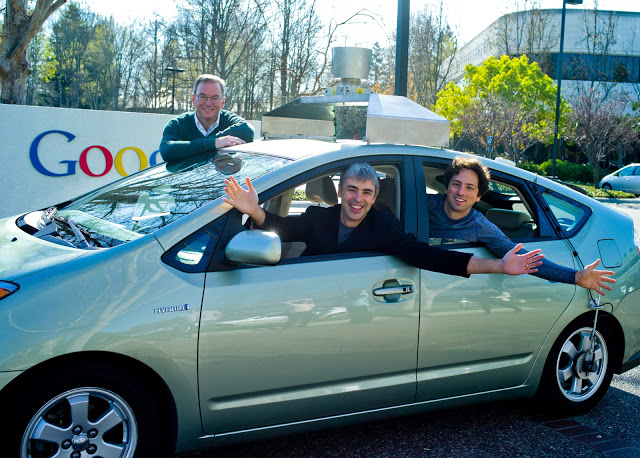
    A fascinating interview with Google founder Larry Page in the Financial Times raises the question of whether the current startup mania lacks imagination.

    Certainly looking at the lists of many startup competitions, incubator admissions and accelerator programs, it’s hard not to be depressed at the number of ‘platform plays’ aimed at clipping the tickets of an established industry.

    If anything, it’s encouraging the Google founder is looking at doing more interesting things than taking a few dollars clipping the tickets off industry. We can, and should, aspire to do better.

    Similar posts:

    • No Related Posts
  • How smart hiring paid off for the PayPal mafia

    How smart hiring paid off for the PayPal mafia

    One of the challenges facing people who’ve started their own businesses is re-entering the broader workforce. Many managers are reluctant to hire previously self employed workers; the PayPal experience shows that attitude could be hurting working

    At the Dreamforce Conference in San Francisco yesterday three PayPal alumni, part of Silicon Valley’s infamous ‘PayPal Mafia’, discussed why the company was such a successful incubator of talent.

    “The company was composed of a bunch of young folks who were very driven,” said founder of LinkedIn and early PayPal employee, Reed Hoffman. “Once they sold the business to eBay they weren’t the type to retire.”

    Along with PayPal’s founders being driven, the company also tended to hire people who had run their own businesses but were finding the  going tough in the economy at the time; “Silicon Valley was collapsing under its own weight,” observed PayPal founder and fellow panellist Max Levchin.

    “There was a lot of running for safety in the Valley,” Levchin remembers. “We were looking for people who were into risk taking and were excited to take a risk and this would be the last company they worked for because the next one would be their own. As a result we biased the selection towards entrepreneurs.”

    Copying that hiring practice today is Stripe where co-founder John Collison told Decoding the New Economy last month that one of the keys to managing a fast growth business is to hire entrepreneurs and former self employed workers.

    “They are self starters; they don’t need much supervision,” said Collison in describing how hiring people who’ve run their own businesses makes running a business that has gone from ten to 150 employees in three years.

    it’s no coincidence that one of the investors in stripe is Peter Theil who along with Levchin founded PayPal and is probably the best known of the ‘PayPal mafia’.

    PayPal and Stripe’s experience show the folly of overlooking workers who’ve run their own businesses; in a world where business is becoming more competitive, having entrepreneurial employees is an asset too good to miss out on.

    Similar posts:

  • Google expands its campus program

    Google expands its campus program

    One of the reasons for the success of London’s Silicon Roundabout neighbourhood was the Google Campus that provided a drop in centre and community venue for the growing tech hub.

    It turns out the success of London’s Google Campus can be replicated, as shown by the Tel Aviv outpost having similar results.

    As a consequence Google are now opening new campuses in Warsaw, São Paulo, Seoul and Madrid.

    Whether these cities will have the same success as London and Tel Aviv, both had a thriving tech start up community before their Google Campuses opened, remains to be soon.

    One thing is for sure, we’ll see other cities’ governments and tech communities lobbying Google to base a Campus in their tech neighbourhood. It may be worthwhile they have a look at the London one to see what works and how they can set their own local hub.

    Similar posts:

  • The tough determined business of building a business

    The tough determined business of building a business

    In 2005, Therese Tucker’s company was down to its last three staff when a customer suggested a new line of business. Today BlackLine is valued at over 200 million dollars and about to list on the stock market.

    A few week ago Therese described her journey from a struggling software startup to a hundred million dollar business on the Decoding the New Economy YouTube channel.

    BlacklLine’s business automates financial processes  as Tucker explains, “we have the interesting job of providing software that helps companies automate all the things around accounting and the financial close that they currently do on spreadsheets.”

    At the time of Tucker’s pivot, the business was supplying a wealth management system when that prescient customer asked her to develop an application to manage the ten thousand spreadsheets they were struggling with for accounts reconciliation.

    BlackLine wasn’t Tucker’s first business having been involved in a series of ventures after working as an electrical engineer designing automation systems before moving into the IT industry.

    “There’s a reason for the term ‘serial entrepreneur.” Tucker says, ” it’s a bug that once you catch it you really don’t want to rest until you’ve been successful at it.”

    For aspiring entrepreneurs Tucker’s advice is blunt — “The best advice is ‘don’t do it’. Because if you listen to that advice you’ll never make it.”

    “It’s the people that are crazy and are determined to work themselves to death and to fail and fail and fail until they don’t fail. It takes that kind of grit and determination.”

    “If I tell you not to do it, then that’s great advice for you.”

    Similar posts:

    • No Related Posts
  • Navigating a world of silos

    Navigating a world of silos

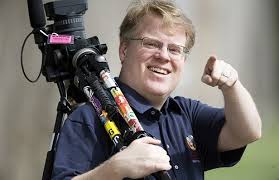
    Having seen Robert Scoble interview dozens of startups and founders, it was fascinating to get him on the other side of the camera for a Decoding the New Economy interview.

    One of areas I was keen to explore with Scoble was his experience of moving from his blogging platform to Facebook and particularly the risk of being locked in a silo, something previously discussed with Doc Searls.

    “I’d rather all my content wasn’t in Facebook,” Scoble observes, “but those days are over.”

    Unlike Searls, Scoble sees the social media networks — particularly Facebook — as being a useful distribution tool while accepting their limitations; “I find I get a lot more engagement and distribution on Facebook.”

    “Unlike a lot of other journalists I don’t have to make my money out of advertising so I don’t care about taking my eyeballs off the blog and onto Facebook.”

    “It does limit my storytelling ability because you can only use one video and I can’t do a lot of typographic stuff,” says Scoble, “people are seeing these on mobile phones anyway so they don’t want to see all of this stuff anyway.”

    The mobile aspect is key to the business world going forward, we stopped midway through the interview to buy an iPhone 6 which went on pre-order right in the middle of the discussion.

    For the mobile world Scoble sees the rise of various ecosystems like Google’s and Apple’s forcing people to make choices about which camp they are going to join.

    Like many in the tech industry, Scoble is very cautious about looking too far ahead; “none of the people, even the investors, are looking more than five years ahead.”

    The key though is miniaturization as devices get smaller and more portable, the potential for technology becomes greater.

    Whether that potential is limited by the desire of vendors to lock users into silos remains to be seen.


    Similar posts:
    • No Related Posts