Tag: startups

  • Rent doesn’t matter to startups

    Rent doesn’t matter to startups

    Following yesterday’s post about the factors behind cities like New York, London and San Francisco becoming startup hubs, a friend asked “let me gues — cheap rents?”

    In truth it’s the opposite; none of the cities cited as startup centres are cheap places to live or work and London is usually towards the top of the most expensive places on the planet.

    That rents aren’t a huge factor is possibly because the typical tech startup is a lean operation with a small team crammed into a crowded location.

    One suspects though there are limits to how much a business conserving its cash will pay — you don’t see many startups based in A-grade locations alongside big law firms and banks — and this may be the weaknesses of these big cities.

    Certainly in London’s Silicon Alley the complaint is the days of cheap rent are long gone and newer startups have to base themselves in other locations across the city.

    Overall, rents are important but they aren’t the critical factor in developing a tech sector hub. Whether that remains the case depends upon how the industry develops.

    Similar posts:

  • Why have cities like New York, London and San Francisco become tech hubs?

    Why have cities like New York, London and San Francisco become tech hubs?

    One of the recurring topics this site keeps returning to is how cities like San Francisco and London have seen an explosion of tech startups in recent years.

    Probably the spectacular of all the cities that have shot to prominence is New York;  a decade ago tech startups in the city were a rare thing, today there are thousands.

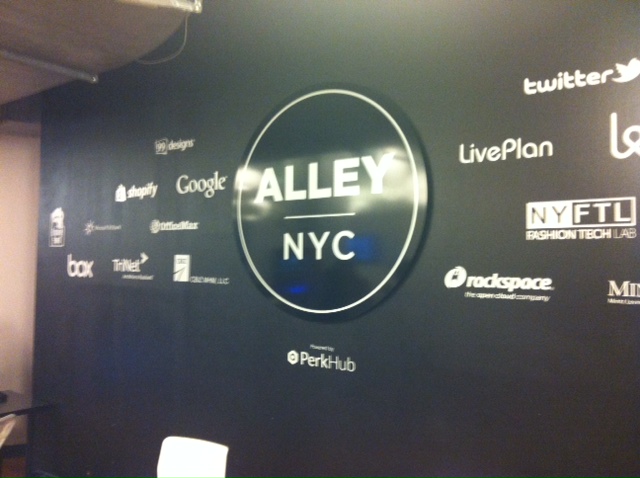
    Today I had the opportunity to visit AlleyNYC, one of New York’s biggest tech accelerators. It’s impressive how a venture two years old can be so successful.

    A question I asked was ‘what has driven the change in New York?’ The consensus was the combination of the Great Depression and the success of high profile companies like Facebook.

    The success of high profile startups has validated the business model in the eyes of both investors and founders, people who would have been reluctant to leave their jobs and start a business now see the opportunities while investors can see there are returns to be made.

    What’s notable about cities like New York, London and San Francisco is the depth of industry expertise, capital, networks, education institutions and diversity. These are key factors in attracting tech startups.

    For other cities aspiring to be ‘the next Silicon Valley’, it would be worthwhile considering where their strengths lie compared to these giants.

    It’s not a given that any of today’s global leaders will be the future centres of industry, but other cities and regions will need to have a very strong reason for businesses to choose them over the incumbents.

    Similar posts:

  • Building a billion dollar start up

    Building a billion dollar start up

    Two years ago we interviewed Mikkel Svane the founder of cloud service provider Zendesk about modern customer support.

    Since we spoke to him Zendesk have had a successful IPO and is now worth over a billion dollars.

    In the latest Decoding the New Economy video interview we catch up with Mikkel and discuss the journey from being a three person startup to a billion dollar listed company.

    Similar posts:

    • No Related Posts
  • Spreading the good news – Canva’s Guy Kawasaki

    Spreading the good news – Canva’s Guy Kawasaki

    “My job is to spread good news,” says Guy Kawasaki of his role as Canva’s Chief Evangelist.

    Kawasaki was speaking to Decoding the New Economy about his role in popularising the online design tool which he sees as democratising force in the same way that Apple was to computers and Google to search.

    Democratisation is a theme consistently raised by startups and businesses disrupting existing industries and Kawasaki continues this theme.

    “The world is becoming a meritocracy; it’s not about your pedigree, it’s about your competence,” states Kawasaki.

    Falling barriers to entry

    What excites Kawasaki about the present business climate are the falling barriers to starting a venture. “Things are getting cheaper and cheaper, in technology you had to buy a room full of servers, have IT staff in multiple cities. Today you call Amazon or Rackspace and host it in the sky.”

    “Before you had to buy advertising for a concert, now if you’re adept at using social media – with Google Plus, Facebook,Twitter, Pinterest and Instagram – you have a marketing platform that fast, ubiquitous and cheap.”

    “What excites me is there are going to be more technologies, more products and more services because the barriers are so low.”

    Creating a valued and viable product

    For those businesses starting into this new environment, Kawasaki believes the most important thing a startup should focus on is getting a prototype to market; “at that point you will know you’re truly onto something.”

    “If you build a prototype that works you may never have to write a business plan,” says Kawasaki. “You’d never have to make a Powerpoint, you may never have to raise money as you could probably bootstrap.”

    Kawasaki view is the MVP – Minimum Viable Product – model of lean product development should have another two ‘V’s added for ‘Valuable’ and “Validated’.

    “You can create a product that’s viable, ie you could make money, but is it valuable in that it changes the world?”

    “Is your first product going to validate your vision? If it’s not then why are doing it?”

    The story Kawasaki tells is the tools to deliver valued and viable products are more accessible than ever before; that’s good news for entrepreneurs and consumers but bad for stodgy incumbents.

    Similar posts:

    • No Related Posts
  • Privacy and mutual respect

    Privacy and mutual respect

    Tonight was the Australian launch of the Respect Network in Sydney which followed similar events in London and San Francisco. I’ll be writing more on this over the next few days.

    One of the key questions when considering the Respect Network is how much the average internet user values privacy; the business model of the service relies upon people being prepared to pay to preserve their privacy.

    Another question is how many lies people will tell to get free or cheap stuff – respect is a two way thing.

    Similar posts:

    • No Related Posts