Tag: startups

  • Saving pets with tech

    Saving pets with tech

    “Like all great ideas it was conceived over a beer and executed over coffee,” says John Bishop, the joint founder and co-CEO of Pet Rescue. “A couple of friends and I were sitting in a bar back in 2003 and we came up with the idea, had a look around and there was no-one doing it in Australia at the time.”

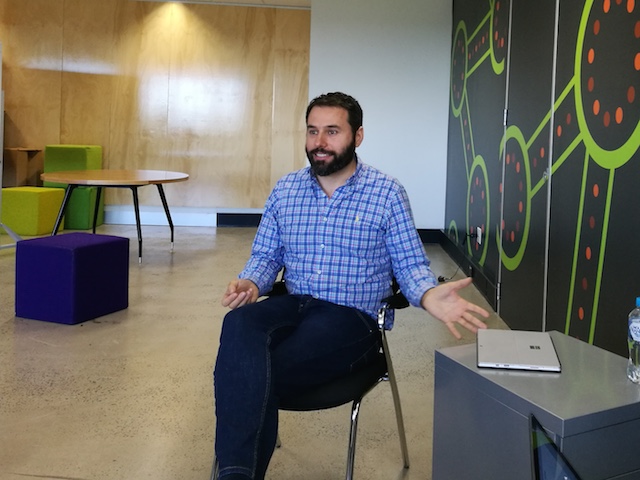
    John was talking to Decoding the New Economy at last week’s AWS Re:Invent conference in Las Vegas where he some time to explain how Pet Rescue uses the web to connect prospective pet owners with rescue shelters.

    “Basically we help people find rescue pets in need of adoption,” John explains. “We work with the vast number of rescue groups in Australia. By rescue groups I mean pounds, shelters, vet clinics and foster care networks. There’s about 950 of those in Pet Rescue at the moment.”

    Rabbits, guinea pigs and rats

    The system allows accredited animal rescue services to list the pets they have available for adoption, “primarily cats and dogs but also rabbits, guinea pigs, pigs, chickens, there’s even one rat we’ve rehomed,” John laughs.

    John was working as an IT manager with a consulting business on the side in 2004 when the site launched. “We didn’t know if it would work but I had the idea in my head the whole time I was building it that if one pet found a home rather than being killed then it would be worthwhile.”

    “From day one I designed Pet Rescue to be as hands off as possible, once the members had access to it they could upload their own photos and things like that. It wasn’t groundbreaking in 2003 but it wasn’t that common”

    “One of the biggest problems we faced in those early days was many of the rescue groups didn’t have digital cameras. So we did a promotion with a bunch of Kodak digital cameras that had been donated to us and gave them to the groups.”

    A problem of scale

    The site was quickly a success but that came with issues, particularly when the site was mentioned in the press or had a lot of social media attention. “Eventually we hit problems as I had gave no thought of architecting a site that would scale.”

    While that scaling process didn’t go without problems, the service now sits in the public cloud with AWS so the Pet Rescue team can get on with connecting pets with owners, and John expects to help rehouse four thousand pets by the end of the year.

    “Our challenge at the moment is we have a weird supply and demand problem happening, we have half a million unique visitors a month and helping rehome about five to six thousand. Another challenge is we’re still working on an old model of handling enquiries about the pets.”

    “Our goal is to get to the point where we rehome 200,000 pets a year. Right now we’re looking at 90,000. It’s a bit of a magic number because that’s the number of pets that are unnecessirly killed each year so if we can get to that two hundred thousand we can zero that out.”

    Finding funding

    The bigger task for Pet Rescue is to find funding with the organisation as John doesn’t believe paid registration for the rescue groups or users is the best thing for the site, “we want to have as few barriers as possible,” he says.

    Currently the service earns some money from advertising with some corporate partnerships in the pipeline. “We need money, it costs a lot to keep the site up and costs a lot for development.”

    While many startups and corporations talk about using tech for good, Pet Rescue’s and John Bishop’s mission of ending unnecessary deaths of unplaced pets is a genuine worthy cause. By making it easier for companion animals to be adopted by the right households shows what technology can do.

    Paul travelled to Las Vegas and the Re:Invent conference as a guest of Amazon Web Services.

    Similar posts:

  • The shine goes off the wearable tech market

    The shine goes off the wearable tech market

    Friday was a bad day for former startup darlings FitBit and GoPro with both companies disappointing investors.

    GoPro, whose cameras for a while defined a new wave of adventure videos, announced a loss of $104 million dollars on the back of production issues and further disillusioned stockholders with a forecast of further poor sales in the upcoming holiday season.

    Those shareholders have many reasons to be disillusioned with the camera maker’s shares reaching $98 two years ago after floating at $24. Today they are sitting at $11.

    FitBit shareholders have suffered similarly, with the fitness band’s shares falling to eight dollars after listing at $20 almost two years ago. Their announcement of further problems on Friday saw the stock price dropping thirty percent on the day.

    It may be easy to scorn investors in hindsight, but both companies were emblematic of a new generation of wearable technology and much of their problems today owes as much to them trying to stay ahead of the curve as it does from smartphones developing most of their products’ functionality.

    The travails of FitBit and GoPro are typical of a time when new technology is changing business. Some companies  shine brightly then fade while others have a rocky road to success. We’ll have to wait and see if FitBit and GoPro survive.

    Similar posts:

  • Building a billion dollar business

    Building a billion dollar business

    Last week accounting automation service Blackline listed on the NASDAQ stock exchange with a valuation of over a billion dollars.

    The listing was a triumph for the company’s founder and CEO Therese Tucker who started the company in 2005 after a client asked her to find a way to manage the ten thousand spreadsheet their firm used for accounts reconciliation.

    We spoke to Therese last year during a visit to Australia where she described some of the challenges of building a business.

    Therese’s journey is an interesting, and inspiring, tale of how you don’t have to be a twenty something white guy to build a billion dollar tech business. Her story is worth listening to.

    Similar posts:

  • An entrepreneur’s journey – a conversation with Muru-D’s Ben Sand

    An entrepreneur’s journey – a conversation with Muru-D’s Ben Sand

    As part of Telstra’s Muru-D business accelerator opening its latest startup intake this week, Annie Parker and Ben Sand, the organisation’s co-founder and Entrepreneur in Chief respectively, spoke to a small group of journalists on Tuesday about what they were looking for in the next batch of applicants and how the tech startup sector is changing.

    Ben’s entrepreneurial journey from a scrappy, underfunded Aussie startup to a hot Silicon Valley property and back to a corporate incubator is an interesting tale in itself.

    His first venture, an edu-tech startup called Brainworth founded in 2010, operated out of a dilapidated inner city Sydney terrace. The business acheived traction and Ben’s team won a ScreenNSW interactive media grant two years later.

    Failing the Kickstarter test

    Ultimately Brainworth petered out after missing a Kickstarter round. As Ben says, “I focused on getting out the maximum viable model rather than the Minimum Viable Model and the money ran out.”

    As Brainworth withered away, Ben joined former university friend, Meron Gribetz at his Augmented Reality startup Meta which went onto join the Y Combinator program. The company went on to attract $23 million dollars in investment, primarily from Hong Kong and Chinese investors, and now has 150 employees.

    Earlier this year, Ben returned to Australia after seeing Mick Liubinskas’ blog post about moving to the United States. In that article, his predecessor put out a call out for those interested in replacing him at the Sydney office which Ben answered.

    Australian advantages

    Now firmly settled into his Sydney role, Ben sees computer vision as one of the biggest opportunities in the tech sector. Bringing together disparate technologies like virtual and augmented reality, artificial intelligence and smart sensors, computer vision allows machines such as autonomous vehicles, drones and medical diagnostic equipment to pull together sources of data that lets machines see what is going on in the world around them.

    Computer vision is a field where Australia has an advantage, Ben believes. “Adelaide is the second most funded city in the world in computer vision,” he points out with investments like Cisco’s into South Australia’s Kohda Wireless driving the local industry.

    Ben and Annie don’t see the next group of Muru-D applicants being restricted to any one field despite Ben’s background in AR and interest in machine vision. “It’s more the psychology of the founders,” he says.

    Mentoring the next wave

    Three years of experience is also delivering dividends, observes Annie. “I’m starting to see the early cohorts starting to mentor and support the newer ones. That’s part of what Muru-D is part of, creating the ecosystem.”

    Over the three years, there’s also been quite a few adjustments to the Muru-D process, Annie observes. “We change the model each year by about thirty percent.” she says.

    Another thing that has changed is that later stage startups can apply for the program which will be open until November 4.

    “I’m excited and I’m very confident we’re going to get great outcomes for these people,” says Ben of the next Muru-D cohort. “We’ll be working on getting the most confident founders on board and hopefully helping them to aim high.”

    Similar posts:

  • ABC Nightlife – building the businesses of the future

    ABC Nightlife – building the businesses of the future

    This Thursday night join Dom Knight and myself on ABC Nightlife to discuss what tools you can use to start or improve your business and how can we encourage more people to have a go.

    Last week the last Australian car making jobs finished and a survey of the Geelong Ford workers found only one percent were interested in starting a new business.

    If you missed the spot, you can listen to the podcast through the Nightlife website.

    Despite the reluctance to start new businesses it’s never been easier to do so with a range of tools making it simpler to run one. Tonight on the Nightlife we look at some of those tools and what we can do to encourage more people to have a go at running their own companies.

    For the program, I’ve a compiled a list of tools businesses should be using. It certainly isn’t exhaustive or definitive and if you have any suggestions on better or newer tools, I’ll be happy to add them.

    Some of the questions we cover on the program include;

    • who ran the survey of motor industry workers?
    • what were most of them going to do?
    • so what sort of businesses can these workers go into?
    • what programs are being offered to these workers?
    • how has starting a business changed over the past twenty years?
    • is the focus on tech startups intimidating people who might want to start a business?
    • what are the basic tools every business should have?
    • a few years ago social media was all the rage, does it matter any more?
    • what’s the number one advice for anyone thinking of starting a business?

    Join us

    Tune in on your local ABC radio station from 10pm Australian Eastern Summer time or listen online at www.abc.net.au/nightlife.

    We’d love to hear your views so join the conversation with your on-air questions, ideas or comments; phone in on 1300 800 222 within Australia or +61 2 8333 1000 from outside Australia.

    You can SMS Nightlife’s talkback on 19922702, or through twitter to @paulwallbank using the #abcnightlife hashtag or visit the Nightlife Facebook page.

    Similar posts: