Tag: startups

  • Spreading the tech industry’s footprint

    Spreading the tech industry’s footprint

    Just how broad is the US tech industry? It’s tempting to think that most of the American tech sector is concentrated in San Francisco Bay Area with some offshoots in Seattle and on the East Coast but as this New York Times piece describes, the country has a range of high-tech industry clusters.

    Like Silicon Valley itself many of those clusters exist because of other industries, research facilities or companies – Seattle being home to Boeing, Microsoft and Amazon being an example.

    Another example of how other industries have influenced the development of industry clusters is shown in the example of Philadelphia.

    I hadn’t thought have Philadelphia as having a tech sector until I spoke with Australian tech company Nuix about one of their key North American offices being in the Philadelphia suburb of Conshohocken.

    When I observed that Philadelphia wasn’t the obvious place to set up, Nuix’s managers pointed out how the city’s pharmaceutical, medical technology and telecommunications provide a deep talent pool for tech companies along with the city’s location between New York and Washington DC being an advantage as well.

    Philadelphia’s civic leaders have contributed to it with their Startup Philly program that offers services and incentives ranging from networking events through to a seed investment program.

    VeryApt CEO Ashrit Kamireddi, one of the recipients of a Startup PHL angel round, describes the pros and cons of the city investment program and points out it was the factor in setting up their business there.

    Prior to raising a $270,000 angel round led by StartUp PHL, my two cofounders and I had just graduated from our respective grad programs and had placed 3rd in Wharton’s Business Plan Competition. We could have settled our company anywhere, with New York and San Francisco being the obvious choices. For a startup, the initial round of funding is where geography is most critical. Most angels don’t want to invest outside of their backyard, which explains the natural tendency for startups to relocate where there is the most capital.

    Kamireddi’s point about capital is critical, for tech startups finding funding is probably the most important factor in where the company is based.

    Funding though isn’t the only aspect and for established companies, particularly those in the Bay Area struggling with high costs which is what the New York Times article focuses on in its example of Phoenix, Arizona.

    The spread of the US’s tech sector shows the country’s industrial depth and strength, it also shows how other factors affect the spread of technology businesses.

    Similar posts:

  • Startups become a Sydney mayoral issue

    Startups become a Sydney mayoral issue

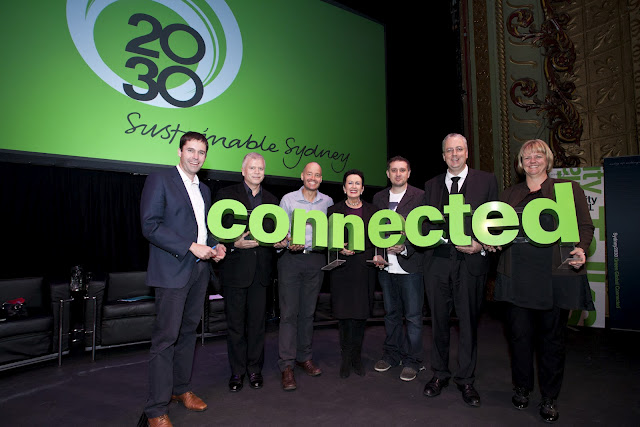
    There’s a mayoral election pending in Sydney and the talk of the city becoming a startup hub is becoming one of the issues.

    Over the next few days I’m hoping to interview each of the four major candidates on their policies regarding how they see Sydney competing against the likes of Singapore and Shanghai, let alone San Francisco or London.

    In 2009, I was working with the New South Wales state government on their Digital Sydney project which looked at how the state capital could become a global centre, one of the things we found was that the city had many of the attributes successful creative centres had – diversity, tolerance and access to talent.

    That project died in the face of bureaucratic ineptitude but the idea still kicks around with last week’s launch of the NSW Government’s Jobs For The Future report which, despite its opening thirty pages of buzzwords and waffle, contains some serious analysis of the state’s reliance on inward facing service industry jobs.

    Refreshingly, the NSW Government strategy looks beyond the current mania around tech startups based on the Silicon Valley venture capital model – something the Federal government’s Innovation Statement failed to do – and discusses how to encourage growth and investment in other emergent sectors both inside and outside the inner city startup communities.

    While Sydney can be an attractive place to live for the digital elite, it falls down in a number of areas with property being among the most expensive in the world, telecommunications being costly and unreliable coupled with a complacent corporate sector and a stingy investment community.

    Making the city more attractive is going to take a number of initiatives that including easing the cost of doing business, improving links between academia and industry along with tapping into Sydney’s diverse immigrant populations.

    Some of these factors are within the City of Sydney’s purview but most of them are state or Federal matters. By definition this limits what local politicians can do.

    Which doesn’t mean they shouldn’t try to do them and it’s good to see these topics have become issues in the local elections. For Sydney though, one suspects it’s going to business as usual until The Lucky Country’s luck runs out.

    Similar posts:

  • Creating alternatives to the NASDAQ

    Creating alternatives to the NASDAQ

    Does it really matter what stock market a company lists on? In my interview with Nuix CEO, Eddie Sheehy for the Australian Financial Review, the question arose about where the company will list for its expected IPO next year.

    Sheehy’s response was clear, “I suspect we’d get just as good a float out of Australia now as we would anywhere else. In fact better, because I think our shareholders are better known, respected and trusted, there’s nothing that I’ve seen in London or Nasdaq that makes me believe we’d get a better outing.”

    Until recently most tech startups aspired to listing on the US NASDAQ exchange and the reasons were compelling as the bourse has a strong technology focus meaning deeper pools of funds, more liquidity along with a community of investors and analysts who had a strong understanding of technology stocks.

    The case for other exchanges

    Now other exchanges are making their case for tech companies listing with them. The London Stock Exchange making a strong argument for prospective IPOs. Singapore, Sydney and many others have similar pitches for the business.

    The problem in those exchanges is the lack of depth in the marketplace. Having a small selection of tech companies listed means limited focus from investors and analysts, it also risks having one or two successful companies dominating the index, as has happened with Xero’s listing on the New Zealand Exchange.

    Xero also illustrates another problem with a listing on an exchange not familiar with the peculiarities of tech stocks at the company’s Sydney AGM a few weeks ago where an investor asked ‘when are you guys going to make a profit?’

    Rod Drury, Xero’s CEO, was able to deflect the question but it showed how companies listed on exchanges where the the high growth, low yield model of tech startups are unusual. On the Australian exchange, this problem is exacerbated by the investor base being dominated by big, dumb institutions.

    Changing perspectives

    Nuix, among Xero and a host of other tech companies, are slowly changing the perspectives of those investors but the focus on yield and safety from both retail and institutional investors will remain an obstacle for ventures launching in more conservative jurisdictions.

    Other factors are the stability, legal and taxation consideration of those jurisdictions. If stockholders are facing barriers realising their investors or the the domicile puts companies at a disadvantage then that country’s stock market won’t be preferred.

    Ultimately though a company’s listing is about access to capital and liquidity. If companies like Xero and Nuix can get both at a reasonable cost by listing on the Australian, Singaporean or London markets, then that’s a choice for their boards.

    It’s hard though to see the NASDAQ being knocked off its perch for moment, although it the US tech bubble does pop things may change.

    Similar posts:

  • Sending school projects into space

    Sending school projects into space

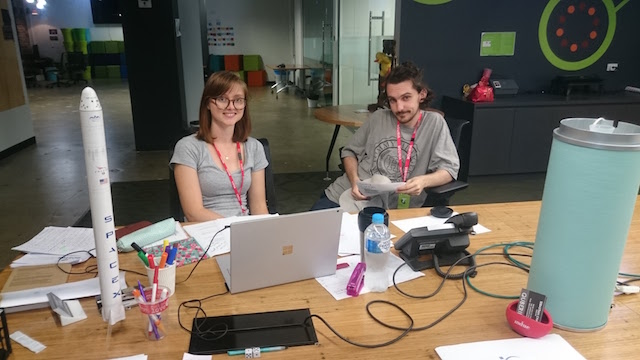
    “We’ve been completely blown away,” says Quberider founder Solange Cunin about the interest in the startup that looks to put science experiments into space.

    The company that was established by Cunin, a fifth year aeronautical engineering student, and her co-founder Sebastian Chaoui in early 2015 to provide school students with the opportunity to conduct experiments in space.

    “Quebrider is a company that focuses on teaching core STEM skills that the current curriculum doesn’t focus on,” Cunin explained about the company. “Things like coding, data analysis and problem solving – all of those things industry needs. We do that in the context of students building their own space mission.”

    The Quberider package starts starts at a cost of $5000 and includes a type of nanosatellite called a cubesat – a cube the size of a large coffee mug that contains ten sensors – along with teaching resources and a slot on one of the International space station launches. The program runs for three terms and integrates into the New South Wales high school science curriculum.

    “Students end up creating their own software experiments and they sent it up on their own space mission,” explains Cunin. “They get that big bang and their own awesome feeling of being on something big and hopefully that gets them motivated to be involved in science a tech.”

    In all, forty NSW high schools have prepared 60 projects ranging from one using the gathered information to create ‘space music’ through to an experiment measuring Einstein’s theory of relativity and time dilation to on the initial launch scheduled for the end of the month.

    “Because it’s space it captures their imagination,” Cunin says of the program designed for years 9 and 10 students (14 and 15 year olds) but they have participants ranging from year 5 up to undergraduate level.

    “We’re solving such an important pain point for many different people – getting students involved is a big problem for teachers and education and skills are a big problem for industry,” Cunin says.

    The project developed out of Cunin and Chaoui’s joint passion for space projects and they came together when working as interns at another space startup.

    While they are looking at a small amount of seed funding later this year, most of the startup’s capital has come from program fees and the support of the University of New South Wales where Cunin is a student and the University of Technology Sydney where Chaou studies. Quebrider is also part of Telstra’s Muru-D startup incubator program.

    “We’re quite aware we have a lot to learn,” says Cunin about the Muru-D program. “Signing up to this with a good mentor program is important. The big value for us is the mentorship, we meet our advisory board once a fortnight and they’ve become part of the family.”

    Ultimately Solange Cunin would like to see their program spread across the country. “What I’d really love to see is nationwide every single student that goes through year nine or ten has a space mission. They get to be part of something bigger and that inspires them and shows that science isn’t something nerdy and is cool.”

    As the price of loading payloads onto satellites falls, it’s almost certain these experiments will become more accessible for schools and students.

    Similar posts:

    • No Related Posts
  • Indonesia looks to launch a thousand startups

    Indonesia looks to launch a thousand startups

    Can Indonesia create a startup tech culture? The 1,000 startups movement aims to try.

    The movement looks to encourage tech startups across the island nation with workshops, incubators and hackathons.

    Notably, the program isn’t being supported by the Indonesian government with any money, just an expression of support.

    That in itself may not be a bad thing, a program run to meet the needs of communities and industry is much more likely to succeed than one being supported by bureaucrats meeting KPIs or political objectives.

    A question though is how appropriate Silicon Valley’s ‘unicorn’ model for tech startups is for a developing nation like Indonesia. While the nation has a high level of mobile phone penetration and a young population, it doesn’t have the sophisticated investment community or financial markets that underpin the Bay Area’s or those of other technology hubs.

    Indonesia, like most developing nations, needs to find its own model which may turn out to be very different to today’s Silicon Valley when it reaches maturity later this century.

    That the 1,000 Startups Movement isn’t part of a government department gives it a chance to develop a unique Indonesian identity rather than trying to recreate an officially mandated copy of Silicon Valley. It will be fascinating to watch.

    Similar posts: