Tag: succession

  • Planning a business succession

    Planning a business succession

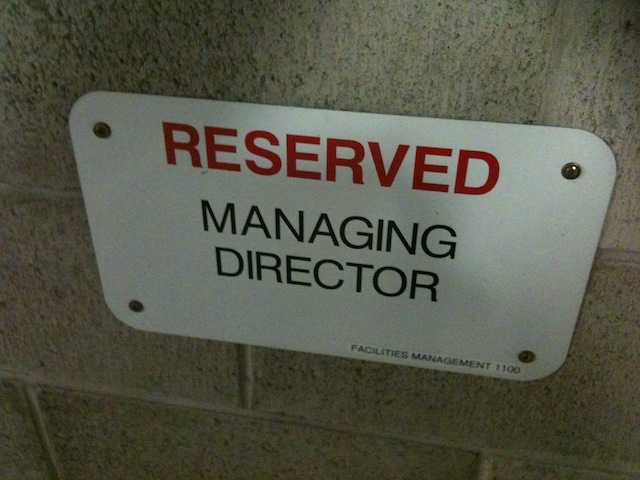
    What happens when your Managing Director of five years standing announces he’s decided to move on?

    This was something Xero’s senior management had to deal with when Chris Ridd, the company’s Managing Director for Australia, announced that after five years he had decided to move on.

    In interviewing Chris and his successor, Trent Innes, last week for The Australian it was striking just how well the succession process had gone for Xero in dealing with the management change, “It has worked out well, it was our preference to go with an internal candidate,” the outgoing GM told me. “From my perspective it’s always good when you can do that but it doesn’t always work out that way.”

    Much of this comes down to Chris putting together a cohesive management team, something he’s quite proud of, “Xero has a huge bench, we have a really talented leadership team. I feel really good about leaving now given that the business has gone from six staff to 295 people, three and a half thousand customers to 265,000.”

    “I achieved way more than what I thought I’d be able to do in that role and after five years it seemed like the right time frame to go into something else,” he continued.

    Part of his confidence in moving on was his confidence in his successor, “Trent and I go back twelve years at Microsoft,” he told me.

    The other part of his confidence was that the company has a clearly defined strategy and business plan that neither he or Trent see changing.

    Many companies struggle with changing their senior management and much of that is because the board and executives are in denial that people – even those at the top – will move on to new ventures.

    A stable management team, a solid business plan and a realistic view about leadership succession are the keys to successfully managing a change at the top, so far it looks like Xero have managed to pull off a change that many other struggle with.

    Similar posts:

    • No Related Posts
  • Trapped in orbit – the founder’s dilemma

    Trapped in orbit – the founder’s dilemma

    Earlier this week Microsoft co-founder Paul Allen celebrated his Seattle Hawks winning the Super Bowl while his former business partner, Bill Gates, still struggles to escape the clutches of the software giant they founded forty years ago.

    After a long drawn out process, software giant Microsoft has finally chosen its replacement for CEO Steve Ballmer however founder Bill Gates finds himself firmly trapped in the company’s orbit.

    Hoodie wearing Satya Nadella‘s ascension to Microsoft CEO was probably the poorest held secret in the tech industry having been openly reported for several weeks.

    Nadella has a massive task ahead of him as the industry that’s been so lucrative for Microsoft over the past thirty years evolves to deal with the post-PC era.

    Microsoft CEO Satya Nadella
    Microsoft CEO Satya Nadella

    How Nadella manages Microsoft’s transition will define his business career and tenure at the top job, it will also determine the company’s position in a marketplace where PCs running Windows are no longer relevant.

    The biggest news from Microsoft’s announcement though was that Bill Gates will step down as Chairman of the Board and take a new position as ‘founder and technology advisor’.

    Microsoft also announced that Bill Gates, previously Chairman of the Board of Directors, will assume a new role on the Board as Founder and Technology Advisor, and will devote more time to the company, supporting Nadella in shaping technology and product direction. John Thompson, lead independent director for the Board of Directors, will assume the role of Chairman of the Board of Directors and remain an independent director on the Board.

    Despite leaving the CEO role over a decade ago, Gates finds himself back in a hands on role at the company.

    The value of Bill Gates

    It’s questionable what value Gates is going to add in the role of ‘Technology Advisor’ as Microsoft’s markets are very different to those the company was founded in and came to dominate in the 1980s and 90s.

    For Nadella, it’s not exactly a vote of confidence from the board in appointing the company’s founder to hover over his shoulder offering helpful advice.

    On a personal level this must be disappointing for the founder and former CEO as well in that his mind is on far greater topics such as eliminating malaria through the Bill and Melinda Gates Foundation.

    Trapped by Microsoft’s gravity

    Gates’ situation though is a classic example of a business founder who’s never been able to get out of the orbit of their business. Despite their best efforts, they keep being dragged back to give a helping hand.

    At least though Gates has at least been able to step away to some degree, many baby boomers with smaller businesses are going to be locked into their companies as GenX or Y entrepreneurs don’t have the funds to pay what the proprietors need to retire.

    Those boomer entrepreneurs are going to work in their businesses until either they or their venture is put to rest.

    Bill Gates’ dilemma though shows how tough it is for business founders to escape the gravitational pull of their creations, even when it’s as big a business as Microsoft.

    Paul Allen showed how to step away from a business and is enjoying life, Bill Gates’ story though is much more typical for business founders trapped in the enterprises they built.

    Similar posts:

    • No Related Posts