Tag: Sydney

  • Sydney’s Mayoral Tech Race – the ALP’s Linda Scott

    Sydney’s Mayoral Tech Race – the ALP’s Linda Scott

    A few weeks back I wrote about how the tech sector had become an issue in the Sydney Lord Mayoral election to be held on September 10.

    Following that post, I approached the four major candidates to get their policies on how Sydney can do better in attracting tech startups to the city. The idea was to get an overview published in one the major newspapers but sadly my pitches were ignored.

    However the issues raised are important to Sydney so over of the next few days I’ll publish each of the candidates’ responses to my questions along with any other conversations I’ve had with their teams.

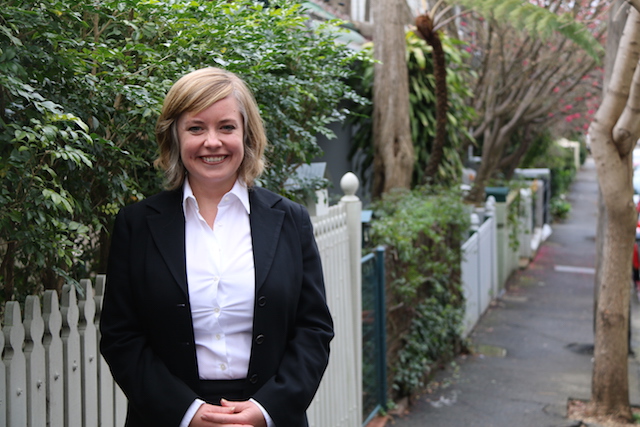
    The first candidate we look at is Linda Scott, the Australian Labor Party candidate. Councillor Scott was elected to the City of Sydney Council in 2012 and is a researcher at The University of Sydney and lives in the inner city suburb of Newtown with her husband and two young children.

    “As a Labor Councillor, I moved that the City conduct a feasibility study into the possibilities for implementation of smart technologies for City infrastructure and services. The current Lord Mayor and her team voted against it, defeating the measure.

    I’ve also held a start up Roundtable for City of Sydney start ups with Labor Ministers Chris Bowen and Ed Husic to hear ideas for how every level of government can improve our support for the start up communities.”

    What are your policies relating to encouraging tech  startups?

    “As a Labor candidate for Lord Mayor, my Labor  team and I are committed to  delivering smart technology to the City’s infrastructure and services for the future.

    “From more efficient watering of our parks to parking to better planned traffic flows, the Internet of Things has the potential to revolutionise our City – and it’s an opportunity we can’t afford to miss.

    “We are committed to working with our start ups and universities to support  the continuation and creation of Tech  Startup  precincts, and will ensure planning policies foster these precincts.

    “Labor will also deliver a dedicated, City-owned work space to form part of a Tech  Startup  precinct and open up City spaces for tech startup networking events and will host an annual festival to promote Sydney as an international tech  startup  hub.

    “If elected, we will explore establishing dedicated innovation and commercialisation ‘landing pads’  with our sister cities, and neighbouring and regional councils here in New South Wales.

    “Labor  will also work to support the continuation and expansion of existing university-based hubs and accelerators in  the City of Sydney along with hosting an annual festival to promote coding among young people. “

    What do you see as Sydney’s strengths in this sector?

    “Our people. Sydney is a great global city, and rightly is the first port of call for international trade and investment. Many of our nation’s and the world’s major firms have their Australian headquarters based in Sydney.

    “We  have the critical mass  of creativity,  capital  and access to services  to provide fertile ground for tech startups.”

    What is Sydney not doing well at the moment?

    “The Lord Mayor has rejected Labor’s moves to embrace smart technology.  It’s time for change at the City of Sydney.

    “We also need more affordable space for start ups, and Labor is committed to delivering this.

    What are we doing well?

    “Sydney has great  hubs and accelerators that  Labor  will continue and expand where possible.”

    How do you see the City’s relations with state and Federal government affecting current efforts?

    “As a Labor Councillor, I already work closely with my state and federal colleagues and governments to ensure I secure what’s best for the City of Sydney. The state and federal governments have the financial strength and capabilities to assist the City in delivering its tech  startup strategies.

    “For example, a federal Labor  Government committed to create a 500 million dollar Smart Investment Fund and a nine million National Coding in Schools program – both measures I will continue to secure for the future.”

    Currently Victoria and Queensland are doing better at attracting businesses.  Should we do anything to counter that and, if so, what?

    “Sydney’s strength and appeal as a tech  startup  hub should be the size and diversity of creativity, capital and access services it can achieve.

    “With all the measures listed above, and working with stakeholders, Labor is committed to doing better for the future of our start ups.”

    How can Sydney compete globally against cities like Singapore, Shanghai and even Wellington?

    “Our City needs to continuously increase its exposure to new challenges and new ideas from around the world as well as at home.

    “Exploring opportunities for establishing innovation and commercialisation landing pads with sister cities around the world as well as neighbouring and regional councils  will be an important first step in that effort.

    “Most importantly, increasing the availability of affordable work space in the City of Sydney will also be critical, and attracting angel investors to Labor’s annual showcase event in the City.

    How does your tech industry policy fit in with other key Sydney employment sectors like the creative industries, financial services and education?

    “Labor is committed to the creation of a fun, fair, affordable and sustainable City for the future for all businesses and residents. “

    It’s hard to see the Labor Party getting a great deal of traction in the council elections, Scott herself only received ten percent of the mayoral vote when she ran for the 2012 election and was the only ALP councillor elected.

    The benefit though of the Labor ticket is that Scott’s positions fit nicely with her party’s state and Federal. However, given the party will remain in opposition at both levels for at least two and a half years – although nothing is certain in the farce that Australian Federal Politics has become, that co-ordination means little for the City of Sydney.
    Similar posts:

  • Startups become a Sydney mayoral issue

    Startups become a Sydney mayoral issue

    There’s a mayoral election pending in Sydney and the talk of the city becoming a startup hub is becoming one of the issues.

    Over the next few days I’m hoping to interview each of the four major candidates on their policies regarding how they see Sydney competing against the likes of Singapore and Shanghai, let alone San Francisco or London.

    In 2009, I was working with the New South Wales state government on their Digital Sydney project which looked at how the state capital could become a global centre, one of the things we found was that the city had many of the attributes successful creative centres had – diversity, tolerance and access to talent.

    That project died in the face of bureaucratic ineptitude but the idea still kicks around with last week’s launch of the NSW Government’s Jobs For The Future report which, despite its opening thirty pages of buzzwords and waffle, contains some serious analysis of the state’s reliance on inward facing service industry jobs.

    Refreshingly, the NSW Government strategy looks beyond the current mania around tech startups based on the Silicon Valley venture capital model – something the Federal government’s Innovation Statement failed to do – and discusses how to encourage growth and investment in other emergent sectors both inside and outside the inner city startup communities.

    While Sydney can be an attractive place to live for the digital elite, it falls down in a number of areas with property being among the most expensive in the world, telecommunications being costly and unreliable coupled with a complacent corporate sector and a stingy investment community.

    Making the city more attractive is going to take a number of initiatives that including easing the cost of doing business, improving links between academia and industry along with tapping into Sydney’s diverse immigrant populations.

    Some of these factors are within the City of Sydney’s purview but most of them are state or Federal matters. By definition this limits what local politicians can do.

    Which doesn’t mean they shouldn’t try to do them and it’s good to see these topics have become issues in the local elections. For Sydney though, one suspects it’s going to business as usual until The Lucky Country’s luck runs out.

    Similar posts:

  • Invite only collaboration

    Invite only collaboration

    The success of Silicon Valley is partly based on the sharing of information. Can a closed group of business leaders replicate that success?

    Currently I’m in the United States interviewing Australian startup founders who’ve moved to the Bay Area on why they’ve chosen to move their businesses in Silicon Valley.

    Naturally there’s a whole range of reasons for relocating across the Pacific – for some most of their market was in the US, for others it was the accessibility of investors while for many the move was always part of their plan to go global.

    A place you fall in love with

    The almost unanimous comment though from the founders was one of the attractions of the Bay Area are the support networks, “It’s a place you fall in love with straight away – it’s the people and the attitude,” says Holly Cardew.  “People ask what can I help you with.”

    Cardew, the founder of image management service PixC, sums up the consensus on the Bay Area business culture of ‘paying it forward’. Almost every entrepreneur who’d moved to San Francisco mentioned how the question “how can I help you?” was key to building a network and finding customers, staff and investors.

    That openness to helping the ecosystem was greatly appreciated by Carl Hartmann, co-founder of logistics startup Temando. “I’m here today because people were kind enough to pay it forward,” he states.

    Since then Harmann has become one of the ‘go-to guys’ for Australian entrepreneurs arriving in San Francisco and almost everyone we spoke to mentioned Carl as being a great help for them in obtaining initial introductions.

    Building a community

    Those introductions and helpful acts are essential in a community where the most valuable asset is the people, not just investors but the entire complex ecosystem of coders, lawyers, publicists, designers and various other disciplines essential for an industrial hub to thrive.

    Which raises the question about yesterday’s announcement of the TechSydney initiative, a project claiming “to address the Sydney innovation ecosystem’s greatest challenge: collaboration.”

    This is a good idea, and one this writer was involved in seven years ago with the failed Digital Sydney program in 2010 which aimed to bring together the disparate groups that make up Australia’s disparate tech and digital media sectors.

    Government failures

    Digital Sydney failed because the state government is poor executing at such initiatives so the fact TechSydney is being led by experienced startup founders, investors and advisors should give hope this attempt would be more successful.

    However, TechSydney’s press release quickly dispels that hope with the opening line.

    Australia’s most successful startups and global tech giants, including Atlassian, Airbnb and Airtree Ventures are backing a new not-for-profit aimed at turning Sydney into Australia’s Silicon Valley.

    The “Australian Silicon Valley” line shows a focus on the current Bay Area tech startup model funded by venture capital and seed investors who are happy to forgoe profits in the hope of big capital gain when the business is acquired or goes public – the Silicon Valley Greater Fool model.

    Silicon Valley itself is pivoting away from this model with businesses across the Bay Area now frantic to at least have the illusion of being profitable or on the path to making money. In narrowly promoting the tech startup model TechSydney seems to be trying to catch a wave that has already broken.

    Slamming the door

    The main worry from the TechSydney announcement though is that it seems to go against the open door policy that makes Silicon Valley so successful. Rather than encouraging questions and new entrants, TechSydney is slamming the door shut with only the successful and well connected invited.

    The group will launch at an exclusive invitation-only Dinner on May 30 at the Powerhouse. Sydney’s top 200 technology companies will be in attendance. The first 100 have already been invited, and the group is now taking applications for the next 100 attendees at TechSydney.com.au, and is urging companies to register their interest today.

    In some respects this is to be expected of the Sydney business community – the city’s industry is based upon the Rum Corps model of the colony’s early days where success is based upon connections and influence rather than being open and collaborative. This attitude underpins the ‘mates culture’ that is critical to acquiring power and wealth in New South Wales and across Australia.

    With an attitude of having an ‘invite only’ group leading the push the hopes of creating an ‘Australian Silicon Valley’ are doomed. By locking out new entrants or dissenting thinkers, it’s impossible to create a vibrant hub.

    Creating an open mindset

    For Sydney, or any other Australian city, to succeed as a global hub in any industry that legacy of the Rum Corps, the mates network, needs to be suppressed and a more open, collaborative mindset put in place.

    TechSydney can do that if its leaders choose to do so. Hopefully at their invite only meeting at the end of the month the wise men of Sydney’s tech elite will decide that an open initiative that welcomes newcomers and tolerates new ideas is the best opportunity to make the city a global leader.

    Similar posts:

  • Creating a retail community – A tour of Microsoft’s Sydney flagship store

    Creating a retail community – A tour of Microsoft’s Sydney flagship store

    Microsoft today opens the doors to its first flagship store outside of North America in Sydney, Australia. A look inside the project gives some insight into the company’s retail strategy.

    Situated in Westfield’s Pitt Street Mall, the store promises “cutting-edge retail and experiential spaces that allow consumers to get hands on with products in an immersive way.” What’s immediately notable is the lack of obvious security with all the devices on display being available for customers to pick up and walk around the shop with.

    Most of those devices showcase Microsoft’s various projects and alliances. Everything from XBoxes running Minecraft to Lumia phones are on display along with a range of laptops from partners such as Dell, Toshiba and Lenovo.

    Looking across the shop floor
    Looking across the shop floor

    Notable among the devices is are the Surface Book and Surface Pro 4 along with the Microsoft Band 2 taking place of pride in the displays. As with everything else, customers can slip the wriststaps on and walk around with them. Microsoft’s representatives were coy on how they will prevent the less honest walking out the store with them.

    Microsoft Band 2 wearables on display
    Microsoft Band 2 wearables on display

    Acting as a store greeter, the Answer Desk is the hub of store where representatives direct traffic whether it’s technical support – which like the Apple Genius Bar is provided free – sales, or directions to events in the upstairs community theatre.

    Welcome to the Microsoft Store Answers Desk
    Welcome to the Microsoft Store Answers Desk

    Community is a big theme in the store and the company announced $4.8 million in software and technology grants to 11 not-for-profit Australian organisations to coincide with the shop’s opening.

    That emphasis on ‘community’ is reflected in this quote from the company’s press release;

    “Our new flagship store is here to showcase the very best of Microsoft to the local community and we are delighted Sydney has been chosen as its home,” said Pip Marlow, managing director, Microsoft Australia. “This is a key part of our commitment to delivering a truly interactive retail experience that gives customers, partners and community organisations the opportunity to see, experience and do great things, all made possible by Microsoft technology.”

    Pip Marlow sees the upstairs community room as being an opportunity to engage with various school, business and technology groups. The space itself is a little cramped, however it can be isolated from the store’s general hubbub, unlike the Apple Store’s equivalent space.

    The community theatre
    The community theatre

    Overall the store is modernistic but somewhat cramped and should the store be successful congestion is going to be a real problem, particularly around the Answer Desk and the narrow stairwell which, like its Apple competitor two blocks away, features a translucent stairwell.

    A narrow translucent staircase
    A narrow translucent staircase

    In comparison to both the nearby Apple and Telstra stores, the Microsoft Showcase is surprisingly low tech with its retail experience. While the assistants will have mobile Point Of Sale terminals there’s little in the way of location technologies and contactless payments.

    happy_holidays_microsoft_feature_store_sydney

    Overall the Microsoft Store comes across as a touch crowded and, dare one say, a little old school retail. As a showcase for the company’s products, it’s probably no more impressive than those of the better retailers.

    However if Pip Marlow’s aim of building a community around Microsoft’s products is successful, that could prove to be the long term winning strategy for the company.

    Similar posts:

    • No Related Posts
  • Riding the slowkansen

    Riding the slowkansen

    Newcastle, a 160km north of Sydney is a drive easily done in less than two hours but for masochists and commuters there’s the three hour train trip affectionately known as the shitkansen by the locals.

    The train trip itself has parts that are genuinely spectacular as it winds through the hills and rivers of the New South Wales’ Central Coast, albeit at speeds that are slower than in the 1933 timetables.

    One of the reasons for the slow and spectacular trip is the Hawkesbury River and Broken Bay and that presents a natural barrier between Sydney, the Central Coast and Newcastle.

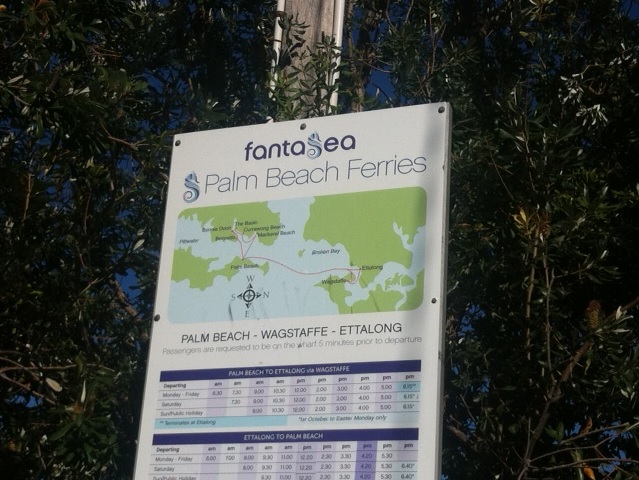
    That natural barrier also presents an opportunity for a third, prettier route between the two cities using the private ferry service that runs between Central and Sydney’s northernmost suburb of Palm Beach.

    Catching the slow train

    slow-train-newcastle-sydney-shitkansen

    Starting from the original Newcastle Railway Station, the trains run twice an hour during the day with one ‘fast’ service taking two-and-a-half hours and slow trips taking three.

    interior-of-newcastle-sydney-slow-train

    Inside the trains things are relatively comfortable although quite grubby. The purple colour scheme are the refurbished older carriages, the original 1970s ones being in a fairly awful green. The news trains feature a modern vandal proof colour scheme although the seats are more uncomfortable for a three hour journey.

    Another weakness with the train service is the spartan facilities, apart from graffiti covered toilets there are absolutely no passenger amenities so bringing your own food and drink is essential along with fully charged electronics as there are no power outlets available.

    closing-newcastle-sydney-railway-line

    Amazingly, rather than improving the railway service to the state’s second biggest city the government plans to abandon the last five kilometers and replace the trains with buses. If there was one example of the 1960s thinking that dominates Australian politics, this venal and ill-thought out proposal is a wonderful example.

    The Central Coast

    While the parts of the ride between Sydney and Newcastle are spectacular, the stretch south to the Central Coast are the boring parts featuring little more than housing estates and low grade scrub until arriving at Gosford where the train runs alongside Brisbane Water until Woy Woy.

    woy-woy-shopping-centre

    On alighting the train at Woy Woy, the immediate impression is a town that won’t win any heritage awards with its neglected main street and an anonymous shopping mall. All of which is a pity as its location between the hills and waterways is sensational.

    Sadly there’s little reason to hang around so getting a bus to Ettalong is the best thing to do.

    bus-woy-woy-to-ettalong

    From Woy’s Woy’s dismal transport interchange – a fate that waits Newcastle’s truncated railway service – buses leave every few minutes for the 15 minute journey to Ettalong. If you have a Sydney transport travelpass then your ticket is valid on the private bus service.

    Ettalong

    If you’re stopping for lunch or a break during the journey, Ettalong isn’t a bad choice with a lot more coffee bars, restaurants and bakeries than the rather depressing choices at Woy Woy.

    Since this writer’s last visit to the town three years ago when its centre was struggling with many empty shops; its fortunes have improved dramatically and it’s gone back to being a good destination for a day trip in itself.

    Catching the ferry

    ettalong-palm-beach-ferry

    The ferry itself is a twenty minute trip including a brief stop at the village of Wagstaffe. Its route winds through the sandbanks of Brisbane Water before getting to the open water of Broken Bay.

    lion-island-hawkesbury-ettalong-to-palm-beach-ferry

    Midway across the bay, the ferry passes Lion Island and the mouth of the Hawkesbury River before entering Pittwater and the Northern Suburbs of Sydney.

    Palm Beach

    arrival-at-palm-beach-ferry-wharf

    The wharf at Palm Beach is a classic wooden structure in a lovely location. Across the carpark and road is a general store, the Barranjoey House restaurant and a fish and chip shop.

    For a takeaway meal, the fish and chip shop is nicer than the general store but you can enjoy either at the park alongside the ferry wharf.

    For a sit down meal, Barrenjoey House has an expensive restaurant along with a bar with an outdoor seating area if you’re looking for a cold drink while waiting for a bus to Sydney.

    The bus to Sydney

    l90-bus-from-sydney-to-palm-beach

    The bus back to Sydney takes about 90 minutes. It isn’t the most comfortable journey however the views of the city’s gorgeous Northern Beaches are worthwhile if you’re sittiing on the left side when heading south.

    Once past Long Reef, the journey is mainly suburbia except when crossing the Spit and Harbour Bridges. A more interesting option that will add another hour to the journey is to switch buses at Warringah Mall and travel to the city via the Manly Ferry.

    Taking the Slowkansen from Newcastle to Sydney isn’t the trip for anyone in a hurry with it adding up to two hours to an already slow three train hour journey but it’s a lot more interesting than the regular way to travel between the two cities.

    Similar posts: