Tag: tech

  • Singapore’s Prime Minister declares the state a smart nation

    Singapore’s Prime Minister declares the state a smart nation

    This blog has written a lot about Singapore in the past, this speech by the country’s Prime Minister sums it up.

    For other nations, particularly Australia, it’s time to stay paying attention to how the global economy is changing.

    Singapore may not have all the answers and its government’s authoritarian tendencies may work against its ambitions to be a global tech and creative centre, but at least the government is staking a position in the new economy.


    Similar posts:

  • What’s coming in tech for 2014 – ABC Nightlife computers

    What’s coming in tech for 2014 – ABC Nightlife computers

    For the first Nightlife tech spot of 2014 Paul will be joining Kate O’Toole to look at what’s going to big technology news in the year ahead.

    The show has been and gone. If you missed it, you can download it from the ABC Nightlife website.

    A lot of this year’s technology stories will be around things we’ve been talking about for a while, but a wave of cheap devices is making things like the connected car and smart house more affordable and accessible to homes and businesses.

    The Connected car

    While it’s early days for the connected car, in the near future we’ll see them talking to intelligent roadsigns to reduce the roadtoll and to our smart houses to let our airconditioners and kettles know we’re on the way home.

    2014 is going to see these vehicles become common, by the end of next year we’ll be expecting most models to have these features.

    Wearable tech

    We’ve been hearing a lot about Google Glass, but the real advances in wearable tech are in devices like the Fitbit that tracks your daily exercise.

    The next wave of wearable tech will be intelligent clothing, a good example of this is the Mimobaby kimono that measures a baby’s movements and repiration during the night.

    The Internet of Things

    One of the truths of the tech industry is that it loves buzzwords – in recent years we’ve had social media, cloud computing and crowdsourcing – the next big one is The Internet of Things.

    The Internet of Things deserve the hype. With cheap sensors, accessible internet and cloud computing it’s now possible to connect, monitor and analyse everything from cows to refrigerators. This will have big effects on most industries.

    Smartphone wars

    For the past few years we’ve seen the iPhone and then Android, primarily Samsung phones, dominate the smartphone market. This is about to change as a wave of cheap Chinese phones flood the market.

    Expect smartphone and tablet prices to fall dramatically as a range of new devices appear on the shelves. We will probably see Apple and Samsung respond by increasing the features available on their more expensive, higher margin devices.

    3D Printing

    Another technology that’s become affordable in recent years is 3D printing. At the CES show, a new range of 3D printers was released that have cameras so you can make copies of items.

    3D printing is rapidly gaining acceptance and the worldwide makers’ movement is showing what we can do with these machines.

    National Broadband Network

    In Australia the NBN will continue to be the biggest local tech story. Unfortunately the project will remain mired in contractual and political problems as the government tries to figure out exactly what it wants to build.

    While Australia plays games, the rest of the world is getting on a building their networks and Australians can expect the country to fall further behind the global leaders on almost every measure.

    Security

    With the revelations of Edward Snowden we can expect security and privacy to be an ongoing story in 2014.

    As corporations and social media companies struggle with the challenge of storing and protecting customer’s data, there will be more discussion of how we can protect our vital information both on and offline.

    We’d love to hear your views so join the conversation with your on-air questions, ideas or comments; phone in on the night on 1300 800 222 within Australia or +61 2 8333 1000 from outside Australia.

    Tune in on your local ABC radio station from 10pm Eastern Summer time on Thursday, January 10 or listen online at www.abc.net.au/nightlife.

    You can SMS Nightlife’s talkback on 19922702, or through twitter to @paulwallbank using the #abcnightlife hashtag or visit the Nightlife Facebook page.

    Similar posts:

    • No Related Posts
  • Steve Jobs’ golden path

    Steve Jobs’ golden path

    Today Apple reinvents the smartphone.” Steve Jobs announced at the 2007 Macworld Conference when he showed off the new Apple iPhone.

    As with most of Jobs’ speeches, the iPhone launch was an impressive display combining the man’s talents, vision and technology to rally Apple’s adoring masses.

    Last week the New York Times magazine had an excellent feature on the story behind the landmark launch of the iPhone. It’s worthwhile reading to understand the theatre that goes behind a major tech company’s launch event.

    In the case of the iPhone, a myriad of tricks had to be performed to make sure the still being developed device didn’t fail in Steve Jobs’ hands during the launch – one can be sure the Apple founder wouldn’t have been as relaxed as Bill Gates when a Windows 98 system crashed onstage a decade earlier.

    A key part of Jobs’ presentation was the ‘Golden Path’, a script that would showcase the iPhone’s features while avoiding known problems.

    Hours of trial and error had helped the iPhone team develop what engineers called “the golden path,” a specific set of tasks, performed in a specific way and order, that made the phone look as if it worked.

    Much to the relief of Jobs’ staff, the demonstration worked flawlessly and Jobs’ polished presentation showed why he was one of the most admired, if flawed, business leaders of his generation.

    While most tech CEOs could never dream of emulating Steve Jobs, almost every one has a ‘golden path’ to show off their product in a new light.

    Something we should remember when watching these demonstrations and the press coverage that follows is that most of them are carefully staged theatre and we should hang onto our wallets until well after these devices are on the shop shelves.

    As it turned out, the iPhone was a spectacular success and did re-invent the smartphone industry. Along with being able to deliver a killer presentation, Steve Jobs was also good at driving teams to deliver his vision.

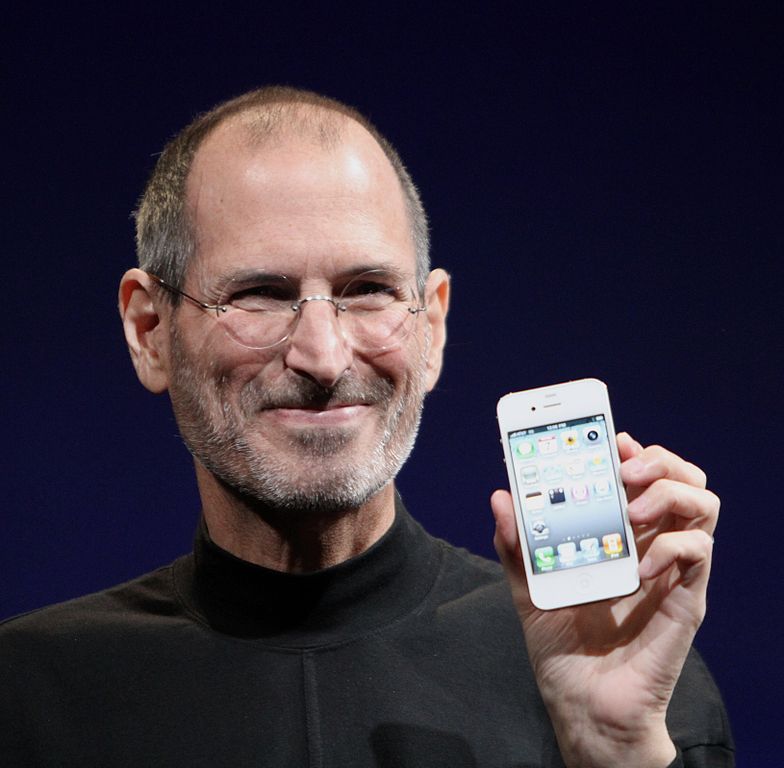
    Steve Jobs image courtesy of Wikimedia.

    Similar posts:

    • No Related Posts
  • On running late

    On running late

    Business Insider’s unathorised biography of Yahoo CEO Marissa Mayer is both enlightening and scary while giving some insight into the psyche of the tech industry.

    Nicholas Carlson’s story tells the warts and all tale to date of a gifted, focused and difficult to work with lady who’s been given the opportunity to lead one of the Dot Com era’s great successes back into relevance. It’s a very good read.

    Two things jump out in the story; Mayer’s desire to surround herself with talented people and her chronic lateness.

    When asked why she decided to work at a scrappy startup called Google, which see saw as only having a two percent chance of success, Mayer tells her ‘Laura Beckman story’ of her school friend who chose to spend a season on the bench of her school varsity volleyball team rather than play in the juniors.

    Just as Laura became a better volleyball player by training with the best team, Mayer figured she’d learn so much more from the smart folk at Google. It was a bet that paid off spectacularly.

    Chronic lateness is something else Mayer picked up from Google. Anyone whose dealt with the company is used to spending time sitting around their funky reception areas or meeting rooms waiting for a way behind schedule Googler.

    To be fair to Google, chronic lateness is a trait common in the tech industry – it’s a sector that struggles with the concept of sticking to a schedule.

    One of the worst examples I came across was at IBM where I arrived quarter of an hour before a conference was due to start. There was no-one there.

    At the appointed time, a couple of people wandered in. Twenty minutes later I was about to leave when the organiser showed up, “no problem – a few people are running late,” he said.

    The conference kicked off 45 minutes late to a full room. As people casually strolled in I realised that starting nearly an hour late was normal.

    It would drive me nuts. Which is one reason among many that I’ll never get a job working with Marissa Mayer, Google or IBM.

    A few weeks ago, I had to explain the chronic lateness of techies to an event organiser who was planning on using a technical speaker for closing keynote.

    “Don’t do it,” I begged and went on to describe how they were likely to take 45 minutes to deliver a twenty minute locknote – assuming they showed up on time.

    The event organiser decided to look for a motivational speaker instead.

    Recently I had exactly this situation with a telco executive who managed to blow through their alloted twenty minutes, a ten minute Q&A and the closing thanks.

    After two days the audience was gasping for a beer and keeping them from the bar for nearly an hour past the scheduled finish time on a Friday afternoon was a cruel and unusual punishment.

    This was by no means the first time I’d encountered a telco executive running chronically over time having even seen one dragged from the stage by an MC when it became apparent their 15 minute presentation was going to take at least an hour.

    It’s something I personally can’t understand as time is our greatest, and most precious, asset and wasting other people’s is a sign of arrogance and disrespect.

    Whether Marissa Mayer can deliver returns to Yahoo!’s long suffering investors and board members remains to be seen, one hopes they haven’t set a timetable for those results.

    Similar posts: