Tag: technology

  • It’s only technology

    It’s only technology

    “We treated Bitcoin as a tech story but now it’s become a much more serious economic story,” said a radio show compere earlier today when discussing the digital currency.

    One of the great frustrations of any technologist is the pigeon holing of tech stories – the real news is somewhere else while tech and science stories are treated as oddities, usually falling into a ‘mad professor’, ‘the internet ate my granny’ or ‘look at this cool gadget’ type pieces.

    Defining the world we live in

    In reality, technology defines the world in which we live. It’s tech that means you have running water in the morning, food in the supermarket and the electricity or gas to cook it with.

    Many of us work in jobs that were unknown a hundred years ago and even in long established roles like farming technology has changed the workplace unrecognisably.

    Even if you’re a blacksmith, coach carriage driver or papyrus paper maker untouched by the last century’s developments, all of those roles came about because of earlier advances in technology.

    The modern hubris

    Right now we seem to be falling for the hubris that we are exceptional – the first generation ever to have our lives changed by technology.

    If technological change is the measure of a great generation then that title belongs to our great grandparents.

    Those born at the beginning of last century in what we now call the developed world saw the rollout of mains electricity, telephones, the motor car, penicillin and the end of childhood mortality.

    For those born in the 1890s who survived childhood, then two world wars, the Spanish Flu outbreak and the Great Depression, many lived to see a man walk on the moon. Something beyond imagination at the time of their birth.

    It’s something we need to keep in perspective when we talk about today’s technological advances.

    Which brings us back to ‘it’s only a tech story’ – it may well be that technology and science are discounted today because we now take the complex systems that underpin our comfortable first world lifestyles for granted.

    In which case we should be paying more attention to those tech stories, as they are showing where future prosperity will come from.
    Similar posts:

  • Is NFC ready for prime time

    Is NFC ready for prime time

    One of ‘coming real soon’ technologies of our times is Near Field Communications (NFC), a short range radio service connecting suitably equipped electronic devices.

    NFC has been tipped to arrive ‘real soon now’ for several years as mobile phone companies, banks and telcos fight to control the payments system.

    The service hasn’t taken off for a number of reasons; it’s clunky to use, the technology itself isn’t consistently applied and many smartphones don’t have the feature, the most notable being the iPhone.

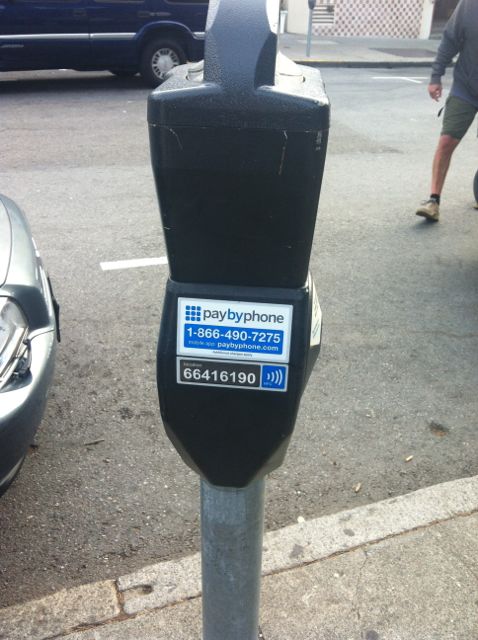
    Most of the applications cited for NFC are contactless payment services where a customer can wave a phone to pay for things, a good example is this parking meter in San Francisco.

    NFC-parking-meter-detail

    On the other side of the Pacific, Google are running a campaign in Australia encouraging commuters to try the NFC features that are built into most Android phones.

    IMG_4447

    Unfortunately the technology doesn’t work, as the comments to this blog post indicate. The users’ problems illustrate why NFC is struggling; it’s clunky, unreliable and customers don’t understand it.

    It’s notable the Google campaign includes a QR code, another technology that’s been pending for nearly a decade.

    Both are doomed though while customers struggle to use them.

    We may well see both QR codes and NFC succeed eventually, but right now they are the classic case of a technological solution searching for a problem to solve.

    Similar posts:

    • No Related Posts
  • Tips for travelling geeks

    Tips for travelling geeks

    During last week I spent the last two days travelling by train between conferences in Spain and the UK while trying to work, write and blog. The lesson is you need to leave the tech at home if you want an enjoyable holiday.

    Some of us however are travelling for business so the option of leaving the technology at home isn’t an option. Here are some tips on how to work effectively while on the road.

    Charge, charge, charge

    If you want to be connected you have to charge your devices at every opportunity, you never know when the next opportunity will arise.

    Three pin European power socket
    Three pin European power socket

    One trap for players is the earthed adaptor plug as the third pin basically renders your equipment useless on most trains and bathrooms. So beg borrow or steal one that lacks the pin which will almost certainly leave you with dead batteries on a night train.

    Get Connected

    Don’t rely on WiFi, in many places it’s patchy and in France requires convoluted sign up plans. When you can get it, consider it a bonus.

    If staying more than three days in a city buying a local pre-paid SIM saves money, but when travelling a lot in Europe it’s best to buy a European wide SIM which will cost more but won’t die at the border.

    The dying on the border shouldn’t be understated. On the night train from Barcelona to Paris the service – which the salesman assured would work in France – stopped working the moment the train exited the tunnel from Spain at Cerbere.

    Avoid night travel

    Should you be intending to work while on the road, avoid night travel. You’ll get more work done in a hotel room or hostel than on a stuffy night train and be more productive than after an overnight flight.

    Travel light

    Keep things to a minimum, if you’re working that might mean laptops and big cameras but for leisure keep it simple. The less tech you carry, the fewer the power, security and other hassles you’ll encounter.

    Forget a schedule

    Work where you can and when you can. If you’re diligent then flight and train delays can be your friend in getting stuff done.

    Get a room

    Working in hostels is almost impossible and you risk having things stolen, staying with friends and relatives is great but their hospitality makes it hard get things done. Get a cheap room so you can work in peace.

    An important thing about travel is that you are away from home to learn about and experience other places, spending your time stressing about finding a power socket or Wi-Fi access point is not why you’re on the road.

    Overall, tech is a hassle when you’re travelling. If you’re on the road for pleasure keep most of it at home, if you’re working then keep it all to a minimum.

    Similar posts:

    • No Related Posts
  • Coping with Generation LuXurY

    Coping with Generation LuXurY

    Speaking at the recent ADMA Global Summit in Sydney, Starwood Hotel’s Phil McAveety described Generation LuXury – the changing hospitality expectations of Gen X and Ys.

    McAveety sees the new generation of travellers as being more diverse, younger, female and increasingly from emerging economies making them very different from the middle aged Caucasian male from Europe or North America which seems to be the focus of most of the hospitality industry.

    The lessons from McAveety’s presentation weren’t just for hotels, much of his message applies as to almost every other business sector.

    3D printing featured heavily, with McAveetry seeing the technology as delivering the personalised experiences demanded by Generation LuXurY, as an example he cited a concierge being able to create a pair of running shoes for a guest in exactly the size and style required for a guest.

    Big Data played a role too with McAveety illustrating how hotel managers used to watch for important, valued guests with hidden windows letting them see who was checking into their establishment, a role that’s now carried out by Big Data and social media.

    McAveety though had a warning about social media in the risks of giving away business intelligence and intellectual property to the services.

    The big risk though is in technology itself – that hotels treat it as an end in itself instead of tools to deliver better experiences to guests.

    “It’s not about tech,” warns McAveety. “If so, we are going to lose.”

    That’s a lesson all industries need to heed, that technology is a means to the end of delivering better products to customers. Understanding what Generation LuXurY perceive as a better product is one of those uses for tech.

    Similar posts:

  • Reducing the road toll through the internet of everything

    Reducing the road toll through the internet of everything

    How can modern computer technology cut the road toll?

    Transport for NSW’s John Wall spoke last week at Cisco’s Internet of Everything presentation in Sydney about some of the ways the connected motor car can reduce accidents.

    John’s presentation comes from personal experience, having being a volunteer for nearly thirty years at his local State Emergency Service brigade where he was often among the first responders to local vehicle accidents.

    Some of the improvements in technology see the road toll falling as people travel less because of remote working, teleconference and business automation. Many of the applications though are built into the vehicles, street signs and the roads themselves.

    Finding the safest route

    John’s first suggestion for improving driver safety is having navigation systems sourcing traffic, weather and other information to suggest the best route for the driver. An intelligent system may also modify the recommended journey based on the experience of the driver and state of the vehicle, such as the tyre conditions.

    Watching the eyes

    Fatigue kills and all of us have driven when we were really too tired to be behind the wheel.

    The first in car technology John discussed is facial recognition technology that detects when drivers are fatigued. Tying this feature into the vehicle’s entertainment system with a stern aviation style “PULL OVER – YOU ARE TIRED” warning could well save hundreds of lives a year on his own.

    Connected road signs

    One of the underpinning factors of the internet of everything is cheap computers and transmitters embedded into almost anything. Road signs and sensors talking to cars could help reduce driver errors such as entering curves too fast.

    Those signs can also be plugged into weather conditions so if there’s ice, fog or rain then the car can be told of the hazards ahead.

    Going on the grid

    Signs are not the only devices that could be talking to each other, vehicles themselves could be talking to each other. Should one car hit a slippery or soft patch on the road, it could tell following vehicles that there’s a problem ahead and respond accordingly.

    That technology too could help traffic planners and road authorities, as data on traffic speeds and road conditions feed into their databases it becomes easier to identify black spots or road design problems before lives are lost.

    Helping the first responders

    A wrecked car or roadside sensor can also help those first responders attending an accident. The vehicle itself could transmit the damage and give rescuers valuable, time saving information, on the state of the occupants.

    Similarly, the system could also warn emergency services such as hospitals and ambulances of the injuries likely and what’s needed to treat the injuries on site, in transit and at the casualty ward.

    Importantly, a smart vehicle can also warn those first responders of potential risks such as live air bag gas cylinders, car body reinforcements or high voltage cables as they attempt to free trapped occupant from a wreck.

    The rescuers themselves may be wearing technologies like Google Glass that help them see this information in real time.

    Bringing together the technology

    As Kate Carruthers points out, the internet of everything is the bringing together of many different technologies – wireless internet, cloud computing, grid networks and embedded devices all come together to create a virtual safety net for drivers.

    By the end of this decade that we will all be relying on these technologies to help us drive. Which means we might find our licenses start to be endorsed for the level of technology in our vehicles, just as we used to have to get qualified to drive a car with a manual transmission.

    Concluding his presentation, John Wall told the story of Jason, a cyclist from his town who was killed in a road accident and left a young family. In his slide he showed Harry, Jason’s young son, playing with the flowers on his father’s memorial.

    “I hope for Harry is that when Harry learns to drive that things will be different on our roads and things will be different because we are all connected,” said John.

    It’s a strong reminder of the real human opportunities and costs when we adopt new technologies.

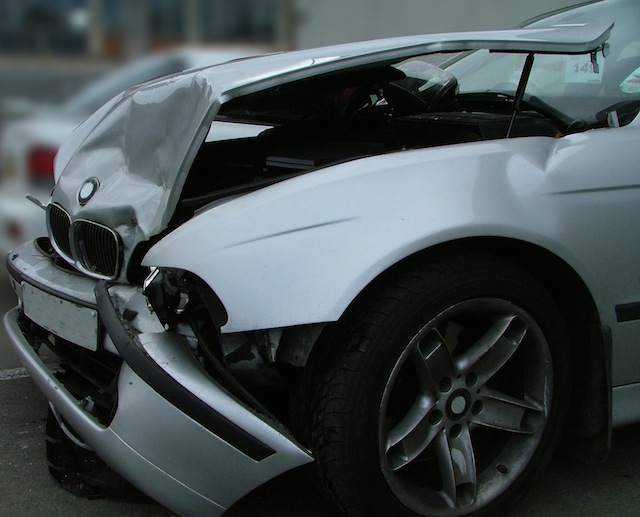
    Car crash image courtesy of jazz111 through SXC.HU

    Similar posts: