Tag: television

  • Television’s argument for relevance

    Television’s argument for relevance

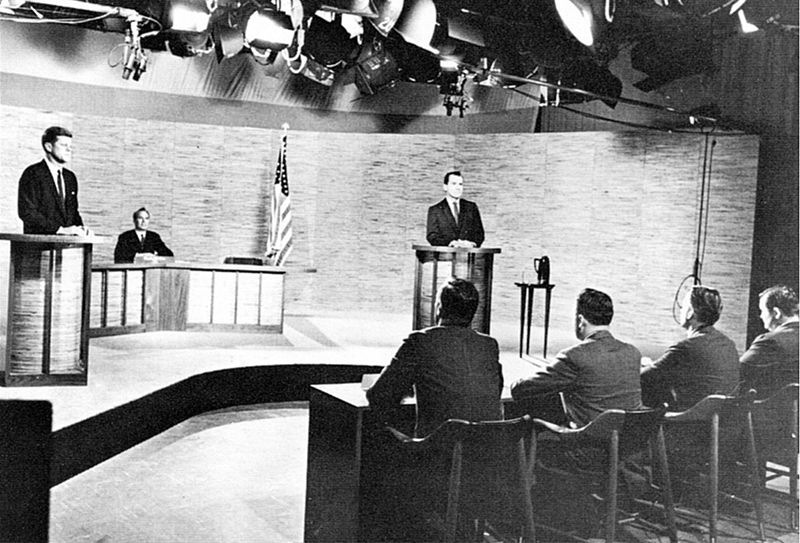
    One of the notable things about the media’s collapsing business model is how television has suffered nowhere near the same downturn in advertising revenues as the other channels.

    This has been baffling for many of us pundits so a series of interviews I’m doing with media executives on digital disruption was a good opportunity to discuss why television is holding the line where print has dismally failed.

    While the executive has to remain anonymous at the moment, the series is for a private client, their view on why television has so far avoided the advertising abyss is simple – accountability.

    We have something, as do my friends at other media companies, that YouTube and Facebook don’t have which is we create quality content. What will differentiate us is we have premium, locally produced content that is one hundred percent brand safe and one hundred percent viewable and, most importantly, is independently measured by third parties.

    My view is that advertisers in that environment is a much more powerful experience than advertising in Facebook or YouTube

    While many of us may laugh at Australian commercial TV being described as ‘quality’, it does appeal to audiences far bigger than the typical YouTube channel or Facebook Live stream.

    The advertising industry’s established systems also, unsurprisingly, work for the television industry in giving the sector accountability that the online services lack in a world where ‘click fraud’ – software tricks to report false web impressions – is rampant.

    Even more importantly for the new media giants is the ‘brand safe’ message being pushed by the incumbents. The advertising crisis for Google is real and the established players intend to exploit it.

    While the TV executive is pushing their own product, it’s clear the fight for advertising and marketing dollars is far from over.
    Similar posts:

    • No Related Posts
  • On the cusp of great change

    On the cusp of great change

    Thought of the day. We’re in at point of change in social and consumer behaviour similar to that of the late 1950s.

    Sixty years ago the drivers were; the first baby boomers entering their teenage years, the rise of television, an era of accessible and cheap energy, along with rising incomes from the post World War II reconstruction.

    Today the drivers are; the baby boomers entering retirement, the rise of the internet, an era of abundant and easily accessible data, the rise of the internet along with stagnant living standards following the late 20th Century credit orgy.

    Your thoughts on where this goes?

    Similar posts:

    • No Related Posts
  • Social media and the changing media landscape

    Social media and the changing media landscape

    “We seek news on Twitter but bump into it on Facebook” points out the Reuters’ 2015 Digital News Report in its analysis of global media consumption.

    The broad trends from surveying over 20,000 online news consumers in the US, UK, Ireland, Germany, France, Italy, Spain, Denmark, Finland, Brazil, Japan and Australia are clear – social media is becoming the main way people are finding their news while television is slowly declining.

    Probably most concerning for the television networks how younger viewers have turned away from TV with only a quarter of those aged between 18 and 25 tuning in as opposed to two thirds of those aged over 65.

    Given the aging of television network audiences it’s not surprising that last week Australia’s Network Ten, part owned by Lachlan Murdoch, found a lifeline from the country’s main cable network as the broadcaster is finding revenues declining.

    The question is how long advertisers are going to stick with television as audiences increasingly move online creating a revenue gap estimated by analyst Mary Meeker to be worth around thirty billion dollars a year.

    For the moment, the great hope for the online world is Facebook with Reuters finding the service is dominating users’ time. In that light it’s not surprising the company has such a huge market valuation.

    The competing social media services are still facing challenges, particularly with Twitter showing a far lower level of penetration with the general public, leading Harvard professor Bill George to speculate the company risked becoming the new BlackBerry.

    While the online services struggle for supremacy and television slowly declines, the real pain continues to felt by the newspapers who continue to find their relevance erode and few of their readers prepared to pay for their content.

    The Reuters report confirms the trends we already know while giving insights into the unique peculiarities of each market.

    Similar posts:

    • No Related Posts
  • Netflix and the global entertainment network

    Netflix and the global entertainment network

    Streaming video service Netflix is looking to launch in China reports Bloomberg Business.

    The Chinese joint venture to be run with Wasu, a company backed by Alibaba founder Jack Ma, looks to increase Netflix’s global footprint.

    Netflix plans “to be nearly global by the end of 2016,” the article quotes a company spokesperson answering questions about a possible China partnership.

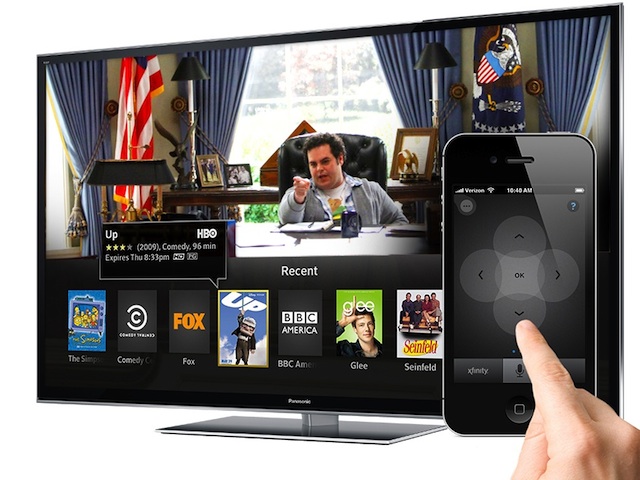
    The Netflix model is a major departure from the established broadcast television and movie business where studios and producers would enter distribution agreements with local TV stations and theatre chains.

    With Netflix and the streaming model, the licensing of rights to local outlets becomes largely irrelevant with the producers – which increasingly includes Netflix itself – able to cut out the local licensees.

    A similar thing is happening in sports, one of the mainstays of broadcast television, where the professional leagues are taking control of their own content and leaving the networks, at best, minor players.

    Neflix’s move is part of a shift that’s affecting many industries, including those like broadcast television that thought they were untouchable.

    Similar posts:

    • No Related Posts
  • Software eats the sports cameraman

    Software eats the sports cameraman

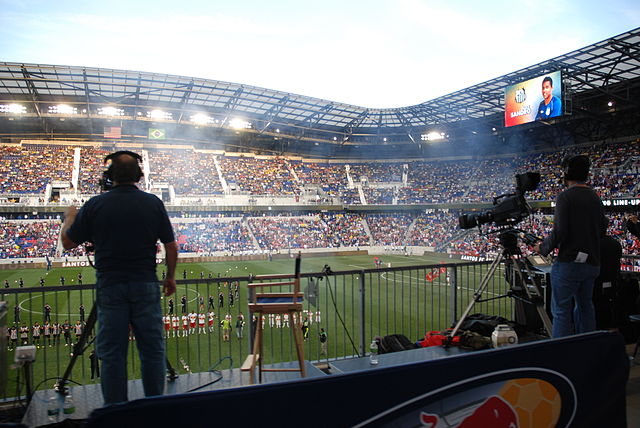
    Since the beginning of industry technology has changed occupations in unexpected ways the demise of the sports TV cameraman is a good modern example of a highly skilled, specialised trade that may soon be redundant.

    Years ago television studios largely replaced cameramen with remote controlled cameras but sports grounds needed skilled operators with excellent attention spans to video action at sports grounds.

    At a lunch today in Sydney Michael Tomkins, Chief Technology Office of Fox Sports Australia, explained how a combination of high definition cameras and advanced software is changing the way sports are broadcast and recorded.

    “Last year we put two 4k cameras in to cover the length of the ground,” Tomkins said. “Two 4k cameras can see the length of the whole ground so I get rid of four cameramen and replace them with one joystick bunny.”

    “He moves a box around the screen and those become a virtual camera. The resolution of a 4k camera is four times that of our HD broadcasts. It’s quite cost effective and I don’t have to roll a crew out.”

    A demonstration of how the technology works is in a YouTube clip of an Australian Rules football match from last year. While the ‘joystick bunny’ and the software is somewhat clumsy in the segment, the clip shows the power of the technology.

    With abolishing most of the camera, the opportunity to rationalise the production suite also becomes possible; at present most sports events have a producer instructing a group of assistants to cut between cameras, prepare replays and all the other effects expected by viewers. With a software based system most of that labor and its skills become redundant.

    Over time as higher resolution cameras become available this application is going to become common, in fact most junior and amateur sports will be able to afford static hi-res cameras for their ground that allows them to record their games.

    While the demise of the sports cameraman and producers is a shame in the same way loom weavers and hansom cab drivers disappeared, it is a reflection of  changing technologies creating then destroying occupations.

    TV camera image through wikipedia

    Similar posts: