Tag: travel

  • Innovation lessons from the Concorde

    Innovation lessons from the Concorde

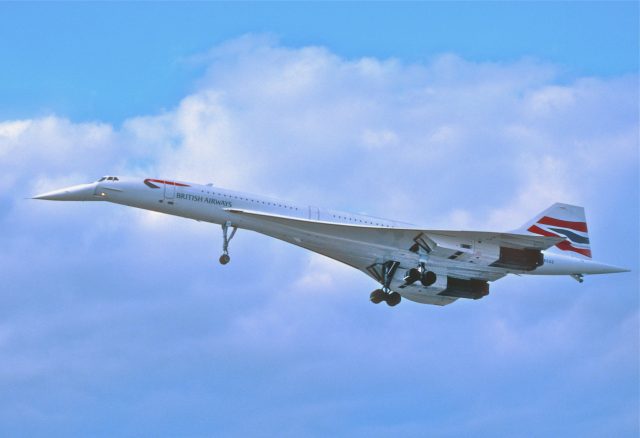
    Why did the Concorde fail? Website Vox has a nice mini-documentary on the iconic supersonic airliner of the 1970s which looks at why the aircraft never became popular.

    Fuel costs, opposition to supersonic flights and the aircraft’s limited passenger capacity are all factors cited in the story.

    Passenger capacity turned out to be the main reasons why the project wasn’t a commercial success as the economics of the airline industry changed over the decade it took to develop the aircraft.

    Wide bodied jets such as the DC-10, the L-1011 and, most importantly the Boeing 747, offered much better profits and reliability for airlines while the 1978 US airline industry deregulation act democratised air travel in the world’s biggest market. The 1973 oil shock which saw fuel prices was .

    As a high priced luxury, the Concorde couldn’t compete in that market. It was only the British and French governments absorbing development costs that allowed Air France and BA to fly it for as long as they did.

    Interestingly, we’re seeing a similar shift affecting the Airbus A380 which has been affected by the airline industry shifting from four engine long distance jets to cheaper two engine planes and consumers show their preference for ‘point to point’ networks rather than ‘hub and spoke’ operations – the biggest customer for the A380 is Emirates Airlines which routes almost all of its global operations through Dubai.

    The Concorde was one of several brave experiments of the 1960s but its demise shows that despite how impressive the technology was, it was no match for economic reality. That is something we need to keep in mind as we marvel at today’s advances.

    Concorde image from Airliners.net

    Similar posts:

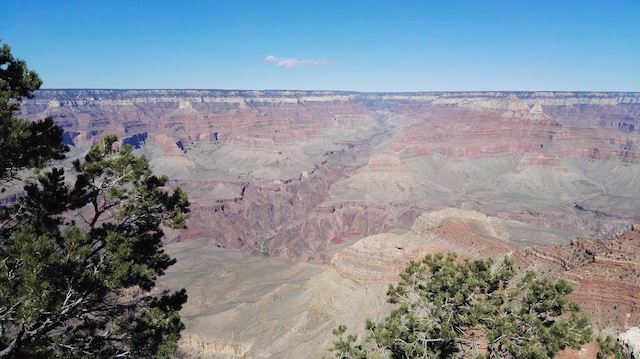
  • A day trip to the Grand Canyon

    A day trip to the Grand Canyon

    Las Vegas exists as a fleecing machine for tourists and for the impoverished freelancer stuck in the town over a weekend, the best idea is to get out of it.

    So the Grand Canyon sounded like a good idea, despite being a long day – departing at 6.30am and returning after 9pm – the price of $79, plus gratuities to the driver, sounded like a good way to spend the Sunday.

    The day didn’t start out well with the connection bus not showing up, the Mandalay Bay separate Tour Lobby on a different floor to the main lobby where I was standing. It was apparently beyond the ken of the connecting driver to call my number to check if I were around.

    Adding to the irritation was calling the Grand Canyon Tour company directly, as instructed, five minutes after the scheduled time only to be told ‘he’s running late, just wait”. Twenty minutes later on calling the company again I was told I wasn’t there for the pickup, something they could have told me earlier.

    Panicking, angry and anxious about missing the bus I jumped in a cab to get to their depot. Fortunately my hotel wasn’t too far from the company’s depot and the fare was only $15, for other passengers it could have been substantially more.

    Long check in queues

    It turns out there was little need to be stressed about missing the, the tour company’s shuttle buses drop passengers off at a central check in place where the queue was literally out of the door. After check in you can pick up a complimentary breakfast Danish and a coffee of tea and buy bottles of water before boarding the bus.

    Bottled water isn’t available in the Grand Canyon park area so bring your own container, or buy some for a dollar each at the Las Vegas check in terminal, you can refill them in the park or at Williams railroad station at the lunch break.

    The right hand side of the bus is best for views, particularly in the desert during the first two hours before a refreshment break just outside of Kingman, Arizona. Castle Peak Bar and Grill is the quirky desert truck stop that acts as a refreshment stop and the food isn’t recommended.

    Running commentaries

    As the tour continues, the driver gives a running commentary of the sights on the way accompanied with videos on the Grand Canyon and Hoover Dam. If you’re doing the Hoover Dam journey another time, it’s worthwhile to do it after this tour as one of the videos is a documentary on the building that will help you appreciate the project even more.

    The videos help while away the ten hours of travel and the bus also has Wi-Fi although you’ll probably find a better signal with your own mobile device. The seats also have power sockets available although I didn’t get to test them.

    One thing to remember when booking the tour is gratuities are not included and the driver expects a tip. Budget for five or ten dollars each.

    After Kingman, the next step is Williams, Nevada, a tourist town that features the oldest diner on Route 66 and the terminus for the privately operated Grand Canyon Railroad where the company puts on a complimentary lunch.

    Enjoying a lunch

    Lunch is a surprisingly good buffet featuring soups, salads and hot dishes with a soft drink thrown in, the swirl icecream cones are nice touch. If you have a water bottle to fill, there’s a filling station outside the restrooms at the other end of the station from the restaurant.

    Williams is an hour from the Grand Canyon and the tour stops twice. It’s worth getting off the bus at Mather Point, the first stop, and then taking the Rim Walk around to the main Village which is the collection point. If you do this, let the driver know and find out the time he expects to leave.

    In our case the bus was late due to several people being lost. This is a problem when the return to Las Vegas is well into the evening. There is a dinner break at the Kingman Carls Jr on the return leg.

    Good for a quick tour

    Overall, the Grand Canyon tour is a good trip if you’re in Las Vegas and on a short schedule. However it’s certainly better to give the canyon more time and stay overnight.

    If you can find accommodation in the main village – when I attempted it was fully booked – then taking the tour company’s one way option each day or hiring a car would be far better given the National Parks runs evening tours and both sunset and sunrise are spectacular times with the opportunities to see more wildlife.

    Should you have several days, having a car to explore Boulder, the Hoover Dam and Williams along with spending one or two nights in the park would be highly recommended.

    For those time poor and based in Vegas, the Grand Canyon tour is a good option, however the big gripe with Grand Canyon Tour Company is its organisation. To avoid future customers having the incredibly irritating experience of missing the shuttle due to being in the wrong place, the company could do with more streamlined procedures and even a better use of technology – such as SMS notifications.

    Similar posts:
    • No Related Posts
  • Touring San Francisco’s cold war missile base

    Touring San Francisco’s cold war missile base

    One of the longest running, and expensive, programs of the Cold War was the Nike missile program. Designed to protect US from Soviet bombers, the missiles were based at 280 sites and guarded cities and military installations.

    Today the program is long since abandoned, a victim of changing technology and the 1972 SALT agreements between the then Soviet Union and US with the only base remaining in a working condition is SF-88 in what’s now the Golden Gate Park just North of San Francisco.

    SF-88_San_Francisco_Nike_Missile_Base

    SF-88 itself was abandoned and over the last 15 years, volunteers have been rebuilding the site to roughly how it looked in the early 1960s at the peak of the Cold War.

    The missiles themselves were only shortrange devices. The first version, the Ajax, only had a range of 25 miles and carried a conventional high explosive payload while the later model, the Hercules, could travel forty miles and could carry either conventional or nuclear warheads.

    SF-88_San_Francisco_Missile_Radar

    Each Nike base had three main components based at least a thousand yards apart; the actual launch site, the Integrated Fire Control room (IFC) that controlled the systems and administrative quarters. The reason for the thousand yard spacing was to minimise the damage from the launch of the rockets and to give the radar systems adequate range to track the weapons.

    SF-88_Nike_Hercules_Missile_Computer_Circuit_Board

    The missiles themselves were controlled by computer. Once fired they were controlled by the computers in the IFC, should the crew decide to abort the attack the only choices they had were to explode it prematurely or disarm it so it flew off into the ocean.

    SF-88_San_Francisco_Nike_Missile_Control_Panel

    With the advent of Intercontinental Ballistic Missiles (ICBMs) and submarine launched weapons the Nike systems became redundant, an experimental anti-missile system – the Nike-X – was tested but as the scale of the Soviet arsenal became apparent it became clear the system would be hopelessly inadequate to combat the hailstorm of death a true nuclear war would unleash.

    By 1974 most the system, including SF-88 was decommissioned although a small number of bases remained in operation for coastal defences for a few years afterwards. Today most are  disappearing at the land is taken over for property development and other uses.

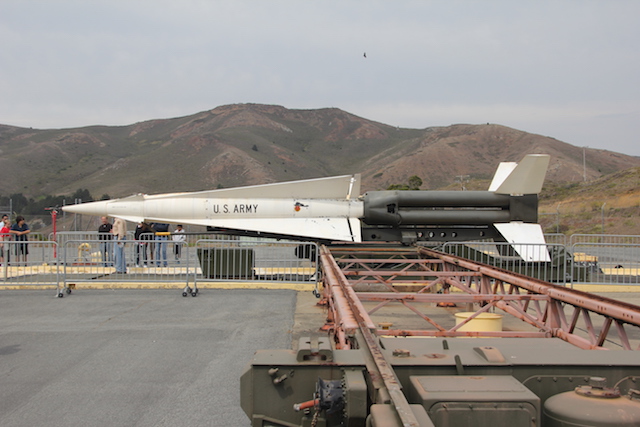
    Nike_missile_at_SF88_San_Francisco

    The volunteers who’ve restored SF-88 have done a wonderful job bringing a facility back to life – the missile hangers had six feet of water in them before the work started and on weekends between 12.30 and 3.30pm they’ll show you around the facility and bring one of the missiles to the surface firing position.

    Fort Baker’s SF-88 Nike Base is an easy drive across the Golden Gate Bridge from San Francisco, on weekend the Muni runs the hourly 76-X service from the Transbay Terminal. Admission to the SF-88 base is free but donations are gratefully accepted.

    If for nothing else, a visit to the Nike Missile Base is worthwhile just to remember how close the world was to destruction in the paranoid days of the Cold War.

    Similar posts:

    • No Related Posts
  • Travelling to the Golden Gate Bridge

    Travelling to the Golden Gate Bridge

    San Francisco’s Golden Gate Bridge is one of the must sees for a visitor. However the iconic attraction isn’t close to the centre or to the main public transport routes which, while time consuming is an opportunity to see more of the city.

    Probably the simplest way for a visitor to get there is to take a tour bus, of which San Francisco has plenty. There’s also the options of a scenic hour’s walk from Fisherman’s Wharf or cycling on a hire bike, but it’s always been this site’s contention is the best way to get to know a place is to catch the local public transport.

    In San Francisco, the public Muni network operates the bus, light rail and cablecar system with the Muni Passport offering unlimited rides at $17 for day or $35 for a week, which is a deal given the cable car services alone are $7 a trip.

    IMG_5418

    The Muni Passport can be bought at most drugstores and at the various Muni ticket stalls dotted around San Francisco, most notably at the Ferry Building and at the Powell Street cable car terminus. While some outlets will sell you a Clipper Card with the passport pre-loaded, most outlets give you a paper copy that requires you to scratch the dates on it.

    Getting the bus

    San Francisco’s Muni bus network is comprehensive although there isn’t a direct bus to the Golden Gate Bridge except the weekend the hourly 76x bus to the tollgates that continues onto the Marin Headlands and Fort Cronkhite, a worthwhile trip in itself.

    Another direct service is Golden Gate Transit’s number 10 and 70 services which don’t accept the Muni Passport but are faster and more direct than the Muni buses as they service the commuter town to the north of the city.

    28-Muni-bus-at-san-francisco-golden-gate-bridge
    28 Muni bus at Golden Gate Bridge

    For most times though the 28 – 19th Avenue service is the most frequent and cheapest service to the Golden Gate however it goes nowhere near the tourist precincts giving a visitor an opportunity to explore the city and get a taste of the ordinary person’s San Francisco.

    Connecting to the 28


    The quickest connection from downtown San Francisco is the 38 or 38R Geary services from Union Square, these frequent services head directly West from the city and drop you off at the corner of Geary and 19th Avenue which the 28 runs along.

    If you’re feeling more active during peak commute times the 38R continues to Lands End, the walk from there to the Golden Gate Bridge takes around two hours along the route of one of the original steam car routes and gives great vistas of the Marin Headlands and the Bridge. The Cliff House and Sutro pool ruins at Lands End itself are worth exploring as well.

    38R Muni Bus at Union Square
    38R Muni Bus at Union Square

    There are other buses that can connect with the 28 at 19th Avenue including the 1 California however they are a lot slower and less frequent than the 38 Geary.

    N-muni-metro-san-francisco


    Another way, which may be faster than the buses during peak times in to catch the N – Judah/Ocean Beach service which drops you at 19th Street a little further south of the 38’s stop. On the outward route the stops are a block apart while coming back from the Golden Gate, the stops are adjacent.

    From Fisherman’s wharf and the cable cars

    The cable cars aren’t particularly convenient to the 28 terminus in the Marina district and the best way to make the connection is the 30 bus that goes along North Point with a change at the corner of Chestnut and Laguna Streets.

    A much nicer alternative to the 30 bus is to walk from Fisherman’s wharf via the Maritime Museum in the wonderfully art deco Aquatic Park Bathhouse (free admission) and Fort Mason to the 28 Terminus in the Marina District.

    Returning to San Francisco

    All the above options are available in the reverse direction and again the Golden Gate Transit service is the fastest option back to the city although it doesn’t accept Muni passes. You can catch GGT buses from the toll plaza level of the bridge.

    If you’ve walked the bridge and aren’t inclined to do the return trip, some GGT services stop on the Northern approaches and the 76X stops on the xx road just above the bridge’s approaches, otherwise you can walk another 45 minutes to Sausalito and catch a ferry – again Muni Passes aren’t accepted – to either the Ferry Building or Pier 43 near Fisherman’s Wharf.

    Whichever way you go, the trip out to the Golden Gate Bridge is one of the must do things of a San Francisco visit and using the public buses is a great way to get a feel for the city.

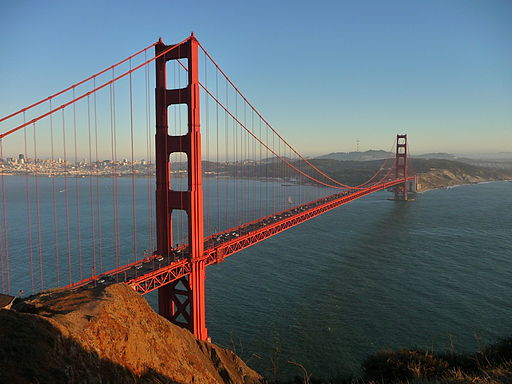
    Golden Gate Bridge image by By Octagon (Own work) via Wikimedia Commons

    Similar posts:

    • No Related Posts
  • Travel review – Air New Zealand Economy Skycouch

    Travel review – Air New Zealand Economy Skycouch

    One unique option offered by Air New Zealand is the SkyCouch, an option where economy passengers can buy adjacent seats for extra space on long haul flights aimed at giving families and couples to stretch out.

    By luck, I got the opportunity of doing an impromptu review of the Skycouch on the 12 hour NZ7 route between San Francisco and Auckland where I had an entire economy row to myself.

    The service is the standard Air New Zealand economy service and, while it’s friendly, the cabin crew can be a bit slow with drinks, I suspect this because of the number of attendants in Premium Economy and it’s a problem when you like to keep hydrated on a long flight.

    Given Air New Zealand don’t use the middle galley on there 777-300 services, it may be easier for crew and passengers if some soft drinks, water and snacks were left out during the flight.

    Made-up-skycouch-air-new-zealand-nz7

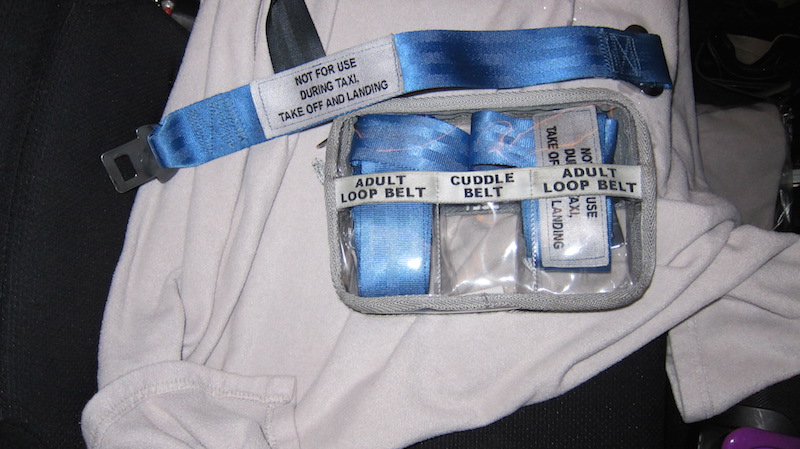
    The notable difference with the Skycouch services is the set of three extension belts, one cutely named the ‘cuddle belt’ given out before takeoff. The cuddle belt itself connects to a loop under the seat in front, this lets passengers lie flat across the three or four seats.

    Once set up, families or couples can buckle up across a row and don’t need to return to the seated position if there’s turbulence. If you’re using a blanket a it’s best to have the straps over the top as the crew will wake you if they can’t see you’re stapped in.

    While it’s great to be able to lie down and stretch out in economy, there are some downsides to be aware of before paying the extra for a Skycouch.

    Unlike business class, the seats aren’t designed for lying on. As consequence the contours mean the lie flat is a bumpy experience while climbing in and out of the row is awkward. I managed to tangle myself up twice in my headset cord.

    Another complication are the seat buckles, again these aren’t designed for people lying over them so they can get uncomfortable, organising them so they don’t dig int requires looping them over the armrest so they are out of the way.

    Spare-seatbelt-buckle-on-skycouch-air-new-zealand-skycouch

    Probably the biggest drawback is for someone of six foot, the three seats mean sleeping with legs folded. Having them hanging out into the aisle is a safety risk and will almost certainly result in a painful accident with a fellow passenger, cabin attendant or catering trolley. I found over time by back started to hurt.

    Working-in-the-air-on-air-new-zealand-skycouch

    Lying flat though did work, I got six hours solid sleep however I suspect that given the legroom on Air New Zealand economy is adequate I may have slept almost as well sitting.

    For families, couples and even pairs of budget conscious business travellers the Skycouch is a good buy offering extra space to spread out and use. For those with the dubious blessing of travelling with small children the added utility could be a sanity saver.

    For those wanting a lie flat bed at a price considerably less than a business class ticket, this probably won’t work. If that’s your intention it’s probably better to save the money and use the savings to travel a day early and book a nice hotel on arrival.

    Similar posts: