Tag: Uber

  • Opportunities in broken systems

    Opportunities in broken systems

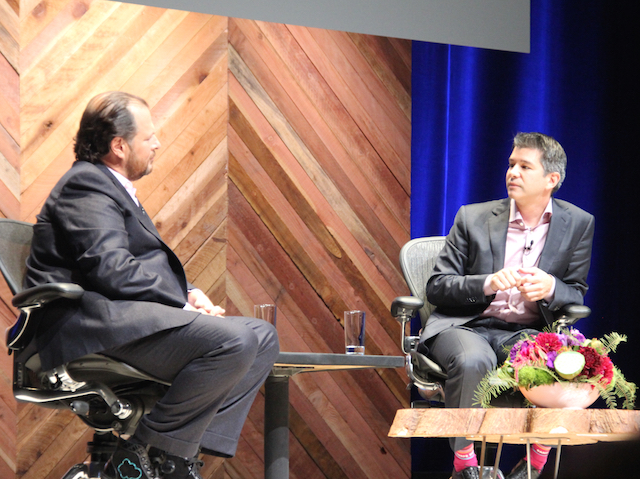
    “Taxi drivers are good people, they are just treated badly”, Uber founder Travis Kalanick told Salesforce CEO Marc Benioff at Dreamforce last week.

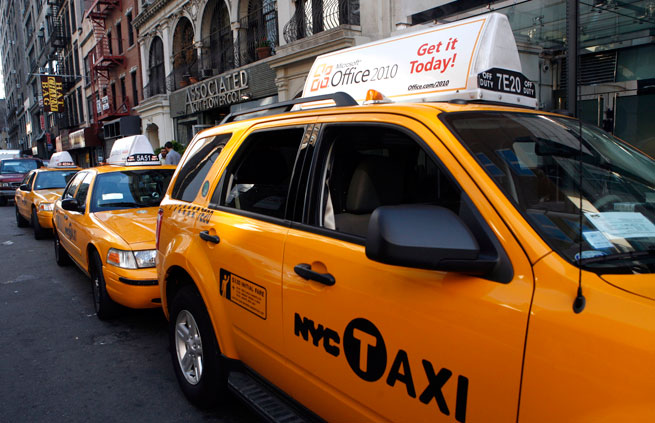
    Kalanick flagged how in most cities around the world the taxi industry is broken. Nowhere is that more true than in Australia and a piece I wrote for Business Spectator about the disruption to the nation’s taxi industry illustrates that well.

    The success of Uber in disrupting those markets – although it should be noted the company is far from becoming profitable – shows the real opportunities lie where existing markets are broken or distorted.

    If you’re benefiting from a broken market then this is a risk to your business. For outsiders, it’s an opportunity.

    Similar posts:

  • Uber and the cities of the future

    Uber and the cities of the future

    “We’re building the cities of the future” claims David Plouffe, Uber’s Senior Vice President for Policy & Strategy.

    Plouffe was speaking in Uber’s head office ahead of this year’s Dreamforce conference where the transportation disrupter was announcing the next phases of its Uber Business service.

    While western societies still remain car dependent, there’s a shift underway as people prefer to live in the cities rather than the suburbs and the far flung exurbs, particularly for younger people. “For my generation it was a big deal to get a car,” says the 48 year old Plouffe. “Millennials today don’t have that same identification – they don’t want to own a car.”

    That shift, which is not just confined to millennials, presents challenges for cities believes Plouffe. “Cities need to support people who are moving in at historic rates,” he says. “Our cities are facing huge challenges.”

    “Every city is facing congestion challenges which will only get worse over the next ten to fifteen years as the number of people moving into the world cities at a historic pace.”

    “Most cities do not have the will or the money to build new public transportation systems,” Plouffe says. “The only way they are going to deal with this is for people to buy less cars, families to only have one car and to reduce the number of cars on the road.”

    Not surprisingly, Plouffe sees this as being where Uber can help in expanding accessible and affordable transport to parts of cities which are unlikely to get public transit and to increase the carrying capacity of existing infrastructure.

    This is an interesting point of view and one that has some validity if we accept the view that ‘on-demand’ services like Uber and others are actually aimed at all groups and not just the affluent upper middle classes and the rich.

    For cities struggling to meet the demands of growing populations and shrinking budgets, services like Uber and Lyft may be part of the answer. That though will take some reform and a change of attitude from many regulators.

    Similar posts:
  • What should we call the sharing economy

    What should we call the sharing economy

    Stop calling it the sharing economy, cries marketer Olivier Blanchard in a blog post describing how the label is inappropriate and doesn’t accurately describe the imbalances in the relationships between providers, users and the online platforms that facilitate them.

    The question is what do we call the business model of companies like Uber, AirBnB and the myriad other services that take providers’ time and resources – cars in the case of Uber, homes or spare rooms for AirBnB – then make them available to people who can use them, taking a commission in the process of course.

    Blanchard wonders if much of the success of these companies is because America’s cash strapped middle classes are desperately trying to find additional source of income and there is very much a strong argument for that.

    More importantly, is what do we actually call these businesses? While they are potentially are as exploitative as the free labour models that have evolved in the media with businesses like Huffington Post, at least they provide some type of income even if for Uber drivers the net returns may be marginal at best.

    Blanchard himself suggests the Microtransaction Economy however that’s not a satisfactory label as the transactions – which may be many thousands of dollars for some AirBnB rentals – are not always small.

    Maybe we should call it the downtime economy, where we’re using the time we’re not busy or when we’re not using our homes, cars or others assets to earn income. That too though doesn’t strike me as satisfactory although it does seem to address the underlying idea these services are really only intended to supplement somebody’s earnings, not be their primary livelihood.

    None of these labels though are satisfactory and maybe we have to ditch the economy moniker. It’s time to start thinking about what we really should call these businesses.

    Your thoughts.

    Similar posts:

  • Uber becomes a US Presidential issue

    Uber becomes a US Presidential issue

    As services like Uber change the definition of employment, the company finds it has become an issue for the US Presidential race.

    The New York Times reports how the Democratic candidates, led by Hilary Clinton, and the Republicans are carving out their positions on the sharing and on-demand economies.

    Notable in the current discussion is low little support there is for the incumbent taxi companies and their drivers which shows how in most states and cities the medallion and licensing regulations have been used to stifle competition and discourage service.

    For cab drivers that characterisation is somewhat unfair given cabbies themselves in many cities are exploited and are as much the victims of a bad systems as the passengers.

    That the future of work and the structure of these services is now in the political spotlight, the issues raised by the new business models are going to get more examination and – hopefully – some ideas on addressing the changes needed to deal with a very different workforce in the 21st Century.

    Similar posts:

  • Getting fat on venture capital

    Getting fat on venture capital

    “Raising money is like ordering dinner,” says startup founder Geoff McQueen about attracting investors. “If you’re only a little bit hungry, you should only buy an appetizer.”

    McQueen was writing about his company, professional services platform Affinity Live, achieving its first round of funding. While the amount raised is a relatively modest two million dollars, the main gain for the company is getting some experienced business people on board.

    Unlike many of the high profile billion dollar ‘unicorns’, cash flow positive businesses like Affinity don’t need large swags of cash to grow. As McQueen points out, big investment rounds put pressures on management and risks the company’s culture changing “from one of discipline and taking on the world to one of comfort and entitlement”.

    Pushing out the owners

    Another risk for founders is they could end up diluting themselves out of the business they’ve built, as venture capital investor Heidi Roizen points out it’s possible for the creators of a billion dollar startup to find themselves broke.

    Roizen observes “venture capital is not free money. It’s debt. And then some”, something that’s overlooked by many commentators who think a fund raising – and the resultant valuation  – goes straight into the pockets of a company’s founders.

    Unless it’s Google Ventures doing the investment, it’s unlikely the founders will be buying Porsches after a VC round and usually the funding goes into growing the business. For many big name startups those capital needs can be huge as we see with Uber where reports indicate the company is currently losing two dollars for every dollar it earns.

    Beating the burn rates

    Most businesses though can only dream of burn rates in the hundreds of millions a year and their needs are far more modest illustrating McQueen’s point about excess capital.

    As we saw in the dot com bust it was the lean and focused companies that survived the downturn, there’s little to think the next industry shake it will be different. That’s why companies like Affinity Live and founders like Geoff McQueen will probably still be around when the dust and hype settles.

    Similar posts: