Tag: us

  • Gen X and the big economic shift

    Gen X and the big economic shift

    The single economic event that defines Generation X was the 1973 Oil Shock, the OPEC embargo on the west bought the post World War II era of economic growth to an end.

    With stagflation gripping the western world, new solutions were sought and by the end of the decade governments touting ‘business friendly’ economic policies – more accurately ‘corporation friendly’ – were seen as the solution.

    As Robert Reich described in the New York Times, these policies were not only a disaster for workers but also for the middle classes and business productivity.

    US-economy-employment-wages

    A notable aspect missing in the above graph is US productivity growth has since stalled as corporations have focused on stock buy backs rather than investment. The problem has been compounded by the use of tax shelters that have resulted in huge amounts of American corporate profits being locked away in offshore bank accounts.

    While those stock buy backs and arbitraging tax regimes have benefitted executives and a small cabal of fund managers, the diversion of capital from productive investment has weakened the US and global economy.

    For the baby boomers, even those of the Lucky Generation who preceded GenX, that lack of investment now threatens their retirement lifestyles as incomes and government spending stagnates.

    The ‘big business friendly’ ideologies of Thatcher and Reagan defined the late Twentieth Century and continue to dominate government thinking in much of the western world, it may be though that we a reaching the end of that era as the costs to the broader economy are beginning to be recognised.

    For GenX and their kids, the costs are being borne now but their parents may be about to feel the costs too.

    Similar posts:

  • The risk of misunderstanding China

    The risk of misunderstanding China

    In the early 1990s I was working for a British company in Hong Kong and regularly commuting to Taipei. On a Cathay Pacific flight back from Taiwan one Friday afternoon, I found myself on the same flight as the organisation’s Asia-Pacific director who graciously got me into the lounge for a beer.

    Over that beer he told me how earlier in the year he’d been asked by one of the pukka English directors why he was bothering spending so much money in business development for ‘third world countries’ like Taiwan and South Korea.

    Jeff, as we’ll call the director, laid down a challenge to his board. “Come out and have a look for yourself,” he told them.

    Some of the UK based directors took Jeff up and flew out to Hong Kong, first class on BA of course, and then continued on to Taipei where they suitably amazed to be greeted by a first world city.

    “They genuinely believed they were going to fly in a DC-3 and be met by a bunch of rickshaw wallas,” laughed Jeff, a long standing English expat. “The Brits don’t get East Asia.”

    It seems things haven’t changed much as veteran venture capital investor Mike Moritz made a similar point at a speech in London yesterday that the West doesn’t understand China, particularly Europe.

    “People underestimate China, especially in Europe,” Business Insider quotes Moritz as saying. “They have very little sense of the size, strength, and scale of ambition of the leading Chinese technology companies.

    Moritz pointed out the fund he leads, Sequoia Ventures, is now placing over half its money in non-US companies with Chinese businesses being high on the list.

    The West’s misunderstanding of China goes beyond business, with The Economist warning that many nations are soon going to have to choose between the PRC and the United States as Beijing sets up its own network of global alliances and trade accords.

    So far the United States has responded to this with clumsy efforts like the Trans Pacific Partnership, an attempt to quarantine China’s influence in the Western Pacific that actually gives PRC  based businesses a competitive advantage over nations that enter the deal which does little more than strengthen US corporate interests.

    Already in Africa, the results of China’s economic efforts are being seen. A good example is the new Ethopian Railway where the Chinese were quick to fund a project that EU and World Bank lenders had dragged their feet on.

    Just as English businessmen in the 1990s misunderstood what was going on in East Asia, it seems ignorance of Chinese growth and intentions are even more widespread today. There may be some shocks coming for countries like Australia who assume today’s realities are tomorrow’s.

    Similar posts:

    • No Related Posts
  • Riding the rails of the global economy

    Riding the rails of the global economy

    Irish economist David McWilliams reflects on how a train ride between Boston and New York illustrates how a lack of investment in the US and over capitalisation in China has affected the global economy.

    A lack of public investment is hurting the US in McWilliams view and that’s exacerbated by a reluctance of the private sector to commit to new productive assets and projects. Weak investment affects household wealth and savings, it also means the low interest rates are encouraging speculation rather than economic growth.

    Meanwhile in China, the nation’s massive expansion has created a global glut in manufacturing capacity. That makes business even more reluctant to invest in plant and equipment while creating risks for the commodities based economies like Russia, Brazil and Australia that feed that machine.

    One aspect that McWilliams overlooks is another shift in the global economy – the shift to smaller scale manufacturing and automation, “real investment tends to be in big machines that make big stuff,” he says.

    That investment in big machines may not be the economic driver they were half a century ago as building and maintaining the machines themselves are no longer labour intensive. Furthermore, the manufacturing of tomorrow may well be much more distributed and on a local, smaller scale.

    McWilliams’ points though are well made. We need to be looking at how to stimulate private investment in productive assets while looking at the public investments that will enhance our economies and improve our living standards.

    Similar posts:

  • Xero and the US cloud accounting challenge

    Xero and the US cloud accounting challenge

    Last month I wrote a piece for Business Spectator on how competition in the Australian cloud accounting market was hotting up with the re-entry of Intuit and Sage.

    One of the divides between vendors was whether online accounting services scale globally with one group – including MYOB and Reckon – saying that deploying services in different jurisdictions added complexity while others believed a global product was necessary to achieve scale.

    The most obvious member of the global scale camp was Xero, the company that has pioneered the growth of cloud accounting software. Two years ago we interviewed the company’s founder Rod Drury about his ambitions for the company and the direction of the cloud accounting market.

    For Xero though, growing globally isn’t easy. While its most successful market has been in Australia, that country has many similarities with Xero’s native New Zealand and the company has found the UK and US markets tougher.

    Renewing Xero’s US push

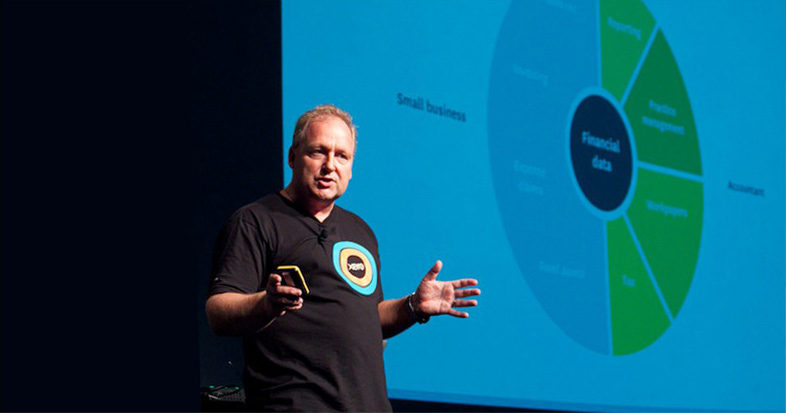
    To deal with a much bigger and diverse market, the company appointed Russ Fujioka, a veteran of Dell, Abode and the various venture capital companies, to lead its revamped operations in the United States and Decoding the New Economy caught up with Russ recently at Xero’s San Francisco office.

    For Fujioka, the key to growth in the United States market is the small business sector with the US recording nearly half a million new business registrations across the nation each year.

    “You see the M in ‘SMB’? We don’t want to be playing to that market,” says Fujioka in emphasising the Xero’s focus on the small business sector.

    Fujioka also sees opportunity in what he calls the ‘pre-accounting’ sector, the roughly 18 million self employed contractors and freelancers who don’t need a full fledged accounting service but need access to basic bookkeeping, invoicing and expense tracking.

    Dealing with diversity

    While the 28 million US small businesses represent a huge opportunity to Xero, the market also presents challenges with, unlike the New Zealand, Australian and UK markets, hundreds of banks and thousands of different state and local tax regimes.

    To deal with the complexity of local tax and employment rules, Xero announced a partnership with Avalara to provide the data feeds for calculating sales taxes and payroll obligations, something that is essential to Xero’s business plans, “payroll is fundamental to our offerings.” Fujioka says.

    Also fundamental are accountants and book-keepers where co-opting them as sellers of the service has been part of Xero’s success in Australia and New Zealand with Fujioka seeing a fifty-fifty split between those businesses signing up directly and those going through advisers.

    The changing accounting industry

    Like the rest of the world, the accounting profession is going through major changes as much of the transactional work becomes automated, Fujioka sees this as an opportunity for companies like Xero to add value to the industry and help individual firms become more akin to system integrators and technology advisers to their clients.

    The ultimate aim for Fujioka is to make Xero the site, or app, that every small business starts and ends their day with, “we really want to be that single pane of glass for small business – you start your day with us, you end your day with us and during the day you check your status on your Apple Watch.”

    For Xero, the key to global success is cracking the US market. The challenge for them is to capture a new generation of business owners and accountants.

    Paul travelled to San Francisco as a guest of Salesforce and Splunk

    Similar posts:

    • No Related Posts
  • Stemming the Innovation drought 

    Stemming the Innovation drought 

    When discussing how industries are changing, the constant question is ‘what will happen to today’s jobs?’

    Even in the Future Proofing Your Business webinar earlier this week this question was asked by a number of the small business owning listeners.

    That concern forms the basis of the “A smart move: Future-proofing Australia’s workforce by growing skills in science, technology, engineering and maths” report released by accounting firm PwC yesterday in Sydney.

    PwC’s report warns 44 per cent of current Australian jobs are at high risk of being affected by computerisation and technology over the next 20 years.

    The report highlights that Science, Technology, Engineering and Maths (STEM) subjects are critical in the jobs that are going to benefit, or be created, by that technological change.

    Finding the right courses

    Sadly for Australia, and most of the western world, STEM courses are deeply out of fashion with students preferring to study in business related courses such as accounting, commerce and law.

    As PwC flag, those industries are at risk with accounting at the top of the list for job losses.

    Australian-industries-expected-to-be-disrupted-pwc

    On the other hand, PwC forecasts professions in health, education, personal care and – worryingly – public relations will be in increased demand. Something that may underestimate the effects of technology on those industries.

    Competing with STEM

    PwC’s main contention is that economies which want to compete in the new economy are going to need more STEM graduates.

    The shift to STEM education is something the OECD highlighted in its recent report, OECD report How is the Global Talent Pool Changing?

    In their report the organisation forecast that the number of students studying around the world would increase from 130 million today to 300 million by  2030 with all of that growth being in Chinese and Indian STEM courses.

    Already that science and engineering emphasis is clear in today’s numbers.

    OECD-graduates-by-field-of-education

    To counter the drift away from STEM courses among students, PwC suggests a campaign to engage young people while they are still at junior school.

    The Australian conundrum

    Sadly, that’s unlikely to work in Australia given the nation’s economy is built upon property speculation driven by the wealth effect of rising real estate prices.

    Two nights before the PwC report one of the highest rating shows on Australian television came to its 2015 finale. The Block, which features couples renovating and flipping properties, finished its season the apartments being sold at auction at record prices and the contestants pocketing between 600 and 800,000 dollars for a few month’s work.

    For young Australians the message from their parents and society is clear; don’t innovate, don’t create, just buy as much property as you can afford.

    In the US on the other hand, the business heroes are the builders of new enterprises; people like Steve Jobs, Elon Musk, Bill Gates, Mark Zuckerberg and the founders of Google.

    Other countries like Israel, India and China, are aspiring to be the next generation of tech leaders. That’s what’s necessary to build a dynamic economy.

    Creating enduring jobs

    As the PwC report claims, “the jobs most likely to endure over the next couple of decades are ones that require high levels of social intelligence, technical ability and creative intelligence”

    Harnessing that combination of social, creative and technical intelligence is going to be one of the challenges for all economies in a decade of change.

    Getting the supply of STEM skills right will be essential for success for all countries at a time when digital technologies will drive most industries.

    Similar posts: