Tag: War

  • Daily links: The IoT goes to sea, building the innovation state and Boko Haram

    Daily links: The IoT goes to sea, building the innovation state and Boko Haram

    The scale of the carnage Boko Haram has inflicted on remote parts of Nigeria is becoming more apparent every day and satellite imagery shows just how much damage the insurgent group is doing to communities in its territories.

    Closer to home, Google’s Project ARA gets another outing, we look at how economies can deal with the jobless future, what a terrible aunt Ayn Rand was and how the IoT is going to sea.

    The IoT goes to sea

    At the CES show two weeks ago Ericsson launched their new maritime cloud service that promises to connect ocean going ships to the same services available on land

    Google unveils more about Project Ara

    Project Ara is Google’s attempt to reinvent the smartphone, the project came a little closer to completion with the company showing off some of its progress

    Creating the innovation state

    What do we do in a world where most people’s jobs have gone? Create an innovation state rather than a welfare state could be an answer suggests one economist.

    The extent of Boko Haram’s massacres

    Words fail to describe the horrors being visited on the people of Nigeria.

    Ayn Rand was a terrible Aunty

    What happened when one of Ayn Rand’s nieces asked aunty for a $25 loan?

    Similar posts:

  • When disruption is more than a buzzword

    When disruption is more than a buzzword

    A briefcase sized device could wreak havoc in today’s networked world warns William Radasky in the IEEE Journal.

    Fans of the  wave of nuclear war movies like The War Game or The Day After will remember the first bomb detonated in the attacks was a high level explosion designed to knock out electronic equipment.

    The resultant Electro Magnetic Pulse leaves everything from military radar to civilian communications systems unusable.

    In both The Day After and The War Game the high altitude detonations over Rochester and Kansas City destroyed motor cars’ ignitions leaving a key part of the nation’s infrastructure paralysed.

    Unlike a zombie TV series, the unlucky survivors of a nuclear strike weren’t going to leap into the nearest abandoned Camaro and speed away from the heaving hungry masses.

    What should be considered is The War Game was filmed in 1965 when electronics were not ubiquitous. Even then the scale of the damage from an EMP was substantial.

    In today’s world, an wide scale EMP would bring down a region’s entire economy.

    I’m writing this post on the 28th Floor of San Francisco’s St Francis hotel and were such a blast to happen now I’m not sure I’d be able to find the fire escapes as the emergency lighting would be fried — it’s not even worth considering the lifts.

    What a first world city like San Francisco would like after all its technology, including electrical and communications systems, were knocked out doesn’t bear thinking out.

    On the bright side, this means a devastating nuclear war killing millions may not be useful military strategy any more. To bomb a first world nation ‘back to the stone age’ just needs a handful of well targeted high altitude nukes.

    The IEEE article is a timely reminder of both the fragility of our systems and the society that depends upon them.

    Similar posts:

    • No Related Posts
  • ANZAC Day

    ANZAC Day

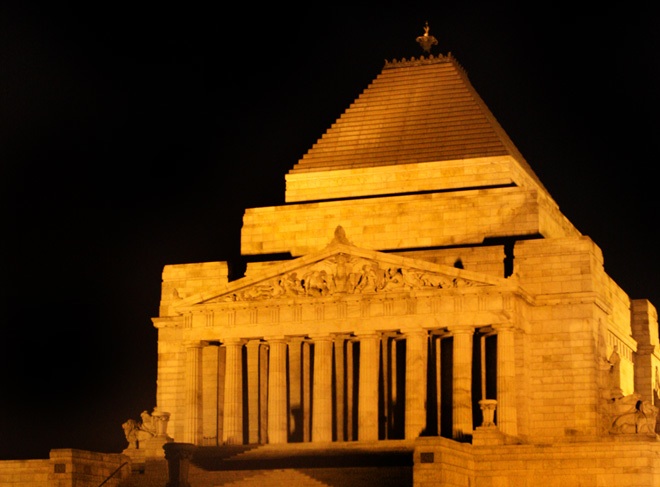
    It’s ANZAC Day in Australia where the anniversary of the World War One landings in Gallipoli marks the first national action of the then new nation.

    At its heart, ANZAC Day remembers sacrifice and bravery. The men and women who volunteered for the Great War and all those that have followed over the last hundred years were prepared to sacrifice relationships, safe careers and their lives to protect the King or Country from the threats of the Kaiser, Hitler, Japan, Communism or Terrorism.

    We should remember though that those politicians saying fine words today and posing for photo opportunities at the landing beaches are the much the same people who started an unnecessary war in 1914 and many of those wars since.

    Compare the words of Billy Hughes supporting Australian conscription in 1915 and the words of John Howard or Julia Gillard.

    Stripped of spin doctors’ dressing and the words of today’s politicians are the same.  Only the empire has changed.

    Today’s politicians know of concepts like sacrifice, patriotism and bravery, exploiting them can prove handy at election time.

    Luckily for most of them their political and business careers rarely call for such qualities.

    Hopefully our children won’t find themselves in the trenches  – or fall out shelters – to meet the short term gains of an Obama, Cameron or Gillard and their corporate friends.

    The real lesson of ANZAC Day, Veterans Day and all the other national days of remembrance around the world for those every nation has lost in battle is that war is the final act and represents a failure by the Kings, Presidents and Prime Ministers who choose to lead us.

    They shall not grow old, as we that are left grow old:
    Age shall not weary them, nor the years condemn.
    At the going down of the sun and in the morning,
    We will remember them.

    Lest We Forget

    Similar posts: