
Tag: web

  • As seen on TV – where are today’s trusted sources

    As seen on TV – where are today’s trusted sources

    In a local shopping centre over the weekend this business was selling massage tables using the fact they’d been mentioned on TV to enhance their reputation.

    Citing an appearance on TV in the hope of improving your credibility is very much a mid-20th Century way of doing things. In the 1960s or 70s an enthusiastic mention from a TV host was the way to get the punters beating a path to your door.

    Today, things aren’t quite the same. TV was on a decline as a trusted medium – despite the successes of talk show hosts like Oprah Winfrey – long before the internet arrived. The web bought social media and now buyers can consult their friends and peers before deciding to buy.

    What was interesting about the sign was there was no indication of a social media presence or web page and that in itself showed how old school this business’ advertising was.

    For the business owner, it would have been hard work getting a mention on TV. Space isn’t cheap to buy and getting a mention on a current affairs show requires either the services of an expensive PR agency or many hours of bugging producers and not a small degree of luck.

    Then again, maybe a complete lack of online engagement didn’t matter. The shopping centre I was in would have an average customer age well over forty and, most of the market the business was aiming probably comes from the sizeable retirement village across the road.

    How this business ignores modern communication channels is instructive about the generational change in business and society, particularly on how different age groups find their trusted sources.

    Similar posts:

    • No Related Posts
  • The end of HTML 5?

    The end of HTML 5?

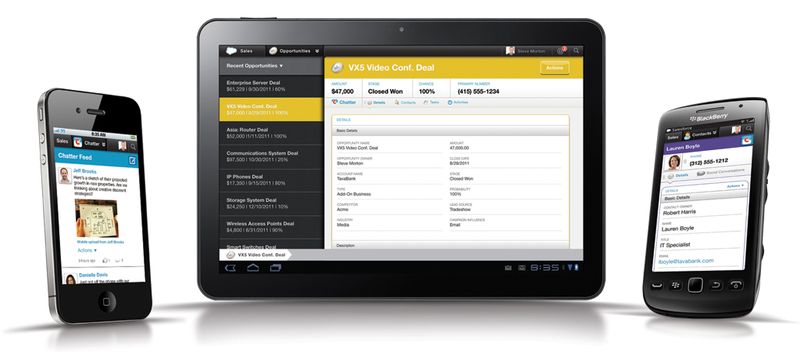
    One of the big debates in web design since the rise of smartphone apps has been the question of ‘going native’ or following web standards.

    In an ideal world, all apps would follow the HTML web standards so designers would only have to create one app that would run on any device — a smartphone, tablet or PC — regardless of what type of software it was running.

    However the HTML 5 standard has proved problematic as developers have found applications written in the language are slow with limited features, so the attraction of writing ‘native’ apps that are designed for each system remains strong as users get a faster, better experience.

    The problem with that approach is that it results in having to design for different operating systems and various devices which is costly and adds complexity.

    For the last two years at Dreamforce, Salesforce CEO Marc Benioff has trumpeted the advantages of the company’s HTML5 Touch product.

    This year Benioff unveiled the company’s Salesforce One product — a suite of Application Program Interfaces (APIs) that simplifies building smartphone and web apps. At the media conference after the launch, Benioff even went as far to describe the once lauded Touch product as a “mistake”.

    So Salesforce has abandoned HTML5, which is a blow for standard applications.

    If others follow Salesforce, and it appears that is the trend, then we’ll increasingly see the smartphone industry dominated by iOS and Android as most companies lack the resources or commitment to develop for more than two platforms and their form factors.

    Open standards have been one of the driving factors of the web’s success, it would be a shame if we saw the mobile market split into two warring camps reminiscent of the VHS and Beta video tape days.

    Similar posts:

    • No Related Posts
  • Pay Pal and the Modern Spice routes

    Pay Pal and the Modern Spice routes

    Online payments company PayPal has released a paper on the The Modern Spice Routes which describes the pattern of online trade across the US, Germany, UK, China, Brazil and Australia.

    The results are a snapshot of how online commerce patterns are evolving.

    PayPal commissioned the Nielsen Company to survey 6,000 online shoppers about their cross border online buying habits to determine some of the characteristics of global internet commerce.

    What immediately stands out in the report is the United States’ dominance with 45% of global market share, China follows with 26%.

    At the bottom of the pack is Australia with 16% and, surprisingly, Germany with 13%.

    The US itself is an interesting study with the most preferred overseas shopping destination being the United Kingdom followed by China.

    Why are people shopping online?

    American respondents were overwhelming shopping overseas to access more variety, with 80% of respondents citing the reasons for shopping offshore being “more variety that cannot be found locally”.

    Finding more variety was the key factor in all the markets. Even in countries like China and Australia were respondents cited saving money as their main reason for shopping internationally online, more diversity in offerings came a very close second.

    That in itself show the opportunity for companies selling internationally  – be unique and don’t offer what can be found at the local WalMart or Tesco.

    Illustrating this, the PayPal report cited Australia’s Black Milk clothing and Germany’s Hatshopping as two international success stories.

    Intra-region trading

    An understated point with the report is just what proportion of international shopping is of each country’s spend – in the United States’ case it is only 18% while in Australia it’s 35%.

    Illustrating those internal trading patterns are the British and German figures that show online shopping in other European nations is substantial, so intra-EU trade is a considerable factor.

    Similarly, the second popular destination, after the United States, for Chinese online shoppers is the Hong Kong SAR. In fact the Chinese statistics show that intra-Asian trade is just as substantial as EU commerce with Japan, Korea and Singapore all feature highly on the list of shopping destinations.

    This illustrates a problem for Australia as it has neither the United States’ massive domestic market or a group of closely integrated neighbours and the high level of international online shopping indicates just how poorly local merchants are doing with their internet strategies.

    Indeed, for Australia that the proportion of online shoppers buying overseas is so high should be a worry for local merchants.

    Today’s modern trade of bulk carriers, courier companies and shipping containers is very different to the spice routes of Marco Polo’s day, the world is evolving around new trading patterns right now.

    For businesses like Australia’s retailers those changed trade routes may not be kind to those who can’t change.

    Similar posts:

    • No Related Posts
  • For God’s sake get a website

    For God’s sake get a website

    The annual MYOB Business Monitor was released earlier this week with the depressing news that half of the Australian businesses surveyed didn’t have a basic website.

    MYOB’s survey reinforced the finding of PayPal’s Digital Literacy Report a week earlier that found only 34% of Australian small businesses list their contact details online.

    This is madness – over a decade ago consumers moved online and now with the mobile internet any business without a website is almost invisible in the marketplace.

    What is really dispiriting about these reports is that listing with the various online services and setting up a website is not hard, at worst it should take half a day for a simple site and to complete Google Places, Facebook and Yellow Pages listings.

    The easiest way to create a website is to setup a free Blogger page, it takes about twenty minutes and is more than adequate if you just need a site that lists your services, location, contact details and phone number.

    While Blogger is good for the basics, it does run the risk of locking a growing business into Google’s walled garden which is why WordPress is the better alternative for more advanced companies or proprietors.

    Most readers of this site already know how important an online presence is for any organisation, but it’s almost certain that everyone knows a business owner who doesn’t have a website.

    If one of those business owners is someone close to you, then the best thing you can do for them is to sit down with them and setup their basic online presence.

    Unless you think it’s time they went out of business. In which case you won’t have to wait long.

    Similar posts:

    • No Related Posts
  • Crumbling cookies

    Crumbling cookies

    On the last ABC radio spot we looked at how our data is being tracked, in the following 702 Sydney program with Linda Mottram we looked at the role of Internet cookies and online privacy.

    Cookies – tiny text files that store visitors’ details on websites – have long been the mainstay of online commerce as they track the behaviour of web surfers.

    For media companies, Cookies have become a key way of identifying and understanding their readers making these web tracking tools an essential part of an already revenue challenged online news model.

    Cookies also present security and privacy risks as, like all Big Data, the information held within them can be cross-referenced with other sources to create a picture of and often identify an internet users.

    These online data crumbs often follow us around the web as advertising platforms and other services, particularly social media sites, monitor our behaviour and the European Union’s Directive on Privacy and Electronic Communications is the first step by regulators to crack down on the use of cookies.

    Similar moves are afoot in the US as regulators start to formulate rules around the use of Cookies, in an Australian context, the National Privacy Principles apply however they are of limited protection as most cookies are not considered to be ‘identifiable data’, the same get out used by US government agencies to monitor citizens’ communications.

    Generally these rules promise to be so cumbersome for online services Google is looking at getting rid of cookies altogether .

    Ditching cookies gives Google a great deal of power with its existing ways of tracking users and ties into Eric Scmidt’s stated aim of making the company’s Google Plus service an identity service that verifies we are who we say we are online.

    Whether Google does succeed in becoming the web’s definitive identity service remains to be seen, we are though in a time where the questions of what is acceptable in tracking our online behaviour are being examined.

    For the media companies and advertising, putting the control of online analytics in the hands of one or two companies may also add another level of middle man in a market where margins are already thin if not non-existent.

    It may well be that we look back on the time when we were worried about  internet cookies tracking us as being a more innocent time.

    Similar posts:

    • No Related Posts