Tag: web

  • Airtasker’s crazy idea

    Airtasker’s crazy idea

    “Anyone who says something is crazy these days is crazy themselves,” says Jonathan Lui, the founder of Sydney based startup Airtasker.

    The crazy idea Jonathan shares with co-founder Tim Fung is to create a global marketplace for small tasks.

    If you need someone to walk your dog, do some gardening or be an extra in elaborate marriage proposal then Airtasker is a site to find the right person.

    Since launching last year Airtasker has advertised more than 54,000 tasks with users looking for everything from dog walkers to computer repairers and actors.

    Tim and Jonathan came upon the idea of a site for small tasks when moving house with the various hassles of cleaning, moving and packing. Instead of relying on friends and relatives to help out, they saw the opportunity for connecting willing workers with small tasks.

    The site turns around how traditional classified advertisements work by paying on results rather than advertising. Lui sees it as “de-centralised social commerce.”

    It’s not just small household tasks either, Jonathan sees Airtasker helping out larger companies with tasks like market research, mystery shopping or even local council inspections of street signs.

    Unlike many of the crowdsourcing sites, the Airtasker team want to keep away from commoditising labour, instead seeing their ‘runners’ providing valuable local services.

    One of the interesting aspects about the internet is how two opposite forces are working against each other – while the internet creates globalised marketplaces it also gives people new channels to discover local services.

    Jonathan sees Airtasker as being at the forefront of hyperlocal marketplaces, with a global website enabling small traders and microbusinesses to deliver services locally.

    That may be a crazy idea – but we live in crazy times.
    Similar posts:

  • On being a good Internet citizen

    On being a good Internet citizen

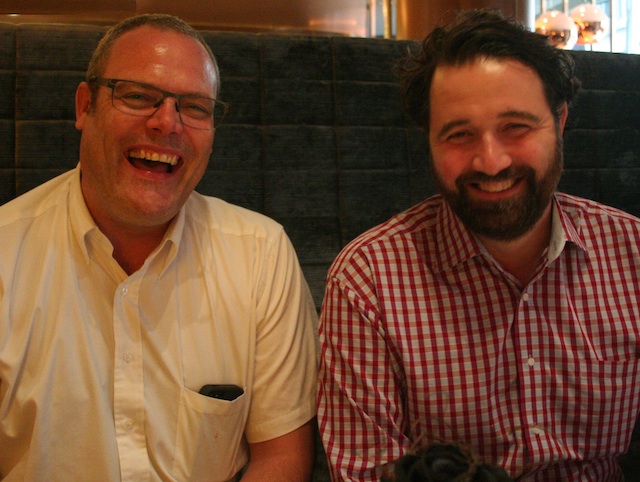
    I grabbed a quick coffee with Zendesk founder CEO Mikkel Svane and his Australian manager Michael Hansen in Sydney yesterday where they told me about the company’s story to date.

    While I’ll be writing in the interview up in depth in the next few days one thing that stood out was Mikkel’s comment about Zendesk being a good internet citizen.

    Those traits of being a good online corporate citizen include open APIs, a transparent culture and giving customers full access to their data.

    Online companies have to embrace those principles if they are going to succeed and it’s the key to the fast growth of businesses like Zendesk and other cloud based services.

    These principles have been the underpinning of the success of companies like Twitter, Facebook and Google.

    What’s interesting with those companies is how they’ve moved away from those principles as they’ve grown and the pressures to ‘monetize’ have increased.

    Abandoning those principles opens opportunities for many new players to disrupt the businesses of what have become the market incumbents.

    With the pace of business accelerating, the assumption that companies like Google, Facebook and Twitter will retain their positions might be tested as the market moves to providers they can trust.

    Those principles of being a good internet citizen may prove to be more important to online businesses than many of their managers and investors believe.

    Similar posts:

  • Exciting but vague

    Exciting but vague

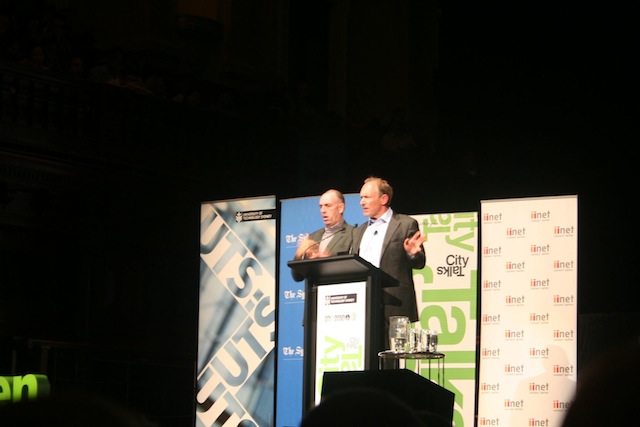
    On Tuesday Tim Berners-Lee rounded off his Australian speaking tour with a City Talks presentation before 2,000 people at a packed Sydney Town Hall.

    After an interminable procession of sponsor speeches, Berners-Lee covered many of the same topics in his presentations at the Sydney CSIRO workshop the previous week and the Melbourne talk the night before.

    These included a call for everyone to learn some computer coding skills – or at least get to know someone who has some, wider technology education opportunities, more women in computing fields and a warning about the perils of government over-surveillance.

    On government monitoring Internet traffic, Berners-Lee has been strident at all his talks and correctly points out most of our web browsing histories allow any outrageous conclusion to be drawn, particularly by suspicious law enforcement agencies and the prurient tabloid media.

    Who owns the ‘off switch’ is also a concern after the Mubarak regime cut Egypt off the Internet during the Arab Spring uprising. The willingness of governments to cut connectivity in times of crisis is something we need to be vigilant against.

    The web’s effect on the media was discussed in depth as well with Sean Aylmer, editor-in-chief of the Sydney Morning Herald, saying in his introduction that Berners-Lee’s invention had been the defining feature of Aylmer’s career.

    While the web has been traumatic for a generation of newspapermen, Berners-Lee sees good news for journalists in the data explosion, “how do we separate the junk from the good stuff?” Asks Tim, “this is the role for journalists and editors”.

    One person’s junk is another’s treasure though and the web presents one of the greatest opportunities for people to “write on their blank sheet of paper.”

    When asked about what he regretted most about the web, Berners-Lee said “I’d drop the two slashes,” repeating the line from Melbourne the night before.

    At each of his Australian speeches Berners-Lee has paid homage to his mentor at CERN, Mike Sendall. After Sendall passed away, his family found the original proposal for the Hyper Text Markup Language (HTML) which formed the basis for the world wide web.

    “Exciting but vague” was the note Sendall made in the margins of Berners-Lee’s proposal.

    Vague and exciting experiments was what drove people like James Watt and Thomas Edison during earlier periods of the industrial revolution. Tomorrow’s industries are today’s vague and strange ideas.

    Similar posts:

  • Necessity, innovation and the birth of the web

    Necessity, innovation and the birth of the web

    The man who invented the world wide web, Tim Berners-Lee spoke at the launch of the CSIRO’s Digital Productivity and Services Flagship in Sydney yesterday.

    In telling about how the idea the idea of web, or Hyper Text Markup Language (HTML), came about Berners-Lee touched on some fundamental truths about innovation in big organisations.

    In the 1990s the European Laboratory for Particle Physics (CERN) in Geneva had thousands of researchers bringing their own computers, it was an early version of what we now call the Bring Your Own Device (BYOD) policy.

    “When they used their computers, they used their favourite computer running their favourite operating system. If they didn’t like what was available they wrote the software themselves,” said Tim. “Of course, none of these talked to each other.”

    As a result sharing data was a nightmare as each scientist created documents using their own programs which often didn’t work on their colleagues’ computers.

    Tim had the idea of standard language that would allow researchers to share information easily, although getting projects like this running in large bureaucratic organisations like CERN isn’t easy.

    For getting HTML and the web running in CERN Tim gives credit to his boss, Mike Sendall, who supported him and his idea.

    “If you’re wondering why innovation happens, one of the things is great bosses who let you do things on the side, Mike found an excuse to get a NeXT computer,” remembers Tim. “‘Why don’t you test it with your hypertext program?’ Mike said with a wink.”

    There’s much talk about innovation in organisations, but without management support those ideas go nowhere, the story of the web is possibly the best example of what can happen when executives don’t just expect their workers to clock in, shut up and watch the clock.

    One key point Tim made in his presentation was that it was twenty years after the Internet was invented before the web came along and another five years until the online world really took off.

    We’re at that stage of development with the web now and with the development of the new HTML5 standard we’re going to see far more communication between machines.

    Berners-Lee says “instead of having 1011 web pages communicating, we start to have 1011 computers talking to each other.”

    These connections mean online innovation is only just beginning, we haven’t seen anything yet.

    If you want your staff to stay quiet and watch the clock, that’s fine. But your clock might be figuring out how to do your job better than you can.

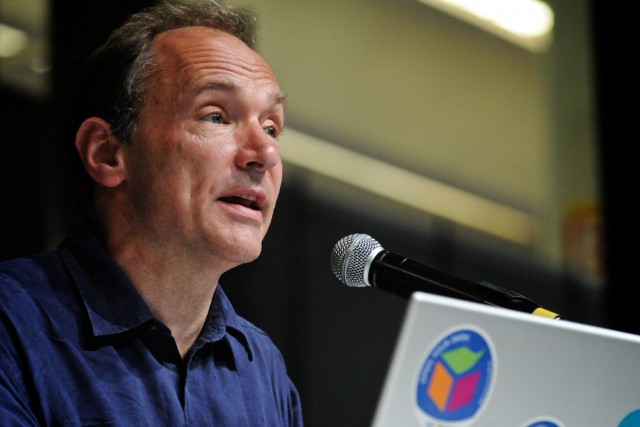
    Tim Berners-Lee image courtesy of Tanaka on Flickr

    Similar posts:

  • Can media salespeople think digital?

    Can media salespeople think digital?

    The future of journalism is bleak if sales teams can’t figure out how to sell ads on news sites.

    Eighteen months ago News Limited, the Australian print arm of News Corporation, put out the first indications that content was going behind a paywall.

    This was always going to be controversial so a softening up process was put in place including the then head of News Digital Media, Richard Freudenstein, speaking at various conferences.

    Inviting bloggers to a briefing on News Limited’s online future was another strategy which, predictably, resulted in varying views on the prospects from attendees like Laurel Papworth and Ross Dawson.

    Another part of the process was Freudenstein penning the odd article for The Australian describing the rationale behind the paywall.

    “And we will have completely solved how to sell advertising across print, tablet and digital.” Freudenstein said at both the end of his Australian article and a later Q&A at the Mumbrella 360 Conference.

    Sadly this appears not to have been the case, a year later News was struggling with digital revenues.

    This is not just a problem for News Limited or Australian publications, The Economist looked at the struggles of print media in 2012 and cited a graph from Reflections Of A Newsosaur showing how newspapers’ digital revenues have been flat lining for nearly a decade while their print revenues collapse.

    digital advertising revenues have been flatlining for decades

    One of the reasons for traditional media’s stagnation is their salespeople have been bought up selling newspaper display ads, are locked into antiquated KPI’s and have commission structures that reward print over digital.

    This was bought home to me a few weeks after News Limited started its charm offensive at a presentation by Cumberland Press, News Limited’s suburban division, where the salesman told a room of small business owners about the range of print advertising products available in the local newspapers.

    Not once was True Local, News Limited’s Google Places competitor, mentioned. When I asked about it, the salesman waved the idea away and said he’d throw in an annual sub if I took out a week’s worth of quarter page display ads in the Manly Daily.

    Many of the small business owners in the room thought that was a good deal, which shows its not just newspaper managers who are having a digital steamroller running over their revenues – but that’s a post for another time.

    As The Economist and Newsosuar shows, News Limited’s experience in selling digital advertising is the norm and it’s genuinely shocking that newspapers’ digital revenues have flatlined while the revenues of Google and other online advertisers soar.

    When News Limited announced its new strategy they also announced a community site to discuss the issues of digital news gathering and online advertising. They called it The Future of Journalism.

    Just over a year later The Future of Journalism site looks like this;

    the future of journalism is gone according to News LimitedThat’s a dismal view of the future of journalism but it’s pretty accurate if somebody can’t figure out how to sell ads on news sites and break newspapers out of their online advertising stagnation.

    Similar posts: