Tag: windows

  • A small business makeover challenge

    A small business makeover challenge

    One of the key factors in bringing the Personal Computer era of business to a close was the end of the upgrade cycle where users tended to buy new systems every three to five years.

    For companies like Dell, Acer, IBM and Microsoft this cycle was an important and reliable income stream.

    In the early 2000s though it stopped as customers decided that with most new innovations coming onto their computers through web browsers they didn’t need to buy new systems.

    For the PC industry, particularly Microsoft, this presented a huge threat to their business models and all of them have been trying to find ways to refocus their businesses.

    The ModernBiz Technology Make-Over

    Late last year I was asked by Microsoft Australia to participate in their ModernBiz Technology Make-Over where a small business running Windows XP and Server 2003 was given a free tech upgrade to the latest equipment.

    This was interesting as it was an opportunity to see how Microsoft and the market are adapting to a very changed industry.

    As well I still carry the many scars – most psychological but some physical – from my years of running PC Rescue where upgrading companies’ old technology was a core part of the business.

    Doing a tough job

    The fallacy many managers and inexperienced companies fall for is that migration customers from old equipment to new systems is a simple matter of copying a few files. It is never that simple.

    Upgrading company computers a tough field as every business is unique and in workplace where the technology has been in use for over a decade the learning curve onto new software is insanely steep for staff and management alike.

    So watching the process from a relatively safe distance where I wasn’t worrying about losing customers’ data or trying to complete a complex task within a short deadline was quite attractive. Basically I wanted to see the other guys sweat.

    Another attraction in participating was to see how Microsoft are managing the transition from supplying business servers to provisioning cloud services and how customers are managing that change in product offerings.

    Dealing with a shifting market

    For both Microsoft and their customers the shift from one off hardware and license purchases to cloud based monthly subscriptions is a major change in mindset, so seeing how small business users adapt to online services will be interesting.

    Overall the technology makeover promises to be an interesting exercise on how the small business computer industry is changing.

    For his participation in the Modern Biz Technology Makeover program, Microsoft gave Paul a Lenovo laptop which he hasn’t yet used.
    Similar posts:

    • No Related Posts
  • The mobile payments industry has a USB moment

    The mobile payments industry has a USB moment

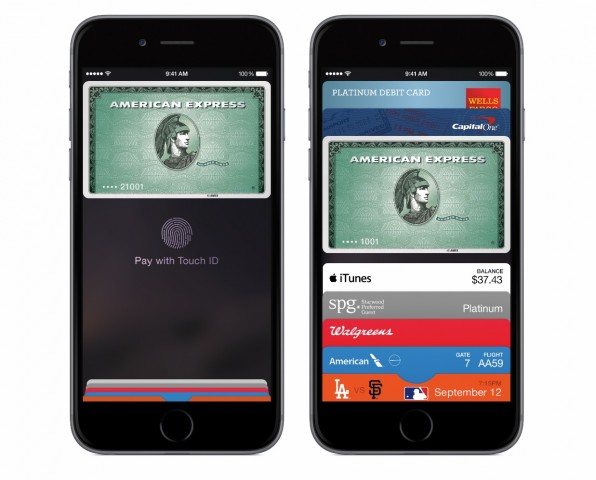
    Has Apple Pay legitimised mobile payments? It appears so, reports the New York Times. Since the launch of Apple’s payments service, Google and other mobile payment providers are claiming usage has doubled with customers exploring the systems.

    If this is true, it’s similar to how Apple legitimised the USB port in 1998 with the release of the iMac.

    Prior to the iMac the USB port was a bit of an oddity, on most PCs the sockets sat unused and the few devices available on Windows computers worked reliably, as Bill Gates himself found out during a live demonstration at the 1998 Comdex show.

    Unlike Apple Pay, the move to USB on Macs wasn’t welcome and it was a high stakes decision by Steve Jobs given that Apple’s existence was still precarious and its user base was still made up of largely of true believers who had been through years in the wilderness with the company.

    Those users also had many thousands of dollars invested in Apple Device Bus (ADB) devices, all of which became redundant with the move to USB. Many customers at the time swore this was the last straw and they would move to Windows PCs.

    Apple’s users didn’t carry out their threats and stayed with the company whose move to USB turned out to be a winner for the entire computer industry.

    For Apple USB’s success meant their customers were no longer locked into a proprietary technology, for manufacturers they were able to start moving off archaic serial and parallel ports while for Microsoft the shift meant a better range of more reliable devices — although their operating systems struggled with USB until the release of the far more stable Windows XP.

    It appears in this respect Apple Pay is repeating history in giving a boost to a technology that has been struggling to find traction in the market place.

    The difference this time is that the payments industry is a far bigger market with far more implications for the broader economy than the computer peripherals segment.

    If Apple raise the boat on payment systems, there are some incumbent businesses who are going to find themselves in a very different marketplace in five years time.

    Similar posts:

    • No Related Posts
  • One, two, skip a few. Microsoft hopes Windows 10 will save a declining PC market

    One, two, skip a few. Microsoft hopes Windows 10 will save a declining PC market

    A few days ago I asked if Windows 9 would be Microsoft’s last desktop operating system.

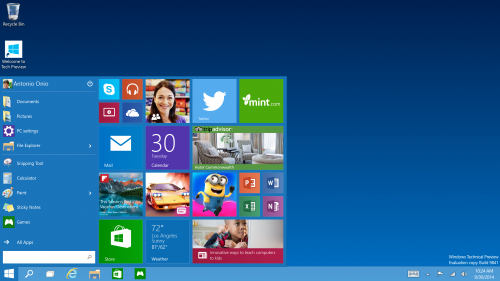
    Yesterday the company partially answered the question by announcing the next version will be named Windows 10 which conveniently skips version nine.

    Skipping around numbers isn’t unusual for Microsoft, most famously Word skipped from version two to six just to overtake competitor WordPerfect in the late 1990s.

    Windows itself has gone 3.0, 3.1, 3.11, 95, 98, ME, XP, Vista, 7 and 8 in the past — that’s without mentioning the Windows NT family — so jumping to Windows 10 doesn’t detract from any logic in the Microsoft’s naming system.

    The key point from Microsoft’s announcement is the business focus along with the continuation of Windows 8’s unified experience across PCs, smartphones and games consoles that has proved less than successful.

    One area where Microsoft has conceded defeat is in the battle for a Start button with Windows 10, one of the biggest irritants upgrading users found with the new operating system and one of the reasons why many users chose the older Windows 7 software when buying a PC.

    How the Start button will work on Windows Phone remains to be seen although Microsoft seem committed to the ‘One Windows’ vision despite its technological and marketplace difficulties.

    Another interesting development with the new product is the Windows Insider Program, billed as an ‘open collaborative development effort to change the way Windows is built and delivered’.

    Back in the old days this was called a beta program where testers were invited to try out new software to test the product and fine tune user experiences. At least it shows Microsoft are embracing the language, if not the spirit, of the collaborative economy.

    Microsoft have released a YouTube video Introducing Windows 10 with Windows Vice President Joe Belfiore outlining the features of the new system.

    Whether Windows 10 is enough to shore up the declining fortunes of the company’s Windows division and Joe’s job will be a key question for analysts and industry watchers over the next three years.

    Similar posts:

    • No Related Posts
  • ABC Nightlife with Tony Delroy October 2014

    ABC Nightlife with Tony Delroy October 2014

    Paul Wallbank joins Tony Delroy on ABC Nightlife across Australia from 10pm Australian Eastern time on Thursday, October 2 to discuss how technology affects your business and life.

    Update: If you missed the program you can listen to the podcast at the ABC site or stream it below.


    For this month’s spot we’re looking at smartcars, smartwatches, the next version of Microsoft Windows and whether the new social media platform Ello can displace Facebook.

    Some of the questions we’ll cover include;

    • What’s happening with connected car technologies?
    • Isn’t all this talk about smart cars another way ?
    • So how far are we off the driverless car?
    • Are our mobile phone choices going to dictate what brand car we buy?
    • How does the smart watch fit into how companies are trying to lock us into their software?
    • A new social media platform called Ello is taking off,  what is it?
    • Do we really need another social media platform?
    • Microsoft have announced Windows 10, aren’t we only up to eight?
    • What’s different in Windows 10?
    • Has Windows 8 been a success?
    • When will Windows 10 be released on the market?


    Join us

    We’d love to hear your views so join the conversation with your on-air questions, ideas or comments; phone in on the night on 1300 800 222 within Australia or +61 2 8333 1000 from outside Australia.

    Tune in on your local ABC radio station from 10pm Eastern Summer time or listen online at www.abc.net.au/nightlife.

    You can SMS Nightlife’s talkback on 19922702, or through twitter to @paulwallbank using the #abcnightlife hashtag or visit the Nightlife Facebook page.

    Similar posts:

    • No Related Posts
  • Could Windows 10 be Microsoft’s last desktop operating system?

    Could Windows 10 be Microsoft’s last desktop operating system?

    On Tuesday Microsoft are expected to announce their new Windows 10 operating system at a media event in San Francisco.

    If the rumours are true, then the new system will be launched almost exactly two years after Windows 8 was released amid hopes that it would stem the PC industry’s decline.

    Windows 8 didn’t deliver with most people being frustrated with the system’s inconsistent interface that tried to be unified desktop, laptop and tablet operating system which managed to be unsatisfactory on all of them.

    As a consequence, users avoided Windows 8 like the plague with industry analysts Netmarketshare claiming most of Microsoft’s customers are buying systems kitted out with Windows 7 or just sticking with decade old Windows XP systems.

    Courtesy of Netmarketshare http://www.netmarketshare.com
    Courtesy of Netmarketshare http://www.netmarketshare.com

    Making matters worse for Microsoft is the decline in personal computer sales in general with IDC estimating global shipments of both portable and desktop system will drop 3.8% in 2014.

    These declines are already well established in the trends being seen in Microsoft’s business with the company’s Windows division showing an accelerating decline in profit margins.

    Microsoft Windows division financial performance
    Microsoft Windows division financial performance ($ million)

    Should that decline continue with Windows 10, it may well be that Microsoft will have to consider the future of product.

    As it is, the market may be deciding for them as users increasingly switch to tablets and smartphones. We may also see a wave of cheap Chinese made laptops running versions of Google Chrome or other Linux based systems also threatening the existing PC sales base.

    Either way, a lot rides on what Microsoft announces in San Francisco this week. It could be the end of an era that defined the mass adoption of computers.

    Similar posts:

    • No Related Posts