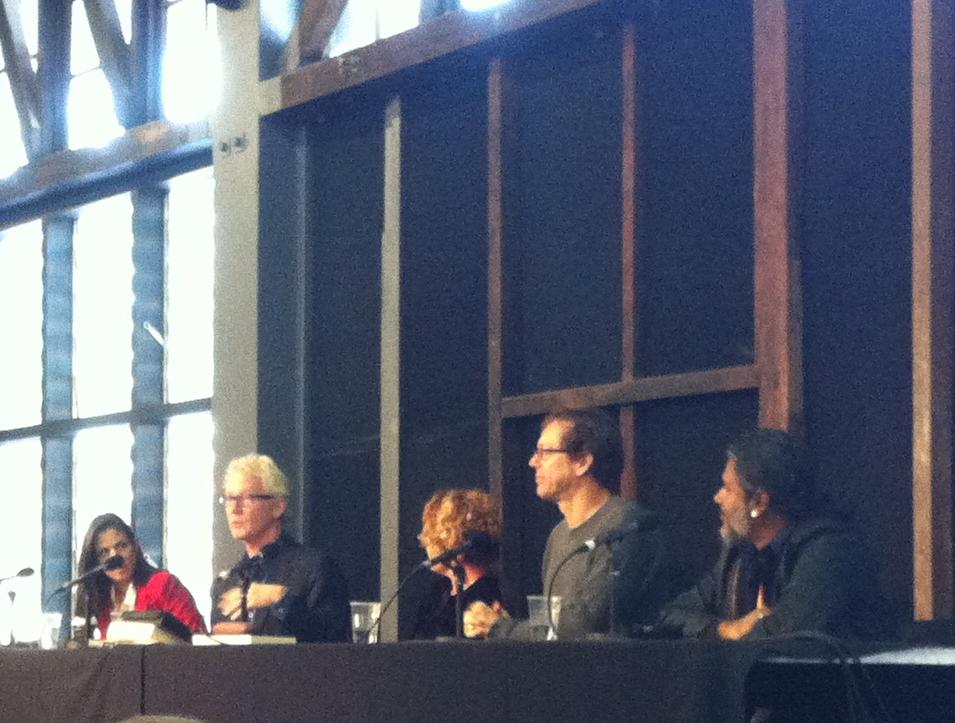
Sitting in on the Storytelling and Business panel of the Sydney Writers’ Festival it occurred to me how well Silicon Valley and the tech startup community have crafted an image for their times.
Author of What’s Mine Is Yours, Rachel Botsman focused on the need of businesses to articulate the organisation’s sense of purpose. While this begs the question of what’s the message if the business’ purpose is to enrich their senior management, it is an a good point.
What is a business’ purpose and how do you articulate it? More so, what is the purpose of your industry?
One group of businesses that has done very well in articulating their message is the Silicon Valley tech community who’ve portrayed themselves – regardless of the reality – as being driven by the altruistic aim of changing the world.
Steve Jobs was one of the leaders of this and, while we shouldn’t overlook his talents, he was a ruthless, driven businessman.
On the panel advertising industry elder Neil Lawrence raised Jobs’ ability to articulate Apple’s mission, telling the story of when the Apple CEO was challenged on the ‘Thing Different’ slogan not being good English, he replied “it’s Californian.”
Apple’s success in branding itself as a visionary, creative company – and Google’s image of ‘Don’t Do Evil’ – show how it’s possible to create an image for an organisation, an industry or even an entire industry.
In reality, Silicon Valley and the tech industry are as full of snake oil salesmen, mercanaries and paper clip counting corporate bureaucrats as any other sector, but legends have been built, and continue to be built, on the myth of selfless entrepreneurs sacrifice all to make the world a better place.
Contrasting Silicon Valley’s success with the Australian experience was interesting, Botsman was scathing about the ability of Aussie managers in telling the story about their businesses finding most of them have lost her by the second slide of their Powerpoint presentation.
We shouldn’t get too hung up though about the nobility of telling a business’ story, Shehan Karunatilaka, former copy writer and author made the major point about business communications “story telling in business is about shifting product.”
He went on to describe the tragic career path of the advertising copy writer who comes into the ad industry believing they are a world changing artist and ends up being burned out.
“you are not an artist – you are a mouthpiece for businesses” said Shehan.
The truth is most of us in business are not artists, some parts of our work may involve creative skills – like copy writing, design or financial engineering – in reality most of us are there to make a decent living, if not a fortune.
Silicon Valley’s mythmaking shows how you can cover the mundane truth with a noble, a constant narrative which has allowed ruthless businessmen like Steve Jobs and Mark Zuckerberg to portray themselves as selfless visionaries rather than the modern equivalents of John Rockerfeller, Cornelius Vanderbilt and other 19th Century robber barons.
This is possibly the greatest message of all in business communications – history is written by the victors.
When you’re winning in your industry, you get to write the story.