Tag: xero

  • Building the artificially intelligent business

    Building the artificially intelligent business

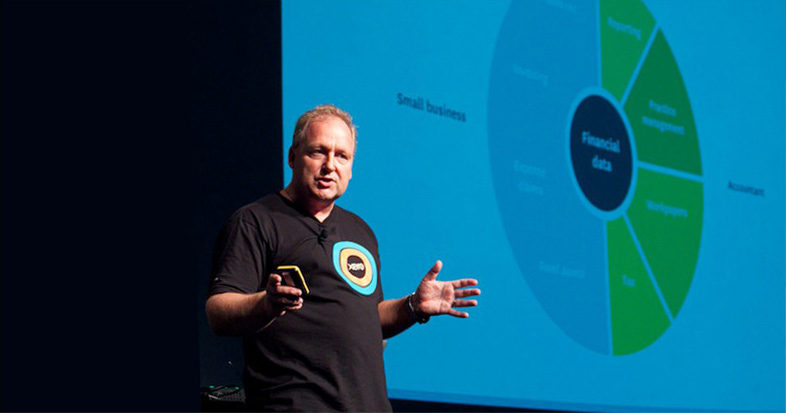
    It’s been another big year for Xero after the company passed its million user milestone, at the recent AWS Summit in Sydney founder Rod Drury to spoke to Decoding the New Economy about what’s next for the company and for small businesses.

    For a company founded a decade ago, having a million paying customers is a substantial milestone and one Drury seems quite bemused by.

    “It hasn’t really sunk in yet. When we did our IPO our promise was a hundred customers and I can remember when it was our first year our target was twelve hundred customers – I think we got to 1300 – so to pass a million is pretty nuts.

    “What we’ve found is the accounting software market is probably one of the key industries where you’ll see the benefits of machine learning and AI. The reason for that is massive amounts of data but a pretty tight and structured taxonomy so we processed 1.2 trillion pieces of data in the last 12 months so the graph of data is huge.”

    Far more modest volumes of data threaten to overwhelm smaller businesses and this is where Drury sees Artificial Intelligence and machine learning as essential for simplifying services and driving user adoption.

    “One of the challenges is that small businesses might be great landscape gardeners or plumbers but they are terrible at actually coding transactions so we’re now seeing that wisdom of the crowd and all that data that we can code better than most normal people can. So the big epiphany was ‘why don’t we get rid of coding?’

    “Effectively all a small business has to do make sure things like the data of the invoice is in the system and we can do the accounting for them and the accountants can check and see what’s going on.”

    This automation of basic accounting tasks, and how these features are now embedded in cloud computing offerings, is changing how businesses – particularly software companies – are operating.

    “You can’t run domestic platforms any more, because every accountant will have customers that are exporting and what we’re seeing now is global platforms connecting together so, for example, HSBC announced its bank feeds and what we’re doing with Stripe and Square.

    All of the accountants need to be coaching the small businesses exporting. That’s what creates jobs.”

    That global focus of business is now changing companies grow, particularly those from smaller or remote economies like Australia and New Zealand.

    “What we’re finding now is the last generation of the late 90s and early 2000s was very much enterprise technology and normally companies would get to a certain point and then a US public company would have to buy them.

    “Now we’re seeing truly global businesses that aren’t selling out quickly they’re actually creating businesses from this part of the world. People don’t have to live in Silicon Valley anymore, they can live in Sydney’s Northern Beaches or Auckland or Wellington and do world class work.

    That remoteness is something that challenges Xero though as the company tries to get traction in the US market which is dominated by Intuit and fragmented across regional and industry lines.

    “As you start off as a company listed in Australia and New Zealand it’s harder as you don’t get the benefit of the density in a smaller market. Now we’ve done enough to get these bank deals, we can now attract executives of the calibre that feels like long term leadership and that’s the benefit of doing the hard yards for a few years.

    We’re past the beach head phase now and now we’re building the long term business. We want to be a big fish in a small pond.”

    Overall Drury sees the cloud, particularly Amazon Web Services, as being one of the great liberators for business as smaller companies follow Xero’s footsteps.

    “This is one of the amazing things AWS have done, they’ve created this flat global playing field.”

    Similar posts:

    • No Related Posts
  • How cloud computing is making innovation a commodity

    How cloud computing is making innovation a commodity

    Being on the public cloud is a competitive advantage believes Xero CEO Rod Drury.

    Over the past few weeks I’ve been writing a lot about cloud computing. One of the themes being pushed by many incumbent IT companies – such as Dell and EMC recently at their Las Vegas conference – is that a hybrid model of computing is developing where certain functions are given to public cloud providers while others are bought back in house.

    Rod Drury, the CEO and founder of Xero, has been one of the greatest critics of this ‘hybrid’ model of computing and during an interview with him yesterday I asked him about this view that companies are bring IT services back in house.

    “I completely disagree with that,” says Drury. “We’ve been on a two year journey moving from our own hosted environment to AWS. The reason for that is important.”

    “We have a trillion dollars worth of transactions for the last twelve months sitting on our servers, the next stage is to apply some of  the Big Data, machine learning and artificial intelligence type services. If you’re sitting there with your own private cloud, you have to invest in those technologies.”

    “The benefit of being on the Amazon cloud – and this is part of the big battle between Amazon, Microsoft and Google – is you really have to be on that platform to take advantage of the commodity innovation that is in those platforms.”

    “Our understanding is our incumbent competitors are still working on migrating their desktop platforms and their own data centres to cloud and haven’t made that investment where they get access to the next generation of technology.”

    “So we think we’ve built a sustainable competitive advantage by being on AWS, we see Salesforce have announced they are getting on AWS, and you really have get in there because of what’s happening.”

    That’s a clear view from Rod Drury and one that most ‘cloud native’ businesses will endorse. Despite the risks of vendor lock-in, companies like Xero are choosing the cloud vendors because of the access to tools and services.

    For Amazon’s competitors, from the small services to the major providers such as Microsoft Azure and Google, the challenge is going to be developing and offering services that can compete with AWS.

    In many respects the cloud computing world is beginning to resemble the desktop marketplace 25 years ago where Microsoft dominated and controlled the sector. Whether Amazon dominating today is in the interests of today’s cloud native companies remains to be seen, certainly though Xero’s Rod Drury seems to be happy about it.

    Drury’s point though about innovation as a commodity is important though and key for businesses like his that have to adapt to changing markets quickly. Maybe that increased flexibility is the key tradeoff when dealing with the AWS juggernaut.

    Similar posts:

    • No Related Posts
  • Planning a business succession

    Planning a business succession

    What happens when your Managing Director of five years standing announces he’s decided to move on?

    This was something Xero’s senior management had to deal with when Chris Ridd, the company’s Managing Director for Australia, announced that after five years he had decided to move on.

    In interviewing Chris and his successor, Trent Innes, last week for The Australian it was striking just how well the succession process had gone for Xero in dealing with the management change, “It has worked out well, it was our preference to go with an internal candidate,” the outgoing GM told me. “From my perspective it’s always good when you can do that but it doesn’t always work out that way.”

    Much of this comes down to Chris putting together a cohesive management team, something he’s quite proud of, “Xero has a huge bench, we have a really talented leadership team. I feel really good about leaving now given that the business has gone from six staff to 295 people, three and a half thousand customers to 265,000.”

    “I achieved way more than what I thought I’d be able to do in that role and after five years it seemed like the right time frame to go into something else,” he continued.

    Part of his confidence in moving on was his confidence in his successor, “Trent and I go back twelve years at Microsoft,” he told me.

    The other part of his confidence was that the company has a clearly defined strategy and business plan that neither he or Trent see changing.

    Many companies struggle with changing their senior management and much of that is because the board and executives are in denial that people – even those at the top – will move on to new ventures.

    A stable management team, a solid business plan and a realistic view about leadership succession are the keys to successfully managing a change at the top, so far it looks like Xero have managed to pull off a change that many other struggle with.

    Similar posts:

    • No Related Posts
  • Xero and the US cloud accounting challenge

    Xero and the US cloud accounting challenge

    Last month I wrote a piece for Business Spectator on how competition in the Australian cloud accounting market was hotting up with the re-entry of Intuit and Sage.

    One of the divides between vendors was whether online accounting services scale globally with one group – including MYOB and Reckon – saying that deploying services in different jurisdictions added complexity while others believed a global product was necessary to achieve scale.

    The most obvious member of the global scale camp was Xero, the company that has pioneered the growth of cloud accounting software. Two years ago we interviewed the company’s founder Rod Drury about his ambitions for the company and the direction of the cloud accounting market.

    For Xero though, growing globally isn’t easy. While its most successful market has been in Australia, that country has many similarities with Xero’s native New Zealand and the company has found the UK and US markets tougher.

    Renewing Xero’s US push

    To deal with a much bigger and diverse market, the company appointed Russ Fujioka, a veteran of Dell, Abode and the various venture capital companies, to lead its revamped operations in the United States and Decoding the New Economy caught up with Russ recently at Xero’s San Francisco office.

    For Fujioka, the key to growth in the United States market is the small business sector with the US recording nearly half a million new business registrations across the nation each year.

    “You see the M in ‘SMB’? We don’t want to be playing to that market,” says Fujioka in emphasising the Xero’s focus on the small business sector.

    Fujioka also sees opportunity in what he calls the ‘pre-accounting’ sector, the roughly 18 million self employed contractors and freelancers who don’t need a full fledged accounting service but need access to basic bookkeeping, invoicing and expense tracking.

    Dealing with diversity

    While the 28 million US small businesses represent a huge opportunity to Xero, the market also presents challenges with, unlike the New Zealand, Australian and UK markets, hundreds of banks and thousands of different state and local tax regimes.

    To deal with the complexity of local tax and employment rules, Xero announced a partnership with Avalara to provide the data feeds for calculating sales taxes and payroll obligations, something that is essential to Xero’s business plans, “payroll is fundamental to our offerings.” Fujioka says.

    Also fundamental are accountants and book-keepers where co-opting them as sellers of the service has been part of Xero’s success in Australia and New Zealand with Fujioka seeing a fifty-fifty split between those businesses signing up directly and those going through advisers.

    The changing accounting industry

    Like the rest of the world, the accounting profession is going through major changes as much of the transactional work becomes automated, Fujioka sees this as an opportunity for companies like Xero to add value to the industry and help individual firms become more akin to system integrators and technology advisers to their clients.

    The ultimate aim for Fujioka is to make Xero the site, or app, that every small business starts and ends their day with, “we really want to be that single pane of glass for small business – you start your day with us, you end your day with us and during the day you check your status on your Apple Watch.”

    For Xero, the key to global success is cracking the US market. The challenge for them is to capture a new generation of business owners and accountants.

    Paul travelled to San Francisco as a guest of Salesforce and Splunk

    Similar posts:

    • No Related Posts
  • Hitting the eighty percent of needs

    Hitting the eighty percent of needs

    “I don’t use ninety percent of what’s in Microsoft Word” has been the complaint of computer users for years as they struggled through the myriad features of box software products.

    In the days of floppy disks and CDs, software developers tried to deliver as many features as they could; despite the fact that the ordinary user only needed a core set of functions and that most items on the menus went untouched.

    The result was bloated, difficult to use software. The cloud computing model changes this, particularly in business fields like accounting software.

    Last week saw a blitz of releases from cloud accounting services with Xero, Intuit and MYOB all making big announcements.

    MYOB announced a wide ranging product refresh, Intuit their mobile service and Xero its new board directors that point the direction for its US expansion.

    A key part of all the announcement was how the services are all boasting of their partner ecosystems developing add ons that improve users’ functionality.

    Once consequence of having an army of developers plugging into the product means that companies don’t have to ship bloated packages that have dozens of features that are irrelevant to each users’ needs.

    Xero’s Australian CEO,  Chris Ridd, put this well during the week by observing that company aims to “address the basic eighty percent of needs”.

    This is the exact opposite of the box software model of the past where vendors would try to pack more features into their products which gave rise to the term bloatware.

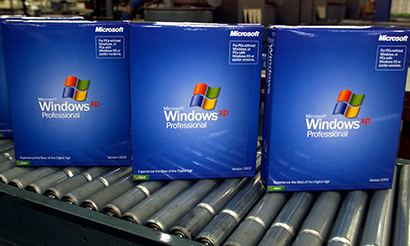
    Microsoft’s Office package was probably the best example of this massive growth in the product size, with the installation files eventually taking up a full 4.3Gb DVD to deliver something that most people were happy with when WordPerfect 2.0 shipped on three floppy disks.

    That change to the software model is a good example of how business practices and methods change as technology evolves; it also illustrates just one of the fundamental changes older software companies are having to deal with as cloud services change their industry.

    We can still have all the features we want in a software package, but we’ll just have to connect – and probably pay for the add ons.

    Today, we’re more likely to be scrambling to find an add-on rather than complaining about features we don’t need.

    Similar posts:

    • No Related Posts