At the local shopping strip, it appears the rent has become to much for the local storekeepers.
Maybe the local businesses need this guy?
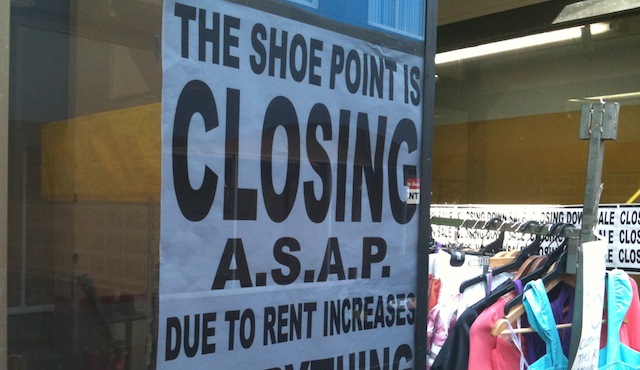
At the local shopping strip, it appears the rent has become to much for the local storekeepers.
Maybe the local businesses need this guy?
Google Places is a service that every business should sign up to, however Google’s policies at the moment mean you have to take care with how you use the listing.
At present Google are enforcing their listing rules in unpredictable ways and we’re hearing businesses are having their accounts suspended for what appears to a misreading on Google’s part of their own policies.
More importantly, there are stories of businesses who have updated their details and found their listing goes into “pending” status and their page is pulled from local search results until their revisions are reviewed by a Google staffer.
Often when the review is done, the listing is denied as being in breach of the rules which effectively bans the business from Google Places until the error is fixed.
Fixing the problem is difficult as the Google rejection emails are cryptic and, unfortunately in this era of the social business, come from a “no-reply” account with no sign off name, so there’s no way to find out exactly where the problem lies.
Given the uncertainty around Google’s policies in this space, it’s best not to make any changes to your Google Places account unless it’s absolutely necessary to update essential information.
If you haven’t already listed your business on Google Places, we’d still urge you to do so. Just make sure you get all of your details correct and pictures uploaded before you submit the entry.

Last Christmas a group of office workers gathered at a city hotel to celebrate the year’s end. The meal was a disaster as slow, surly staff made mistakes and delivered poorly cooked food.
Within an hour of the workers returning from lunch, negative reviews of the hotel started appearing on the Eatability and Urbanspoon websites. By the time Christmas Day rolled around, the reputation of the establishment was throughly trashed.
The rise of online review sites along with social media services like Facebook challenges many businesses, particularly those in the hospitality industry as café owners, restaurateurs and hotel managers struggle with unfavourable comments about their establishments.
Customers now research on the web before deciding to dine out or make a purchase, so online reviews can make or break an establishment. How does a business make sure their online reputation is safe.
Pay attention
The most important part is to pay attention to what people are saying about your business.
Big corporations will have their own social media staff and community managers to handle much of this, Telstra last week announced their online team will now be on the web 24/7.
Larger organisations will also subscribe to online monitoring services like BuzzNumbers and PeopleBrowsr to report what’s being said about them.
For smaller businesses it falls on the owner and staff to keep an eye on the popular review sites and to monitor the business’ Facebook page for negative comments.
Engage the critics
No matter how good your business is, you will get the odd unhappy customer. When that happens you need to contact them, preferably through the same public forum they have complained about you.
Once you’ve established contact, take the discussion offline onto email, phone or even face to face meetings. If the resolution is positive, try to publicise the result in the original channel the complaint was made.
Fix the problem
Despite many in the hotel industry believing that most online complaints are deliberate campaigns against them, regular complaints are usually legitimate and indicate an underlying systemic problem in the business.
If customers are complaining about service, you need to let your staff know customers are talking about them. Should there be regular criticisms of your food, then you need to talk to your kitchen staff or suppliers.
Complaints happen. Even the best business in the world has a bad day or encounters a customer who woke up on the wrong side of bed.
If you think the criticism is unfair or even defamatory, don’t get angry and certainly do not make threats as you’ll only inflame the situation more.
Should the customer turn out to be unreasonable, at least by having publicly engaged them you’ll have shown the public you’re calm, professional and trustworthy.
The web is as great at exposing falsehoods as it is at spreading them. If you’re clearly not telling the truth, you’ll make your critics angrier and more determined to damage your reputation.
A common way many businesses cheat online is with false reviews. Despite industry claims that organised damaging comments are widespread, the reality is the opposite as many hoteliers and restaurateurs frequently post clumsy and obviously fake glowing reviews of their establishments. It’s a bad look and the establishment often ends up looking foolish.
Many businesses, particularly in hospitality, have lousy websites or a site that has no Search Engine Optimisation (SEO) so when someone searches for a hotel or restaurant their page comes up way below those for review sites or critical blog posts.
Regularly review how your site is doing and talk to your web designer or SEO consultant on making sure it’s coming up well when customers search for your type of business.
It’s important not to overlook local search services so ensure your business has been listed on Google Places and has a Facebook Local Business Page otherwise local searches will go to the online review sites or your competitors.
Ultimately, the best way to deal with negative online reviews is to minimise them by running a good business. The biggest effect the web is having on business is that it is making us accountable to our customers.
As big corporations are finding, the days of covering up poor goods and indifferent customer service with marketing is over – if your product doesn’t match the promise you make to your customers they will tell the world.

Shopping centre owner Westfield’s announcement this week that they’ll be offering Facebook Check-in Deals at their local malls shows the corporate sector is beginning to rise to the challenges of the social, local and mobile driven marketplace. Smaller businesses need to be taking notice.
Consumer behaviour is changing quickly as the SoLoMo revolution, a term invented by investor John Doerr, sees customers bringing together social media and local search on their mobile phones and iPads. That presents a lot of opportunities for savvy marketers and business owners.
In the early days of mobile commerce we saw the idea of local, mobile based marketing being SMS based along the lines of nearby vending machines texting you on a hot day to say “hey, I have cold drinks” on a hot day.
Thankfully for our sanity that concept never really took off and it’s taken the arrival of social media services and smartphones for this type of marketing to become feasible.
Social media services also have the advantage that messages, particularly those appearing on a user’s Facebook wall, come from trusted sources, further increasing the credibility of a message.
How the check-in deals work is a shopper checks into their local shopping mall which triggers messages there are deals available at stores in the centre. If the customer takes an offer, a “Like” appears on their Facebook wall.
All of the customer’s friends then see the hot deal and that encourages them to visit the store and shopping centre. In this respect it’s similar to the social media aspect of group buying services, another area that Facebook have entered and which will almost certainly be integrated into this the Check-In Deals program.
There are some issues with this for both the merchant and the consumer. The most obvious are the privacy and identity issues of the customer as social media sites work harder than ever to find angles on using our private information.
For businesses, there’s the risk of being held hostage by Facebook and Westfield. Both organisations are well known for their strict terms and control of tenants and users, so having your business’ long term interests may not be served by being locked onto their platforms.
Driving traffic to your website is the key objective of a social media presence, so the website has to tie into the proprietary social media, local search, group buying and whatever channels you’re using to promote your business online.
What this emphasises is the importance of smaller businesses getting their local search listings working on services like True Local, Google and Facebook Places to compete on this platform against the big boys who are now making aggressive moves into the social and local services.
The clear message from Westfield’s partnership is that corporate Australia is now beginning to understand how social media, e-commerce and online concepts like group buying fit into their businesses.
Smaller businesses had a head start with online media as the larger corporations struggled to understand the new services. Now that advantage is gone, it’s time to make sure you’re getting local services right.

As Groupon struggles to get its public offering to the market and the startup mania continues in the tech sector, it’s worthwhile having a look at what underpins the modern Silicon Valley business model along with it’s limitations and risks for those who want to imitate it or invest in it.
Distilled to the basics, the aim of the venture capital funded startup is to earn a profitable exit for the founders and investors. While there’s some exceptions – Apple and Google being two of the most notable – most of these businesses are not intended to be profitable or even sustainable, they are intended to be dressed up and sold onto someone else.
This can be seen in what many of these companies spend investors’ money on; in an example where a startup receives 10 million dollars VC investment, we may see a million spent on developing the product, five million allocated customer acquisition and four million on PR. The numbers may vary, but the proportions indicate the investors’ and management priorities.
Focussing on PR and customer acquisition is essential to attract buyers, the public relations spend is to place stories in the business media and trade press about the hot new business and spending millions buying in customers backs the narrative of how great this business is. By creating enough hype about a fast growing enterprise, the plan is prospective buyers will come knocking.
But who buys many of these business? In some cases a company like Microsoft or Google may buy the startup just to get the talents of some smart developers or entrepreneurs, but in many cases it’s fools being parted from their money.
The greater fool model the core tech start up model; two guys set up a business with some basic funding from their immediate circle; the friends, family and other fools. A VC gets involved, makes an investment and markets the company as described above.
With enough hype, the business comes to the attention of a big corporation whose managers are hypnotised by the growth story and possibly feel threatened by the new industry or have a Fear Of Missing Out on the new hot, sector.
Eventually the big business buys the little guys for a large sum, meeting the aim of the founders and venture capital investors. The buyer then steadily runs down the acquired business as management finds they don’t understand it and find it a small, irritating distraction from their main business activity.
While there are hundreds of examples of this in the tech sector, the funny thing is the biggest examples are in the media industry with Time Warner’s purchase of AOL and News Corporation of MySpace.
As a bubble develops we start seeing the Initial Public Offering arrive and this is where the lesser fools step in.
The mums and dad, the retiree, German dentists, the investment funds and all the other players of the stock market are offered a slice of the hot new business.
Usually the results are interesting; the IPO is often underpriced which sees a massive profit for the initial shareholders and underwriters in the first few days then a steady decline in the stock price as the pie in the sky valuations and the realities of the underlying business’ profitability become apparent.
Steve Blank, a Silicon Valley investor and entrepreneur, put the greater or lesser fool scenario well in a recent article asking Are You The Fool At The Table? Sadly too many small and big investors, along with big corporations, are the fools at the table ignoring Warren Buffet’s advice on avoiding businesses you don’t understand and finding themselves the patsies that the Silicon Valley startup model relies upon.
The fundamental misunderstanding of the venture capital driven Silicon Valley model of building businesses is dangerous as our governments and investment mangers are seduced by the glamorous, big money deals. It’s also understandable funding from banks and other traditional sources is difficult to find.
An obsession with this method of growing businesses means that long term ventures with profitable underlying products and services are overlooked as investors flock to the latest shiny startup. That’s a shame and something our economy, and investment portfolios, can’t really afford in volatile times.
For business owners, the venture capital model might be a good option if your aim is a quick, profitable sale to a fool. If your driving reasons for running a business are something different, then maybe the Silicon Valley way of doing business isn’t for you.