Tag: government

  • Are small business owners whingers?

    Are small business owners whingers?

    People of the same trade seldom meet together, even for merriment and diversion, but the conversation sends in a conspiracy against the public, or in some contrivance to raise prices.” Adam Smith – The Wealth of Nations.

    At a meeting with the state’s Small Business Commission I was once again reminded of Adam Smith’s words – that business owners will try to seek whatever opportunity they can to raise prices and whinge when they can’t.

    Over the last few months I’ve heard business owners complain the government doesn’t do enough to protect the quality of their imports, give them more onstreet dining permits, stop their neighbours from having onstreet dining permits and, my favourite of all, regulating discounts offered on group buying websites.

    Restauranteurs are complaining their customers don’t appreciate the cost of running a business – which is true, but it isn’t the customers problem.

    A spectacular example is the anti-carbon tax propaganda where local businesses are displaying letters from a political party claiming their prices will go up and one franchise chain was dumb enough to even write down their plans to blame price rises on the new tax.

    We also have the ongoing narrative that local councils – particularly those controlled by Green or Independent groups – are “anti-business” and killing commerce through unfairly enforcing parking rules and building bicycle lanes. Something that nicely fits the talking points of the Corporatist political parties that anyone who isn’t endorsed by a major party is “a dangerous radical”.

    The best of all though is the ongoing campaign to eliminate the GST and import duties threshold for overseas purchases, which claims all the problems of the nation’s retailers would be solved if customers were forced to wait a week a pay a couple of hundred dollars in administrative fees.

    Some of these gripes are fair – some councils are unreasonable (interestingly usually in areas where local government is seen as a stronghold a big party), the current tax rules are unfair and there are truly stupid people deeply discounting on group buying sites – but most of them are just excuses.

    Business is always tough, if it wasn’t everybody would be doing it and taking it easy.

    If all you can do is whinge about prices, your council, the government, your competitors, staff or your customers then maybe you should think about getting a job or at least taking a holiday.


    Similar posts:

  • Can Sydney become a smart city?

    Can Sydney become a smart city?

    How does a city become smart? That seems to be the question of the moment as countries and cities around the world try to figure out how to catch a little bit of Silicon Valley’s magic.

    As part of the 2012 City Talks series, the City of Sydney hosted a discussion on how the city can become a smart city;

    Sydney is bursting with talented, creative and forward-thinking people. How can we harness the energy of government, education, businesses, media, and creative thinkers to create space for innovation?

    While it’s questionable that a “creative space for innovation” is a worthy objective – albeit laden with buzzwords – it’s certainly true that Sydney, along with other Australian cities, has the components to be a entrepreneurial centre, the question is how does the city harness the various talents across the different sector.

    Working to advantages

    Rather than aping Silicon Valley, New York or Ireland all cities should be exploiting their natural advantages. Fast Company Magazine recently looked at how Oklahoma City has advantages over its bigger cousins in New York and California.

    For Sydney, and Melbourne, those strengths include an educated, multi-cultural workforce with first world legal systems in a similar time zone to the world’s major growth markets.

    One of the tragedies in Australia’s marketing over the last twenty five years has been the failure to mention the ethnic diversity of the nation. This is huge competitive advantage that is barely being discussed.

    What can governments do?

    At the Sydney City Talks event, Lord Mayor Clover Moore said that creating a smart city requires “the same incentive to be given to innovators and creatives as is given to property investors and mining companies.”

    That change requires state and Federal governments to change laws and businesses, particularly banks, to pick up on those price and policy signals.

    Education too needs reform although this needs real consultation or we’ll end falling for short term fads or copying the damaging anti-teacher jihad that has infected the US.

    A welcome change for many Australian innovators would be changes in government procurement policies as currently all levels of government prefer to deal with the local offices of large multinationals. As the Queensland Health Department debacle shows, these organisations are often less competent than local providers.

    Making those changes though will require major reforms to policies and laws, something that neither major Australian political party at any level has the courage or vision to do.

    That the NSW Digital Action Plan is now in its thirty-first draft speaks volumes about the inertia among the city’s, state’s and country’s political and business leaders.

    Ditch the Silicon

    Probably the first failure of imagination is the “silicon” tag – US entrepreneur Brad Feld skewers this nicely in his blog post on The Tragedy Of Calling Things Silicon.

    Sydney has already has a group called “Silicon Beach” which has spread out to Melbourne and the Gold Coast and it’s interesting that both Google Australia’s CEO and Engineering head want to co-opt the name.

    On of the suggestions was “Silicon Banana” a tag which brings to mind the phrase “kill me now please?” to anyone already uncomfortable with the ‘Silicon’ label.

    The “Silicon Banana” idea comes from the curved shape of Sydney’s ‘digital heartland’ which curves from Darling Island to the west of the city and curves around the edge of the city centre through Surry Hills across to the film and television facilities at Fox Studios.

    Describing Sydney’s centre of innovation as lying within the ‘banana’ illustrates the lack of thinking outside the current app and web mania. It also neglects the bulk of Sydney, particularly those parts of the Western Suburbs where languages such as Mandarin, Cantonese, Korean, Vietnamese, Arabic or Hindi are spoken.

    Once again we neglect those assets because they aren’t white, Anglo or living in the prettier parts of the city.

    Does it have to be Sydney?

    We should keep in mind that the Silicon Valleys of the past haven’t been the biggest cities – Silicon Valley itself is barely a city and San Francisco is not one of the US’ biggest cities.

    It’s quite possible that an Australian centre of innovation could be any one of dozens of smaller towns such as Geelong, Wagga or Cairns.

    The problem in Australia is, once again, property prices. Compared to the US or Europe, housing and office rents aren’t substantially cheaper outside the big cities unless you’re prepared to move to seriously blighted parts of the country.

    Spinning the wheels

    Probably the most disappointing thing of the ‘smart city’ discussion is just how bogged down we’ve become – there was little in the City Talk that wasn’t being spoken about five, or even ten, years ago. Things have not moved on.

    Creating a smart city isn’t about picking winners among industries, suburbs or groups. To really be smart we have to give the opportunities for clever people to succeed.

    Simply jumping onto today’s technology fad or mindlessly aping Silicon Valley is to squander our advantages and not learn from the mistakes of others.

    The real worry though is just how little progress is being made in seizing today’s opportunities. It doesn’t bode well for tomorrow’s.

    Similar posts:

  • Are the Olympics a curse for the host city?

    Are the Olympics a curse for the host city?

    With just over two months until the start of the London Olympics, the inevitable cold feet about the wisdom of the project have started. Vanity Fair details the convoluted bidding process while Business Insider gives the 32 reasons why they think the 2012 Olympics will be a disaster.

    Conventional wisdom is the Olympics leaves the host city – and often the nation – in a collective emotional, if not economic, depression.

    In the case of Athens it may even be an economic depression, although it would be drawing a long bow to suggest the 2004 Olympics are responsible for the economic predicament Greece finds itself in today.

    But is true that the Olympics are “cursed”? Or is the truth more complex than that?

    For cities hosting the Olympics, the core problem is the size of the event with the 2012 games expecting 10,000 athletes from 182 countries in over 300 competitions. The Olympics are several orders of magnitude bigger than any other comparable sporting event such as the FIFA World Cup.

    Given the size, it’s not surprising host cities suffer an Olympic hangover – there is no way any country, even China, can sustain the frantic hyperactivity a host city goes through in the years of preparation.

    China is a good example of an economy that didn’t suffer after the Olympics and the event was more a proclamation that the country had arrived as a global power.

    This is common with successful Olympics – Spain in 1992, South Korea in 1988, Japan in 1960 and arguably Australia in 1956 – were all turning points for those countries and the games announced their new position in the world.

    Australia though is an interesting case with the two Olymipcs they have hosted,while the 1956 Olympics did change Melbourne, and Australia’s, self image the story is different for the 2000 Sydney event.

    In the run up to the 2000 Olympics Sydneysiders, like myself, were sceptical. The city couldn’t run a decent railway for crying out loud, so how could we expect to run a decent Olympic games?

    All the scepticism vanished on the weekend of 20th August, 2000 when the blue line marking the marathon route appeared across the city. It was as if a switch had been flipped; the few remaining doubters skipped town and everyone else had a party.

    The optimism in Sydney and Australia at the end of the games was clear; the country could pull off the world’s biggest event and the opportunities were boundless.

    But Sydney and Australia squibbed it – rather than building on the Olympic success and the preceding decade of reform, the nation looked inwards, decided to invest in new kitchens and today the country is more dependent on mineral exports than any time since the 1850s gold rush.

    Much of the blame for this can be put on Australia’s political establishment, specifically two men – Prime Minister John Howard and NSW Premier Bob Carr.

    Both men were, or are, very effective tactical politicians who were good at winning elections but were by no means visionaries or nation builders was not their thing. So the opportunities presented to Australia in the early 2000s were squandered on Carr’s short term opportunism and Howard building his middle class welfare state.

    There’s no reason why there should be an Olympic curse, for some cities it’s a timing issue. For Athens the economic cycle was against them while politics damaged the Olympics of the 1970s and 80s.

    On the other hand for cities like Seoul, Tokyo and Barcelona the Olympics were a coming of age for a growing country.

    The challenge for Boris Johnson and David Cameron is to translate London’s Olympics into building Britain’s confidence. While the economic tide seems to be against them, much of their political legacy will be judged against on how well they do.

    Similar posts:

  • Depreciating the future

    Depreciating the future

    When I wrote my first book back in 1998, one of the things my editor and I did was look at the cost of buying and maintaining technology.

    Regardless of how we chopped the costs up, it came up consistently that the purchase cost of a personal computer was around a third of the Total Cost of Ownership (TCO).

    The TCO concept is something forgotten by people – be it a minister announcing a billion dollar purchase of jet fighters, a CEO boasting how he’s opened a hundred new outlets this year, or a family buying an investment property.

    It was bought sharply into focus for me when one of my kids claimed he couldn’t use his government provided school laptop because the IT guy didn’t have the repair software to fix a problem.

    Despite millions being spent on providing these computers, little has been allocated to maintaining them.

    This is typical of the public education sector, early in the adventure of building a computer support business I learned that services to schools and universities were fraught with difficulties as many would infrequently receive a fixed amount for capital expenditure but nothing for ongoing maintenance. You see this in the conditions of buildings on many campuses.

    Forgetting operating and support costs is something we all fall for.

    Strangely motor vehicles are the only area we consistently factor in maintenance and running costs, probably because we get the fuel price shoved in our face every time we take the car for a drive.

    While computers are becoming disposable items just like fridges and TVs were maintenance isn’t so much an issue given most last five to ten years before needing expensive repairs, its still true for many capital items.

    There’s another aspect to forgetting costs – depreciation.

    Depreciation allows us to factor in the declining value of our business assets yet I keep meeting people who treat depreciation as income or even an asset in itself. This is particularly true among real estate investors who prefer to buy newly built apartments for the higher depreciation deductions they can claim against tax.

    Bizarre stuff and true bubble thinking where people think operating losses will be offset in the medium term by capital gains.

    One of the aspects of 1980s thinking is that business costs like training and maintenance can be palmed off elsewhere or infinitely deferred. That isn’t the case.

    In society and business, we’re seeing the effects of pretending these costs don’t exist. Somewhere in there lies opportunity.

    Similar posts:

  • When taxpayers hearts sink

    When taxpayers hearts sink

    Nothing is sadder than a government or business that believes it will gain huge savings through outsourcing.

    Part of the 1980s management mindset is that outsiders can do a job better and cheaper than existing staff. Almost always this is proved to be expensively wrong.

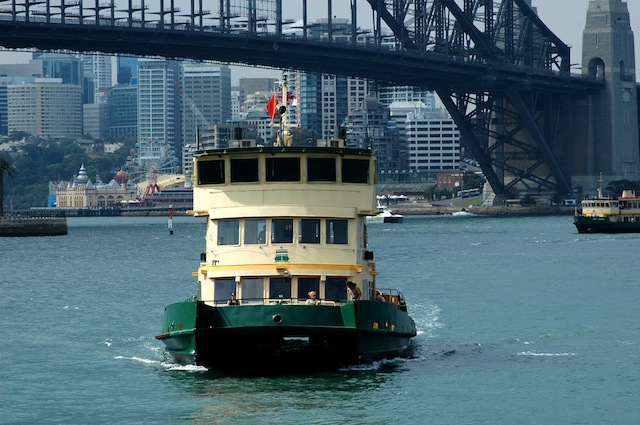
    The announcement the New South Wales Government will outsource Sydney Ferries is a good example of this. Media reports claim the “government is hoping to save hundreds of millions of dollars over the next decade.”

    Good luck with that. As the people of Melbourne found when the Victorian government outsourced operations of suburban trains and trams the levels of service remained poor, subsidies increased and new level of bureaucracy developed to manage the disconnect between a private operator running a service accountable to the public.

    Advocates of outsourcing always overlook the cost, time and skills involved in supervising contractors.

    This is something the banks found in the early days of offshoring services as the claimed massive labour cost savings by moving operations to the developing world were offset by higher supervision costs.

    Governments have a bigger problem with outsourcing as the public service generally lacks the contractual and project management skills to effectively specify and supervise major service outsourcing contracts.

    A good example of this is the Royal North Shore Cleaning contract where the hospital has seen a fall in hygiene levelsas the contractor attempt to meet their KPIs under an agreement that has been designed primarily to save the area health service money.

    Focusing on cost savings when outsourcing is almost always a recipe for failure. In both business and government its rare that a function or operating unit is so badly managed that savings offset the increased management expenses.

    This isn’t to say outsourcing isn’t always appropriate. Sometimes those savings are achievable – albeit not as often as proponents claim – and outsourcing can deliver skills that the parent organisation lacks.

    Which is another concern about the Sydney Ferries outsourcing. The Sydney Morning Herald article referred to above says the following about the CEO of the winning consortium.

    Mr Faurby, who has more than 20 years maritime experience, has never run a passenger service before. But he said he understood what it would take to improve Sydney’s ferries.

    ”It doesn’t really matter very much if it is a towage, tug company, or a container shipping company, or for that matter a ferry company … what matters is that you have the competencies to run it in an efficient, safe and effective manner.”

    Um no. That’s 1980s management school thinking where every business – from airlines to software – can be reduced to selling soap.

    Not having experience in running a passenger service with all the customer service issues that come when you’re dealing with the public is a concern. One hopes, prays even, that Mr Faurby and his employers have the wisdom to support the CEO with managers who do have a customer service ethos.

    Then there’s the black hole of Australian public transport – ticketing.

    While it’s impossible to quantify just how poor Australian governments have proved themselves to be with ticketing systems; Sydney’s convoluted, complex, siloed and passenger unfriendly public transport system adds another layer of complexity that the new management of Sydney Ferries is going to have to deal with.

    There’s no doubt though that Sydney Ferries need reform; its management was incompetent and, beyond the usual cheerful deckhands, the staff were surly with little concept of customer service.

    Done well, outsourcing Sydney Ferries could be for the better; but the emphasis on cost savings and what appears to be naive management expectations should make taxpayers’ hearts sink.

    Similar posts: