
Tag: microsoft

  • Losing sight of what matters

    Losing sight of what matters

    Last Night Google’s chairman Eric Schmidt testified before a US Senate antitrust committee on the search engine company’s market power.

    In opening his testimony, Schmidt alluded to Microsoft, saying “twenty years ago, a large technology firm was setting the world on fire. Its software was

    on nearly every computer. Its name was synonymous with innovation.

    “But that company lost sight of what mattered. Then Washington stepped in.

    It’s an interesting and probably accurate perspective given how Microsoft has effectively lost its way for the last decade – although given Google’s urge to become an identity service and its buying a mobile phone manufacturer doesn’t auger well for their focus on the core search business.

    Losing of focus of what matters is a problem for all business owners. We’re busy, it’s hard winning orders, getting paid and keeping customers happy so we lose track of the reason we went into business.

    For most of us it was because we had a great business idea or a belief we could have a better life being our own bosses.

    That latter objective is often the first one lost, usually we find ourselves working harder, taking fewer holidays and seeing the family less than if we’d stayed in a comparatively safe job with BigCorp.

    Great ideas can also be our undoing – if you’re constantly having brainwaves, you find you have lots of ideas but no time to execute on any of them.

    Similarly, one great idea that turns out to be dog can be bad news as well. Often, we’re loath to admit we’re wrong and hold onto a failing business idea long after it’s shown not to be viable.

    Probably worst of all is when we violate our own values; many of us went into business because we didn’t like the values of the corporation we worked for.

    Then one day we find we’re screwing subcontractors, that we’re leasing an expensive car the business can’t afford while cutting staff benefits and we’re tying up customers in legalistic contracts in attempt not to deliver the services we promised.

    Just like the big company we swore we’d never become.

    If you’re a big company with a lucrative business niche – like Google or Microsoft – you can get along quite nicely with the rivers of gold flowing subsidising your indulgences and distractions, most of though we don’t have that revenue buffer protecting our assets.

    The cost of losing focus is a killer; even if it doesn’t kill our businesses, it will destroy our souls.

    Are you keeping focus on why you went into business?
    Similar posts:

  • Microsoft’s lost decade

    Microsoft’s lost decade

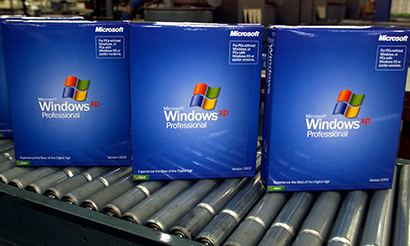
    Amid the discussion of Steve Jobs standing down as Apple CEO last week, a quiet milestone was passed. Ten years ago last Wednesday, Microsoft released to manufacturers their latest operating system, Windows XP.

    Windows XP turned out to be the most successful computer operating system ever and probably marked the peak of the personal computer era.

    The glitz and glamour of the Windows XP launch showed the power of Microsoft at the time – their products dominated the desktop markets, Apple were crawling their way back to profitability and relevance with the iMac while mobile phones were barely capable of sending anything more than SMS messages.

    In 2001 the business model of Microsoft was built upon the perpetual upgrade cycle, as computers were expected to last three to five years which would then be replaced by new systems requiring an updated operating system with the latest office software.

    Ensuring maximum revenue from the upgrade cycle, Microsoft encouraged retailers to sell XP systems with bundled software locked to the individual computer, these “deals” made sure users would have to buy new programs when the existing machines were replaced.

    The three year upgrade coupled with the need to buy new software every time made Microsoft’s model seemingly unstoppable in 2001, but problems were already developing for this strategy.

    A major part of breaking the “upgrade every few years” mentality was the late running of Longhorn, Windows XP’s successor, which was released as Vista three years behind schedule and the product’s poor quality meant customers were reluctant to upgrade.

    Unfortunately the market rejection of Vista and the wait for the next version of Windows saw the rise of reliable and affordable cloud based services, that ran on web browsers which made the need to upgrade less pressing. Today many people are quite happily running seven and eight year old computers that meet their needs adequately.

    It would be foolish to write Microsoft completely as their revenue is still strong and in the past they have seen off major threats like Netscape and the web in 1995 and the rise of cheap Linux based netbooks in 2007. Google’s takeover of Motorola and HP’s abandonment of WebOS may open new opportunities for Microsoft on tablets and mobile phones.

    For businesses, the immediate lesson is to look closely at upgrading options however for managers and owners there’s a much bigger lesson when looking at how Microsoft lost its way in the last decade despite a seemingly untouchable and lucrative business model.

    Similar posts:

  • Greater fools and lesser fools

    Greater fools and lesser fools

    As Groupon struggles to get its public offering to the market and the startup mania continues in the tech sector, it’s worthwhile having a look at what underpins the modern Silicon Valley business model along with it’s limitations and risks for those who want to imitate it or invest in it.

    Distilled to the basics, the aim of the venture capital funded startup is to earn a profitable exit for the founders and investors. While there’s some exceptions – Apple and Google being two of the most notable – most of these businesses are not intended to be profitable or even sustainable, they are intended to be dressed up and sold onto someone else.

    This can be seen in what many of these companies spend investors’ money on; in an example where a startup receives 10 million dollars VC investment, we may see a million spent on developing the product, five million allocated customer acquisition and four million on PR. The numbers may vary, but the proportions indicate the investors’ and management priorities.

    Focussing on PR and customer acquisition is essential to attract buyers, the public relations spend is to place stories in the business media and trade press about the hot new business and spending millions buying in customers backs the narrative of how great this business is. By creating enough hype about a fast growing enterprise, the plan is prospective buyers will come knocking.

    But who buys many of these business? In some cases a company like Microsoft or Google may buy the startup just to get the talents of some smart developers or entrepreneurs, but in many cases it’s fools being parted from their money.

    Greater Fools

    The greater fool model the core tech start up model; two guys set up a business with some basic funding from their immediate circle; the friends, family and other fools. A VC gets involved, makes an investment and markets the company as described above.

    With enough hype, the business comes to the attention of a big corporation whose managers are hypnotised by the growth story and possibly feel threatened by the new industry or have a Fear Of Missing Out on the new hot, sector.

    Eventually the big business buys the little guys for a large sum, meeting the aim of the founders and venture capital investors. The buyer then steadily runs down the acquired business as management finds they don’t understand it and find it a small, irritating distraction from their main business activity.

    While there are hundreds of examples of this in the tech sector, the funny thing is the biggest examples are in the media industry with Time Warner’s purchase of AOL and News Corporation of MySpace.

    Lesser Fools

    As a bubble develops we start seeing the Initial Public Offering arrive and this is where the lesser fools step in.

    The mums and dad, the retiree, German dentists, the investment funds and all the other players of the stock market are offered a slice of the hot new business.

    Usually the results are interesting; the IPO is often underpriced which sees a massive profit for the initial shareholders and underwriters in the first few days then a steady decline in the stock price as the pie in the sky valuations and the realities of the underlying business’ profitability become apparent.

    Steve Blank, a Silicon Valley investor and entrepreneur, put the greater or lesser fool scenario well in a recent article asking Are You The Fool At The Table? Sadly too many small and big investors, along with big corporations, are the fools at the table ignoring Warren Buffet’s advice on avoiding businesses you don’t understand and finding themselves the patsies that the Silicon Valley startup model relies upon.

    The fundamental misunderstanding of the venture capital driven Silicon Valley model of building businesses is dangerous as our governments and investment mangers are seduced by the glamorous, big money deals. It’s also understandable funding from banks and other traditional sources is difficult to find.

    An obsession with this method of growing businesses means that long term ventures with profitable underlying products and services are overlooked as investors flock to the latest shiny startup. That’s a shame and something our economy, and investment portfolios, can’t really afford in volatile times.

    For business owners, the venture capital model might be a good option if your aim is a quick, profitable sale to a fool. If your driving reasons for running a business are something different, then maybe the Silicon Valley way of doing business isn’t for you.

    Similar posts: