Maintaining the BlackBerry ecosystem: A review of the Passport smartphone

The BlackBerry Passport is a good smartphone but may not be enough to lock existing corporate customers into the company’s ecosystem

“Man, it’s a BlackBerry!” Exclaimed the assistant at the T-Mobile store on San Francisco’s Financial District, “I haven’t seen one of those in years.”

Generally that was the reaction in taking a BlackBerry around; a lot of bemused comments along with the the odd wistful reminiscence, usually from a forty something lawyer or banker, about how they used to love their BlackBerry back in the day.

So is the Passport is enough to rekindle Blackberry’s fortunes, or at least keep the company going until CEO John Chen can execute his Internet of Things strategy around QNX?

The BlackBerry Passport is an unusual device; with a square screen it’s a very different mobile phone that takes a little getting used to.

An irony for this reviewer is the tactile keyboard, with soft keyboards now the norm for smartphones, going back to a ‘real’ keyboard takes some getting used to and the Passport suffers from the real estate taken up by the keys.

A return to two thumb typing

The layout of the keyboard also takes some getting used to with the three row tactile QWERTY layout requiring two thumbs to use, compared to the one fingered swipe or typing options available on Android or Apple phones.

Only having three rows also presents a problem for inexperienced users — where are all the punctuation keys? The answer is they appear on the screen above while typing. While a bit clunky, the predictive software which determines which punctuation you’ll need works well.

Adding to the predictive typing features is a suggested word box that appears as you type, as one becomes more experienced in using the device this becomes a very efficient way to get messages out quickly. Overall BlackBerry has done a good job on designing the phone’s typing functions to get the most out of the form factor.

Blackberry-passport-handset

Another learning curve for users are the swipe functions, where an up gesture brings up the home screen and swipes to the the left and right let you navigate between screens and apps.

The main app on the phone is the BlackBerry Hub, a centralised repository for all information. The aim of the hub is bring together email, social media and text messages into one fixed location.

Bringing together information like this is always problematic as many of us are receiving dozens, if not hundreds, of emails, texts and social media messages a day. Overall though the Hub handles them well and integrates nicely with the major social media services including Twtitter, Facebook and LinkedIn.

The Appstore weakness

Where the software falls down is when venturing outside the pre-packaged apps — while things are better than they were, BlackBerry’s devices still suffer from a sparse app store.

The lack of a suitable WordPress app prevented this reviewer from testing out the device’s blogging potential which is a shame as the 1:1 aspect screen may well have proved to be better than the Apple and Samsung equivalents.

In the case of social media Instagram is a good example with the only free app, iGram, only offering Facebook and Twitter integration; a limitation that betrays the device’s excellent 13 Megapixel camera.

On the other important hardware matters, the phone’s battery gives well over a days life on heavy use, the company claims 24 hours talk time, and recharges through a standard Micro USB connector.

The decent battery life is reflected in the weight of the device with it tipping the scales at 196g, compared  to the Samsung Galaxy 5’s 145g and the Apple iPhone 6 plus’ 172g. It’s not heavy by any means which shows some of the engineering BlackBerry has applied to the phone.

Inside the device is 32Mb of storage with the capacity to add up to 128Mb Micro SD memory, alongside the memory slot is the Nano SIM holder which worked well on both the US T-Mobile and Australian Optus 4G networks.

Maintaining the ecosystem

Unfortunately we were unable to review how well the device and its software integrated with the Black Enterprise Service as this is going to be the main selling point for the Passport.

Overall the BlackBerry Passport is a good corporate phone that’s going to appeal to organisations that wants to give their staff secure communications with smartphone capabilities.

However the handset itself is unlikely to appeal to the broader smartphone market. At best the BlackBerry Passport is an attempt to keep the company’s core market locked into the ecosystem while John Chen executes his pivot into new markets. It may not be enough.

In San Francisco’s Financial District, the guys at the T-Mobile shop are probably not going to see many more BlackBerry phones.

Reinventing the payphone with WiFi access points

For now though it seems the remaining payphone kiosks are safe from being abandoned

As smartphones have become common, the humble phone box has become a quaint reminder of a previous era. A series of initiatives around the world to use phone boxes to WiFi points may be giving them another lease of life.

For telecommunications companies around the world what to do with thousands of barely used but high maintenance phone boxes has become a pressing question, particularly in markets where licenses require operators to maintain them as part of their service obligations.

A solution may be found in municipal WiFi as cities have found one of the barriers to rolling out networks is where to locate base stations. In Barcelona one of the solutions has been to create hotspots in bus shelters.

The idea of using payphones as hotspots first appeared in the Yorkshire town of Leeds followed by a municipal network in New York and now Australia as the incumbent telco Telstra announced plans to rollout wireless broadband across the country.

In the UK, the Leeds based service includes charging stations in the kiosks with the services based upon advertising. It’s notable the UK service is a private startup while the US experiment is a municipal initiative and the Australian service is an extension of the existing telco network.

It may be that other revenue generators may be to provide electric vehicle charging, secure storage and perhaps neighbourhood collection points for delivery services. The model certainly needs tweaking.

How the utility of kiosks providing WiFi and these other neighbourhood services work will depend upon many factors; the economics may require governments or community groups to provide the services. It certainly is a business model in development.

For now though it seems the remaining payphone kiosks are safe from being abandoned.

iPhone ME — Apple risks becoming the new Microsoft

Is Apple’s current inattention to detail a worrying trend?

It’s been a tough week for Apple, after the spectacular launch of the iPhone 6 the company has had two humiliating and worrying setbacks that indicate standards may be slipping at the once untouchable giant.

The iPhone 6 Plus should have been a triumph, and for a while it was, but the news the phones bend and distort has tarnished the product.

Compounding the bendable phone problem are the claims users are being charged to replace their damaged handsets.

On its own this problem might have been manageable like the iPhone4’s antenna problems in 2010, however today’s news that the latest iOS8 has had to be withdrawn after user complaints indicates a sloppiness has crept into the company.

Both problems, or all three problems if it turns out the stories of Genius Bars charging to replace damaged phones, show Apple isn’t paying attention to detail to the degree they’ve become known for.

The botched iOS8.0.1 rollout is sloppy work while the bendable phone is very much an uncharacteristic lapse in design.

For a premium brand with a large dose of arrogance, shipping defective products is both an embarrassment and damages the company’s name.

This inattention to detail is horribly reminiscent of Microsoft’s horror days at the turn of the Century where the company repeatedly rushed incomplete products to market — Windows ME being the most notorious example.

So maybe we are seeing Apple become the new Microsoft and the iPhone 6 Plus as the Windows ME of our time.

That doesn’t mean we’ll see the end of Apple, Microsoft is still a huge corporation, but it may be the tech industry’s most iconic business is beginning to lose its edge.

Image of Steve Jobs and Bill Gates via Wikipedia

Don’t be at the wrong end of the long tail

The state of the apps market shows how the long tail theory doesn’t work for businesses in digital markets

One of the most important characteristics of the technology industry is  you have to be first or second in your market to guarantee profitability.

As more of the world become digitized this is becoming true in other sectors, as Tomi Ahonen’s survey of the app industry shows. This also demolishes the long tail theory of online economics.

The long tail idea was put out by writer Chris Anderson during the first dot com boom.

Anderson’s view was the long tail of older material would be a useful income source for creatives and businesses. For many, small payments on a ‘long tail’ of older work would add up to reasonable revenues.

I’ve always skeptical of that view as the internet tends reward the ‘one percenters’ — a tiny number with the most traffic or revenue make the money while the bulk of players fight over the few crumbs that drop from the table.

A sheer disaster industry

A good example of how digital markets favour a tiny group of leaders  is in Tomi Ahonen’s survey of the 2014 mobile apps market that shows the vast majority of developers struggle for pennies.

Ahonen pulls no punches, describing the apps industry as a “sheer disaster industry with only one sector making money” and goes on to describe just how dire the predicament is for most developers.

The first point is where the money is being made; the first answer is by Google and Apple who skim five billion of the industry’s $21 billion in revenues. Just that stat alone shows where the real money is in the sector.

Of the remaining $15 billion the top 1.3% of the industry — around 27,000 developers — take $11 billion, or 73% of the revenue and leave four billion to be shared among the other 98%.

Slaves and huddled masses

At the other end of the scale those who Ahonen calls the ‘slaves’ and the ‘huddled masses’ there’s only 400 million dollars to be shared around two million developers. Implying 87% of the industry barely make a few hundred dollars a year.

On Ahonene’s figures two out of five developer make nothing.

HUDDLED MASSES IN APPS ECONOMY 2013
Revenues left . . . . . . . . . .  0 million dollars
Bottom 39% developers . . 819,000 developers
Bottom 39% earn . . . . . . .  0 million dollars
Bottom 39% earn . . . . . . .  0% of all revenues
Bottom 39% earn . . . . . . .  0% of developer revenues
Average per dev . . . . . . . .  0 dollars
In above numbers:
Beggars failed to earn . . . . 400,000
Hobbyists don’t care . . . . . 250,000
Branded utility app devs . . 170,000
Source: TomiAhonen Consulting analysis on Vision Mobile survey Aug 2014

The Apps industry is a stark indicator of just how brutal the economics of digital distribution are. The long tail is real, it’s just that it describes a massive imbalance in income within markets.

For all of us trying to make a dollar in the digital world, we need to find the niche where we fit into the profitable part of the curve.

Being on the wrong end of the long tail is a recipe for poverty.

Blurring the boundaries between home and office

The workplace is changing as mobile internet becomes an expected part of society.

“My ambition is to only spend four or five hours in the office,” said Vodafone Australia CEO Iñaki Berroeta when asked at a lunch in Sydney today about how he would like to structure his working day.

For many Australians, this is becoming the reality of work as increasingly their job is following them home and into their social lives according to Microsoft’s Life On Demand white paper released this week.

The blurring of the lines between home and work is no surprise to small business owners, senior executives or those establishing a startup, however according to Microsoft this is becoming normal for the majority of workers.

In their paper, Microsoft found 30% of Australian workers are checking work emails on devices at home before they leave for work and 23% are doing work activities while they are socialising with their friends.

Overall, more than a quarter of Australians work from anywhere which has more than doubled in the last five years.

This is largely due to the rise of tablet computers and accessible wireless broadband. A direct consequence of this is nearly half of commuters work or study while on public transport.

Being able to work on the train, bus or tram is changing the usage of public transport with many commuters preferring to use the usually slower option (at least in Australia) over driving as it’s seen as more productive time. This is a cultural change that governments have been slow to understand.

Equally slow have been many businesses in understanding they have to deploy the tools that allow workers to be efficient while out of the office, this is the whole point of cloud services.

The workplace is changing as mobile internet becomes an expected part of society. How is your businesses catering to both your staff and customers’ needs in the age of the smartphone and tablet computer?

A tale of two telcos

The contrasting fortunes of Australia’s Telstra and China Telecom tell us much about the two nation’s economies

Last Thursday saw China Mobile and Australia’s Telstra release their annual results.

Both have impressive numbers that illustrate how the telco industry is changing along with some stark differences between the two nation’s business culture.

For both companies their results show how voice and SMS are declining as the ‘rivers of gold’ for telecoms operators around the world; China Mobile’s voice revenues are down 6% while  Telstra’s fixed line voice fell by a similar amount.

In Australia, the incumbent telco (which sometimes advertises on this blog) continued its dominant position in its market with net profit rising nearly 15% on the back of 6.1% increase in income.

teslstra-revenue-2014

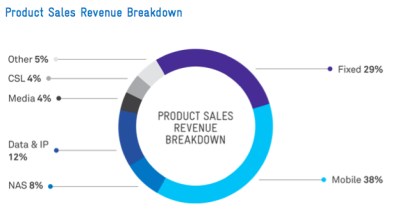
Telstra’s results also showed how the Aussie telecommunications market is now primarily a mobile sector; while the advantages of being the incumbent are substantial the real growth and profits in the business are in it’s non traditional sectors. It’s little wonder the company is happy to give away its legacy copper systems to the government’s troubled National Broadband Network.

In the PRC, the news wasn’t so good with China Mobile’s net profit for the first half of the year falling  8.5 per cent as its traditional voice and messaging businesses faced continued pressure from social media firms, despite revenue being up nearly five percent.

China Telecom is under pressure from competitors while in Australia the incumbents are doing very well. This is true across much of the Aussie economy.

While China Mobile is staking its future on its 4G rollout, Telstra is seeing the Internet of Things and Machine to Machine (M2M) markets as being the key markets, despite Gartner flagging the IoT as being at peak of the Hype Cycle.

It may well turn out to be the other way round — Chinese businesses and governments are far quicker to embrace the IoT than their Australian equivalents while Telstra’s biggest competitive advantage against SingTel Optus and Vodafone is it’s far superior 4G network.

China Mobile’s and Telstra’s competing fortunes tell us much about each country’s telecommunications markets along with the direction of both nation’s economies.

Blackberry’s quest for its future

BlackBerry stakes its future on increased enterprise security concerns and the internet of things

This is the unedited, submitted version of ‘is BlackBerry ripe for a comeback‘ that appeared in Technology Spectator on 30 July, 2014.

“What do we well?” is the question Blackberry CEO John Chen asked when he took the reigns of the Canadian communication company last November.

Chen was speaking on Tuesday at Blackberry’s Security Summit in New York where he and his executive team laid out the company’s roadmap back to profitability.

Since the arrival of the iPhone and Android smartphones, times have been tough for the once iconic business phone vendor as enterprise users deserted Blackberry’s handsets and the company struggled to find a new direction under former CEO Thorsten Heins.

Back to BlackBerry’s secure roots

In Chen’s view, the company’s future lies in its roots of providing secure communications for large organisations, “It became obvious to us that security, productivity and collaboration have to be it.”

“This is not to say we are not interested in the consumer, but we have to anchor ourselves around the enterprise.” Chen said in a clear move distancing himself from his predecessor and products like the ill fated Blackberry Playbook

An early step in this process of focusing on enterprise security concerns is the acquisition of German voice security company Secusmart which was the cornerstone of Chen’s New York keynote.

Blackberry’s acquisition of the company is a logical move says the CEO of Secusmart, Dr Hans-Christoph Quelle, who points out the two organisations have been working closely together for several years.

“It fits perfectly,” says Quelle. “We are not strangers having worked together since 2009,” in describing how Secusmart technology has been increasingly incorporated into Blackberry’s devices.

Secusmart’s key selling point has been its adoption by NATO and European government agencies; the Snowden revelations on the US bugging of Angela Merkel coupled with the Russian FSB leaking intercepted US state department conversations along with the release of Ukrainian separatist conversations after the shooting down of MH17 has focused the European view on the security of voice communications.

Launching new services

Along with the acquisition of Secusmart, Blackberry will also be launching an new enterprise service in November, the new Passport handset in December along with a range of security applications including BlackBerry Guardian, a new service that will scan Android apps for malicious software.

Blackberry’s executives were at pains to emphasise their products aren’t focused on any single smartphone operating system and not dependent on customers buying their smartphones although to get the maximum security benefits.

“We will provide the best level of security possible to as many target devices out there as possible,” said Dan Dodge who heads Blackberry’s QNX embedded devices division.

Longer term plans

In the longer term, Blackberry sees QNX division as being one of the major drivers of future revenues as the Internet of Things is rolled out across industries.

QNX was acquired by Blackberry in 2010 to broadband the communication company’s product range, now it is one of the pillars of the organisation’s future as Chen and his team see that connected devices will need secure and reliable software.

Dodge says: “With the internet of things, you can have devices that can change your world.”

While QNX is best known for its smartcar operating system – it underpins Apple’s CarPlay system being rolled out for BMW as well as its own system deployed in Audis – the company’s products are used for industrial applications ranging from wind turbines to manufacturing plants.

Despite Blackberry’s announcements in New York, the company still facing challenges in the marketplace with the Ford Motor Company announcing earlier this week it will drop the Blackberry for its employees by the end of the year and replace them with iPhones.

Chen’s though is dismissive about Apple’s and IBM’s moves into Blackberry’s enterprise markets, “what we do and what they do is completely different.”

Focusing BlackBerry

The focus for Chen is to differentiate Blackberry and play on its strengths, particularly the four markets it calls ‘regulated industries’ – government, health care, financial and energy that the company claims makes up half of enterprise IT spending.

Whether this is enough to bring Blackberry back on track remains to be seen but Chen says this is where he sees the company’s future, “This is why we are so focused on enterprise and so focused on these pillars.”

For Blackberry, the emphasis on enterprise communications is a step back to the profitable past. It may well be successful as businesses become more security conscious in a post-Snowden world.

Paul travelled to the Blackberry Security Summit in New York as a guest of the company.

Mixing brains, bravery and magic

Gadi Amit on designing things that matter to people

A few weeks ago I interviewed Gadi Amit, principle of New Deal Design ahead of his visit to Sydney for the Vivid festival.

Tonight his public talk for Vivid – Designing the Things We Love – didn’t disappoint, particularly his disdain for designing luxury goods.

“I believe we should design things that help people live their lives; a $50,ooo watch doesn’t do that,” he told the audience.

Through his presentation he showed his best known projects including the FitBit and Project Ara along with discussing some of his failures and why sometimes it’s best to part with a client should their philosophy differ with the designer.

Gadi’s view is a refreshing take from the design and tech industries that are often fixated with celebrity and bling. The view also ties into the manifesto of New Deal Design – “We mix brains, bravery and magic.”

Television in an age of context and the mobile internet

Ericsson’s head of broadcast, Thosten Sauer, sees context as key to using mobile video as telcos struggle with exploding internet traffic

One of the great changes to the telecommunications industry is the rise of video. As part of the Decoding the New Economy video series we had an opportunity to grab a quick chat with Torsten Sauer, Ericsson’s Vice President of Broadcast services.

Video is the great challenge for telecommunications company, broadcasters and consumers with Cisco Systems predicting by 2018 over 50% of internet traffic will be videos.

As designer Gadi Amit told this website a few weeks ago, the problem is compounded as the broadcast world evolves from a three or four screen environment to an almost infinite range of screen sizes and devices.

With most of that traffic being over mobile devices, Sweden’s Ericsson has been adapting to the the industry’s change to mobile video with a series of acquisitions in the broadcast production space. Sauer explained some of the motivations and strategies behind Ericsson’s moves in the industry.

Red Bee Media

Ericsson’s acquisition of British content house Red Bee Media earlier this year is one of the areas where the company is looking at growing its services.

“Consumer behaviour is changing and that represents a huge transformation for the industry,” Sauer says. “We want to be a catalyst for that transformation through providing the right services.”

Along with more traditional fields like basic production services, Sauer sees the company’s opportunity in building the metadata into videos making them more accessible over the very crowded internet.

A multitude of screens

The other key opportunity Sauer sees is that by creating richer content, it becomes easier for creators, broadcasters and advertisers to serve appropriate content to viewers depending upon both their interests and the devices they are using.

“It’s a great opportunity for broadcasters to address new opportunities and revenue streams on different devices and in different locations.”

Sauer’s view ties in with Gadi Amit’s in that the proliferation of ways to watch videos is going to create great opportunities for broadcasters to find different ways to show their work.

The innovation race

With the proliferation of channels, the field isn’t just left to the incumbents with Suaer seeing the entry of new broadcasters as one of the great opportunities.

“There will be a lot of opportunities for a lot of new players, that will create a healthy innovation base. It’s a very exciting time to be in this industry.”

With video marketing exploding, Sauer sees it’s important for non-broadcast businesses to experiment with video; “It’s now the time, business models are not all set and technology models are not all set.”

Just as businesses have to deal with a more mobile marketplace and workforce, we’re also seeing video becoming more important. It’s a great opportunity for businesses to develop new channels.


Customer service is no longer a department

Customer service needs to pervasive through modern organisations says Salesforce’s Alex Bard

When it comes to customer service businesses, Alex Bard calls himself a ‘career entrepreneur’, having founded four startups in the field since the mid 1990s.

In 2011 he sold his most recent business, Assist.ly, to Salesforce and became the company’s Vice President for Service Cloud and the Desk.com customer service offerings.

Bard tolds Decoding the New Economy last week how social media and Big Data are radically changing how organisations respond to the needs of their clients.

“I’ve been in the industry for twenty years and I’ve never been excited as I am now,” Bard says. “The real transformational things that’s happening now are these revolutions – the social revolution, the mobile revolution, the connected revolution.”

The philosophy of customer service

“What they’re really driving is this idea that customer service is no longer a department, it’s a philosophy.”

“It’s a philosophy that has to permeate throughout the organisation. Everybody in the company has a role in support. It’s not just about a call centre or a contact centre or even an engagement center which is what these things are called today.”

“I really don’t like the word ‘centre’ because I really fundamentally believe that everbody in that company has to interact with customers, has to engage and has to the information – no matter they are – about that customer to provide context.”

Abolishing the service visit

With the Internet of Things, Bard sees GE’s social media connected jet engine as illustrating the future of customer service where smart machines improve customer service.

“They’re going to capture more data in one year than in their entire 96 year history prior,” says Bard. “With that data they’ll be able to analyse and do things on behalf of that product or service that’ll reduce the number of issues.”

“Because the best service of all is one that doesn’t have to happen.”

In this respect, Bard is endorsing the views of his college Peter Coffee who told Decoding the New Economy last year that the internet of machines may well abolish the service visit.

“Connecting devices is an extraordinary thing,” says Coffee. “It takes things that we used to think we understood and turns them inside out.”

“If you are working with connected products you can identify behaviours across the entire population of those products long before they become gross enough to bother the customer.”

For Alex Bard, the customer service evolution has followed his own entrepreneurial career having evolved from being personal computer based in the 1990s to today’s industry that relies on cloud computing, big data and social media technologies.

As these technologies roll out across industry, businesses who adopt the customer service philosophy Bard describes are much more likely to adapt to the disruptions we’re seeing across the economy. Changing corporate cultures is one of the great tasks ahead for modern executives.

Avoiding the smartphone commodity trap

Can HTC avoid the looming commodity trap for smartphone manufacturers?

HTC’s announcement that the company going to focus on lower margin, mid market smartphones illustrates the maturing of the phone marketplace.

Smartphones have been a huge, and immensely profitable, business for cellphone manufacturers however the devices are now becoming a commodity as the high end western markets become saturated and cheaper devices start to enter the marketplace.

Having been comprehensively defeated in the high end marketplace by Samsung and Apple, Taiwanese manufacturer HTC hopes to make money in the lower end of the market.

For HTC it’s questionable how profitable these cheaper markets will be; rebates to telcos and distributor markups tend to eat up most the margin while pushing up retail costs.

The biggest factor of all though is the entry of newer Chinese businesses into the market, it’s going to be a tough for the Taiwanese manufacturer to compete with these suppliers.

Even Apple and Samsung are being affected by the slowing demand for high end smartphones.

HTC’s dilemma would be familiar to most electronic manufacturers; the high end of the market is a narrow niche – the premium smartphone market, like PCs, is dominated by Apple – while the other suppliers fight not to find themselves locked into the commodity end of the market.

For HTC the trap is not to fall into the commodity trap; although it’s hard to see how they’ll do this in a smartphone market that’s increasingly becoming a low margin, high volume game where, like the PC market, there is no middle ground.

Potentially unwanted applications – what are we are installing on our smartphones?

Do we really understand what we are installing on our smartphones? Sophos Labs thinks potentially unwanted applications or PUAs are a growing problem.

One of the notable things about the technology industries is there are always new terms and concepts to discover.

During a visit to Sophos’ Oxford headquarters last month, the phrase ‘Potentially Unwanted Applications’ – or PUAs – raised its head.

PUAs come from the problem application developers have in making money out of apps or websites. The culture of free or cheap is so ingrained online that it’s extremely hard to make a living out of writing software.

As result, developers and their employers are engaging in some cunning tricks to get customers to download their apps and then to monetize them, particularly in the Android world which lacks the tight control Apple exercises over the iOS App Store.

“What’s interesting about Android,” says Sophos Labs’ Vice President President Simon Reed, “is it’s attracting aggressive commercialisation.”

The fascinating thing Reed finds about this ‘aggressive commercialisation’ is where the distinction lies between malware and monetisation and when does an app or developer cross that line.

Reed’s colleagues Vanja Svajcer & Sean McDonald explore where that line lies in a paper titled Classifying PUAs in the Mobile Environment which they submitted to the Virus Bulletin Conference last October.

In that paper Svajcer and McDonald discuss how these applications have developed, the motivations behind them and the challenge for anti virus companies like Sophos and Kaspersky in categorising and dealing with them.

The authors also flag that while the bulk of the revenue generated by these apps comes from advertising, there are serious privacy risks for users as developers try to monetize the data many of these packages scrape from the phones they’re installed on.

Svajcer and McDonald do note though that potentially unwanted applications aren’t really anything new, we could well classify many of the drive by downloads that plagued Windows 98 users at the beginning of the century as being PUAs.

What we do need to keep in mind though that what is driving the development of PUAs is users’ reluctance to pay for apps and that it’s going to take a big change in customer attitudes for this problem to go away.

For businesses, this is something managers are going to have to consider as they move their line of business applications onto mobile devices, as Marc Benioff proposed at the recent Dreamforce conference.

Sophos’ Simon Reed believes potentially unwanted apps won’t be such a problem in the workplace however. “Consumers may have a different tolerance towards PUAs than commercial organisations,” he says.

The prevalence of PUAs on mobile devices does underscore though just how careful organisations have to be with who and what can access their data. It’s another challenge for CIOs.