Tag: new media

  • Being SWAMed

    Being SWAMed

    One of the constants of social media services is their habit of penalising users without giving any avenue of appeal or recourse.

    The latest example of this is Box Free IT’s story of how LinkedIn’s blacklist censors thousands of legitimate users.

    Should the moderator of a LinkedIn discussion group choose to ‘block and delete’ a members’ message, that user is thrown out of the group, prevented from re-joining and have their posts in other groups pushed into a moderation queue.

    ‘Block and delete’ is a very powerful feature – a thin skinned administrator or a vindictive competitor can damage an individual or a LinkedIn reliant business – yet users have no means of challenging the block or undoing the effects.

    This is fairly typical of social media sites; Facebook sanctions anyone who falls foul of their war on nipples while Google users who fall of the company’s algorithms find themselves in an administrative maze similar to something from a Kafka novel.

    In every case, the social media service shows it’s unaccountable and opaque, which is ironic as these sites’ proponents preach about the new age of openness.

    Once again, the Box Free IT story shows that businesses can’t afford to depend upon social media sites as primary marketing platforms. It’s essential that businesses use social media services to drive traffic to their own websites rather than risking losing their online presence because of an administrative mistake.

    These risks are something that everyone using new media should keep in mind when building their online marketing channels.

    Similar posts:

  • 57 million websites and nothing on

    57 million websites and nothing on

    Twenty years ago, Bruce Springsteen sang about TV having 57 channels and nothing on.

    While little has changed on TV, today the web has 57 million websites* offering little beyond click bait and a quick rewrite of someone else’s work.

    At the moment that model works for the kings and queens of the digital manor who pocket a few pennies for each of the ten stories their overworked interns pump out in a day but it’s hard to see how that form of publishing adds value to the audience.

    The 1990s television stations and cable networks got away with no adding value – and still do today – because they are in industries that are tough for new entrants to enter.

    But on the web there are far fewer barriers to new entrants which means offering 57 channels with nothing on, or 57 million websites with no real content, isn’t a long term path to success.

    *a wild guess

    Similar posts:

  • An infinite number of blogging monkeys

    An infinite number of blogging monkeys

    With the recent kerfuffle over writing for free, I thought I’d spend Christmas Day re-reading Chris Anderson’s Free.

    Deep in the book there’s the pertinent quote;

    Abundant information wants to be free. Scarce information wants to be expensive

    This is key question all writers, and anyone else in the creative industries need to ask, are we just adding to the tsunami of abundant information or are we adding something insightful and unique that has scarcity value?

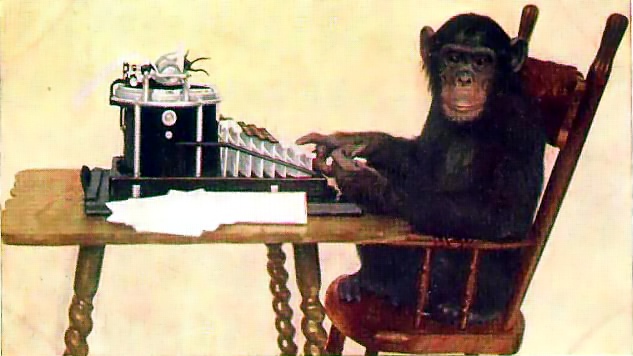
    On the web there’s a unlimited number of monkeys writing rubbish, even if we’re the one that’s managed to bash out Hamlet nobody is paying much attention.

    We need to be better than the noise, and the sites we give our work to – whether we get paid or not – need to be a step above those churning out rubbish.

    Similar posts:

  • What Rupert did wrong

    What Rupert did wrong

    A small step in the evolution of social media happened over the new year when Rupert Murdoch joined Twitter and almost immediately, and predictably, his tweets attracted criticism.

    While there’s still a nagging doubt as to whether the @rupertmurdoch account is real, despite the assurances of Twitter founder Jack Dorsey, there’s a few lessons other new users can draw from Rupert’s experience.

    Shut up and listen

    One of the unfortunate things about social media is how everybody assumes their voice has to be heard. It’s a mistake we all make when we first join theses services.

    Like social contexts, it’s best to be quiet when you first join until you’ve figured out the protocols, manners and dynamics of the group.

    Just stumbling in and blasting your opinions out doesn’t usually work well whether we’re at the pub, mothers’ group, updating Facebook or posting on Twitter. The key is to understand why you are there.

    It’s about community

    The first word in social media is “social”, these online services are a society and just restricting your circle to a select few isn’t go to give you a great deal of benefit.

    Rupert Murdoch’s account is a good example of how many people restrict themselves; at the time of writing he’s following five users. If it really is Rupert Murdoch behind the account, he’s missing some good and relevant stuff.

    If the person behind the account is really a new user, then they are probably wondering what all the fuss is about as two of the five accounts they are following haven’t been updated in months.

    What’s your objective?

    Why are you here is a good question. Have you come to listen to customers, learn from industry leaders, spruik a product, find a job, catch up with the folks or be one of the online hipsters?

    All of these and any other zillion objectives are perfectly valid reasons for joining a social media service. So listening and posting in ways that help your objectives makes sense, as does following the right people.

    The whole point of using social media services – be it Twitter, Facebook, LinkedIn or any of the other hundreds of online networking platforms – is to listen, learn and talk with your peers and the leaders of the areas you’re interested in. Perhaps you’ll even be considered a leader, as Rupert Murdoch certainly is.

    Starting by listening and understanding how a social media service works and where it adds value for you will make using the site a far better investment of your time.

    Similar posts:

  • The end of the troll

    The end of the troll

    Australian union leader Paul Howes today claimed in Sydney’s Daily Telegraph that New Media is denigrating politicians. His point being anonymous users on newspaper websites (such as the one he writes for) and online services like Twitter encourage abuse and slander which is degenerating politics and media discussion.

    The rough and tumble of the Internet was raised during the Canberra Media140 conference last September where conversation turned around Liberal politician Joe Hockey’s comment that anonymous, banal tweets was causing him to lose faith in online services like Twitter.

    Media140 provided more discussion about anonymity when The Australian decided to out the anonymous blogger Grogs Gamut, aka Greg Jericho. Greg wasn’t being abusive however his commentary had clearly found its way under the skin of some members of the Canberra political classes.

    But does anonymity matter?  We are kidding ourselves if we believe we are truly anonymous on the Internet. Few of us have the skills or diligence to fully hide our tracks from people we offend or upset.

    Anonymity also discredits much of a person’s statements – as both Paul and Joe have pointed out, if you aren’t prepared to put your name to your views then there is a good argument that your opinions are really worthless.

    However that argument ignores the power imbalance between the ordinary citizen who may find their career at risk by stating their views, as Greg Jericho found, and politicians and those working for political parties or allied organisations, like Joe and Paul who are protected by powerful and often tribally loyal party structures, PR machines and compliant journalists.

    Probably the part that’s most disingenuous though about Paul Howes’ article is that anonymous Internet commenters are dragging politicians down. Sadly our politicians did that job themselves long before social media or web2.0 based websites came on the scene.

    Today’s politicians are only reaping what they have sown themselves. Paul and Joe’s mentors – people like Graham Richardson, John Howard and Bob Carr – went out of their way to pander to and encourage the shrill, anonymous harridans of talkback radio.

    Unfortunately for today’s politicians, the Internet doesn’t have the same gatekeepers in the form of friendly announcers, producers and editors to save them from the public’s genuine, unfiltered opinions.

    The fact many of those anonymous comments – whether online or in more traditional media channels – may be true is another thing to consider; that people genuinely believe these politicians are doing the wrong thing. Rightly or wrongly, is that the fault of the Internet, or the fault of those politicians and their advisors who claim to have wonderful communication skills?

    Internet anonymity is not perfect, and often not right, but the privilege of being able to make an anonymous statement is a fundamental part of a working democracy.

    It’s not surprising our current generation of spin-doctored, on-message politicians feel threatened by a medium they struggle to understand or control, but that isn’t the fault of the anonymous online troll who could turn out to be what ultimately saves our democracy.

    Similar posts: